


Centre Clears Rs 10,000 Crore Scheme to Boost India’s Container Manufacturing Capacity
The long term programme aims to raise domestic production nearly tenfold to 7.5 lakh shipping containers annually, reduce import dependence and create thousands of jobs across manufacturing and related industries.
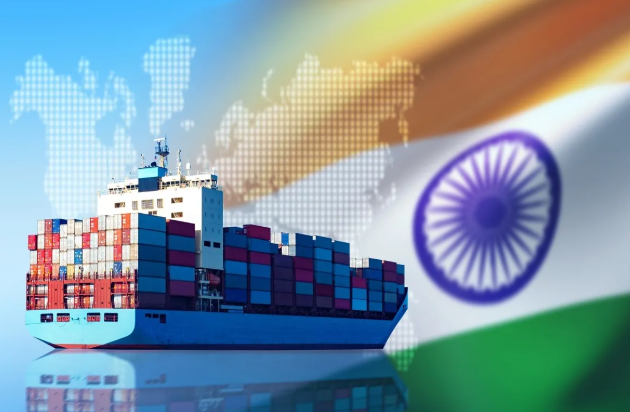
NEW DELHI, Oct 29: The Union Cabinet has approved a Rs 10,000-crore Container Manufacturing Promotion Scheme to strengthen India’s domestic production capabilities, reduce dependence on imported shipping containers and improve the resilience of the country’s logistics and maritime supply chains.
The scheme, approved on Wednesday, October 28, is designed to establish a globally competitive container manufacturing ecosystem. It will support the establishment of new manufacturing facilities and the expansion of existing units, with financial assistance extending through the 2039-40 financial year.
According to the government, the initiative aims to increase India’s annual container manufacturing capacity nearly tenfold, from approximately 70,000 twenty-foot equivalent units (TEUs) to 7.5 lakh TEUs.
Shipping containers are essential to international commerce, enabling goods to move between factories, ports, warehouses and markets through interconnected maritime, road and rail networks. A stronger domestic manufacturing base could help India reduce supply-chain vulnerabilities while supporting the expansion of exports and industrial production.
The programme was announced in the Union Budget for 2026-27 and is intended to address the cost and capacity challenges facing India’s emerging container manufacturing industry.
Financial Support for Manufacturers
The scheme provides assistance through several components intended to help manufacturers establish facilities, expand output and improve their competitiveness against international producers.
A major share of the funding, amounting to Rs 8,891 crore, has been earmarked for operational expenditure assistance. Eligible manufacturers will receive support for containers produced in accordance with global shipping standards and sold under the scheme.
The government intends this assistance to help bridge the cost gap between domestic production and competing international manufacturing centres. Improving cost competitiveness is considered important for attracting investment and encouraging businesses to source containers from Indian manufacturers.
The programme also includes Rs 859 crore in interest subvention assistance. Under this component, eligible manufacturers can receive interest support of three per cent annually on qualifying term loans used to establish new factories or expand existing production facilities.
The assistance is expected to lower financing costs for businesses undertaking capital-intensive manufacturing projects. For companies entering the sector, access to affordable long-term credit can influence decisions regarding factory construction, machinery purchases and production capacity.
An additional Rs 150 crore has been allocated for testing and certification assistance. This provision is intended to support common testing facilities, including infrastructure for specialised impact testing and other requirements associated with internationally accepted container standards.
Reliable testing and certification will be important for ensuring that containers manufactured in India meet the technical and safety requirements of shipping companies, port operators and international customers.
Reducing Import Dependence and Supply-Chain Risks
India’s growing trade volumes have increased the importance of dependable access to shipping containers. These units are required to transport manufactured products, agricultural commodities, industrial components and other goods through global supply networks.
Heavy dependence on overseas suppliers can expose domestic businesses to changes in international prices, production bottlenecks, freight disruptions and geopolitical uncertainty.
Developing domestic capacity could give Indian exporters and logistics companies access to a wider local manufacturing base. It could also create opportunities for Indian manufacturers to supply international customers if they can meet quality, delivery and pricing requirements.
The government’s initiative reflects a broader effort to strengthen domestic manufacturing in sectors that support trade and infrastructure. While production incentives can encourage investment, the long-term success of the scheme will depend on whether Indian factories can operate efficiently and compete without excessive dependence on government assistance.
Manufacturers will need access to specialised steel, precision engineering, reliable electricity, skilled workers and efficient transportation networks. Consistent quality and timely delivery will also be necessary to establish confidence among global shipping companies.
The development of an integrated supplier ecosystem could help reduce costs over time. However, building that ecosystem will require coordination among manufacturers, component suppliers, financial institutions, logistics companies and public agencies.
Employment and Opportunities for Ancillary Industries
The government estimates that the scheme could generate approximately 3,000 direct jobs and more than 50,000 indirect employment opportunities.
Direct jobs are expected to arise in manufacturing plants, engineering operations, quality control, maintenance and production management. Indirect employment could develop across transportation, warehousing, equipment supply, repair services and other supporting activities.
The initiative is also expected to benefit ancillary industries supplying components and materials required for container production. These include manufacturers of corner castings, specialised steel products, wooden flooring components, paints and related industrial inputs.
A stronger domestic market for such components could encourage smaller businesses to expand capacity and invest in modern manufacturing processes.
For small and medium-sized enterprises, opportunities may emerge through partnerships with larger manufacturers or by supplying specialised parts and services. Such participation could broaden the economic impact beyond the factories directly supported by the scheme.
Nevertheless, the employment projections represent anticipated outcomes rather than guaranteed results. Actual job creation will depend on the number of projects established, the speed of investment, factory utilisation and the development of a commercially sustainable industry.
Training will also be important. Manufacturers will need workers with skills in fabrication, welding, industrial design, materials handling, inspection and production technology.
Strengthening India’s Maritime and Logistics Infrastructure
The container manufacturing initiative complements the country’s wider efforts to expand port capacity, improve freight movement and strengthen multimodal transport infrastructure.
Container availability affects the efficiency of international logistics, particularly for exporters that depend on predictable schedules and competitive shipping costs. Domestic production could help improve supply resilience, although it would not eliminate other challenges such as port congestion, freight rates or imbalances in container availability across trade routes.
The government is seeking to position India as a manufacturing and export destination by strengthening industrial capacity and reducing bottlenecks in the movement of goods.
A competitive container industry could support that objective by creating another domestic source of equipment needed for global trade. If Indian manufacturers can establish the required scale and quality, they may also find opportunities to serve overseas markets.
The scheme’s long implementation period provides manufacturers with greater visibility for investment planning. It also places responsibility on the government to maintain clear eligibility rules, transparent disbursement mechanisms and effective monitoring of supported projects.
Regular assessment will be necessary to determine whether financial assistance is leading to additional production capacity, improved productivity and stronger commercial competitiveness.
Implementation Will Determine Long-Term Success
Although the Cabinet’s approval establishes the financial framework, the scheme’s impact will depend on implementation. Manufacturers must be able to access assistance without unnecessary delays, while public authorities will need to ensure that funds support productive investments and meet the programme’s objectives.
The government will also need to monitor whether supported factories achieve the required production standards and develop sustainable customer relationships.
Another important factor will be demand. Expanding capacity is commercially viable only if manufacturers can secure sufficient orders from shipping companies, logistics providers and other buyers.
Domestic producers will therefore need to compete on more than incentives. Efficient operations, reliable delivery schedules, product durability and competitive prices will remain central to attracting customers.
The availability of skilled labour and supporting industrial infrastructure will also influence how quickly new facilities can become operational.
If these requirements are met, the scheme could help India develop a more resilient domestic supply base for a critical component of international trade. It could also support investment in engineering and manufacturing activities that have applications beyond shipping containers.
For now, the government’s target of raising annual capacity to 7.5 lakh TEUs provides a clear benchmark against which progress can be measured. The pace of factory development, the volume of container production and the growth of ancillary industries will determine whether the programme delivers its intended economic benefits.
The initiative marks a long-term push to strengthen India’s manufacturing capabilities while linking industrial policy more closely with the country’s trade and logistics ambitions.

