


Challenging Misinformation and Conflict Narratives: BGSBU Rajouri Witnesses First-of-Its-Kind South Asia Dialogue
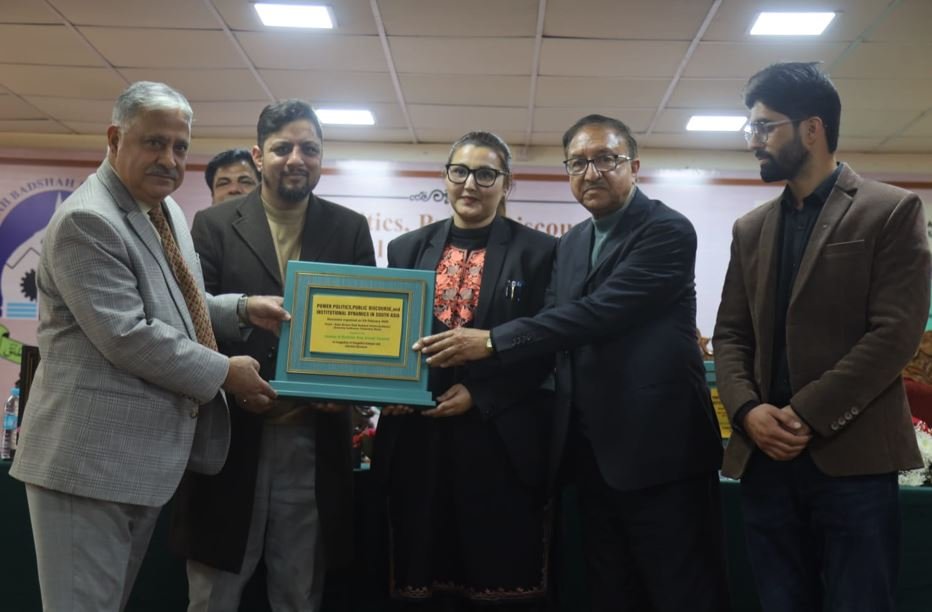
Dated 5/02/2026: A thought-provoking and intellectually enriching discussion on “Power Politics, Public Discourse, and Institutional Dynamics in South Asia” was successfully organized at Baba Ghulam Shah Badshah University (BGSBU), Rajouri, under the banner of the Jammu & Kashmir Haq Insaaf Council, a Jammu & Kashmir-based peace-building and civic platform headed by Advocate Zeshan Syed. The programme marked a first-of-its-kind initiative at BGSBU, aimed at strengthening informed public discourse, democratic values, and institutional accountability, particularly in sensitive border and conflict-affected regions.
The programme commenced with the National Anthem, followed by a two-minute silence to pay solemn homage to the bravehearts who laid down their lives for the nation during Operation Sindoor. The dignified opening set the tone for deliberations rooted in constitutional responsibility, national sacrifice, and respect for human dignity.
The discussion witnessed the participation of eminent academicians, journalists, legal experts, and civil society voices from different parts of Jammu & Kashmir, including Prof. Ashok Aima (Former Vice Chancellor, Central University of Jammu), Saleem Beigh (Former Director General, Tourism Department), Prof. Karan Maini, Dr. Ali Asghar Shah, Dean, School of Biosciences and Biotechnology, Advocate Uma Kapahi, Javed Beigh (Human Rights Activist), Sumit Bhargav (Journalist), and Azad Rahat (Journalist).
The programme was moderated by Tahir Mustafa Malik, while Sajid Arain delivered the welcome address. Speakers offered nuanced, fact-based perspectives, reflecting academic rigour, democratic maturity, and a shared commitment to truth and dialogue.
Key highlights of the programme included:
Deliberations on the growing menace of misinformation and its disproportionate impact on youth, particularly in conflict-affected and border regions.
A critical examination of the gap between public discourse and ground realities in border districts.
In-depth discussions on human rights, institutional accountability, and the need for transparent governance.
Insights into women’s leadership in Jammu & Kashmir as a substantive and transformative force in South Asia.
Analysis of conflict entrepreneurship and its adverse implications for regional stability.
Emphasis on fact-based dialogue, responsible media practices, strong institutions, and inclusive governance as prerequisites for sustainable peace and national integration.
Addressing the gathering, Advocate Zeshan Syed, Chairman of the Jammu & Kashmir Haq Insaaf Council, lambasted Pakistan for its role in regional disturbances, stating that its continued support of terrorism has paralyzed SAARC and betrayed the collective interests of South Asian nations.
He remarked that developments in countries such as Bangladesh, Nepal, Sri Lanka, Afghanistan, and other South Asian states offer critical lessons for retrospection and future policy thinking in the face of propaganda unleashed by what he described as a failed state.
He asserted that the youth will oppose, expose, and defeat such nefarious designs, particularly on 5th February, which is projected internationally as Kashmir Solidarity Day. He further alleged that international aid meant for the development of the downtrodden and needy populations of PoJK and PoGB is being misused to promote terrorism, benefitting vested interests rather than ordinary people.
The program saw enthusiastic participation of scores of youth, including students of BGSBU and young participants from Rajouri, Poonch, Jammu, and the Kashmir Valley, making the interaction lively and meaningful. Their active engagement reflected a growing awareness among young citizens that democracy thrives not on slogans or polarization, but on critical thinking, informed participation, and civic responsibility, especially in border districts that bear the direct consequences of conflict and policy decisions.
At a time when public discourse across South Asia faces increasing polarization and institutional trust is under strain, the program reaffirmed the essential role of universities and civil society in nurturing democratic resilience. It reinforced the belief that peace without justice is fragile, security without accountability is incomplete, and development without inclusion remains unsustainable.
The program was attended by deans of the schools, directors, principals, heads of different departments, faculty members, officers of the university, non-teaching staff, research scholars, and students.
The Jammu Kashmir Haq Insaaf Council reiterated its commitment to continuing such academic and civic engagements in the future, with a focus on promoting fact-based discourse, constitutional consciousness, and constructive youth participation. The organizers stated that initiatives of this nature are not merely academic exercises but democratic necessities, particularly in regions where voices have historically remained underrepresented.

