


CJI Surya Kant: AI Can Aid Judicial Reasoning, But Cannot Replace Judicial Conscience
Chief Justice of India Surya Kant highlights responsible AI use, judicial independence and stronger India-Germany cooperation in mediation and digital justice.
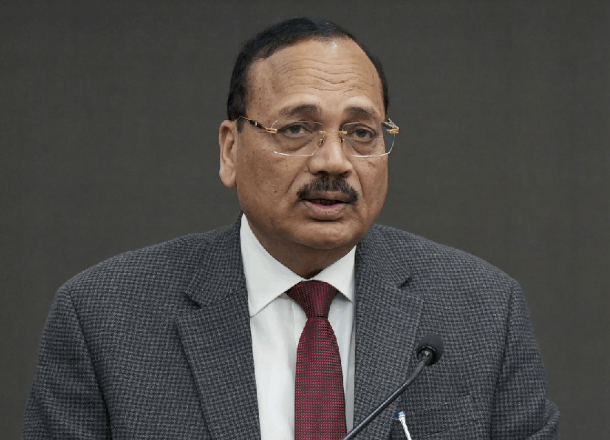
NEW DELHI, Aug 26: Chief Justice of India Surya Kant on Wednesday said artificial intelligence can strengthen judicial reasoning and improve court administration, but cannot replace the human conscience and judgment required to decide cases.
Speaking during a bilateral meeting with Ulrich Herrmann, presiding judge of Germany’s Federal Court of Justice at Karlsruhe, CJI Kant said the judiciary must ensure that technological progress does not compromise judicial independence or public confidence.
He said the Supreme Court is already deploying AI in limited support-oriented areas, including legal research, translation of judgments into 16 languages and a conversational interface that enables citizens to access information about case status and court procedures.
According to the CJI, such applications are intended to reduce repetitive administrative tasks rather than influence the outcome of judicial proceedings.
He said proposed regulations prepared by the Supreme Court’s AI Committee permit administrative applications such as scheduling, transcription and translation while restricting AI from making assessments concerning witness credibility, flight risk, recidivism or eligibility for bail.
CJI Kant also said a permanent apex level institution has been proposed to oversee the adoption of AI and ensure accountability as the technology becomes more integrated into the justice system.
“Artificial intelligence may augment judicial reasoning, but it cannot substitute judicial conscience,” he said, stressing that judicial decisions must continue to rest with judges and legally authorised judicial officers.
The Chief Justice said India and Germany have different judicial frameworks and legal traditions, with India following a common law system with an integrated judicial hierarchy, while Germany operates under a civil law framework with separate federal jurisdictions.
Despite these differences, he said both countries face several common challenges, including managing appellate workloads, ensuring consistency in judgments, improving case disposal and expanding access to justice.
CJI Kant identified three broad areas for closer cooperation between the two judiciaries the responsible use of technology and AI in courts, strengthening cross-border mediation and alternative dispute resolution, and establishing deeper institutional engagement through a memorandum of understanding.
He proposed that both sides designate institutional points of contact to turn the discussions into a structured programme involving courts, registries, judges and judicial academies.
The proposed cooperation could cover digital judicial processes, court administration, commercial and business law, as well as mediation involving cross-border disputes.
Highlighting the importance of mediation, CJI Kant said institutional mediation centres, Lok Adalats and digital Lok Adalats have helped bring dispute settlement mechanisms closer to litigants outside major urban centres.
He cited the Supreme Court’s recent special Lok Adalat, ‘Samadhan Samaroh’, as an example of efforts to expand access to settlement mechanisms through trained professionals, case managers and secure digital systems.
The CJI said India and Germany, being major trading partners, could benefit from sharing expertise on cross-border commercial mediation, enforcement of mediated settlements and training mediators dealing with disputes involving businesses from both countries.
Giving an overview of India’s judicial structure, CJI Kant noted that the country does not have a separate constitutional court. The Supreme Court performs both constitutional and final appellate functions in civil and criminal matters, besides exercising original jurisdiction under Article 32 for enforcement of fundamental rights.
He said India’s technological transformation of the courts is aimed not simply at digitisation, but at making justice delivery more accessible, transparent and responsive to citizens and other stakeholders.
Referring to Germany’s electronic case files, e-Justice Council, Bund Laender Commission and proposed Federal Justice Cloud, CJI Kant said both countries recognise the need for secure digital infrastructure while maintaining judicial control over decision-making.
“Both our judiciaries agree that judicial decisions must remain with judges and legally authorised judicial officers, whatever the degree of digital transformation,” he said.
CJI Kant also reiterated his emphasis on mediation as a key component of the justice delivery system, saying its promotion has remained among his priorities since taking charge as Chief Justice of India.
The CJI is currently on a four day visit to Germany and the United Kingdom, where he is scheduled to participate in several programmes focused on judicial cooperation and institutional engagement.

