


Cong Accuses Govt of ‘Stealing’ Votes and Savings Amid Rising Inflation
Jairam Ramesh cites September food inflation of 7.74 per cent and sharp price increases in essential commodities, accusing the Modi government of ignoring household financial concerns.
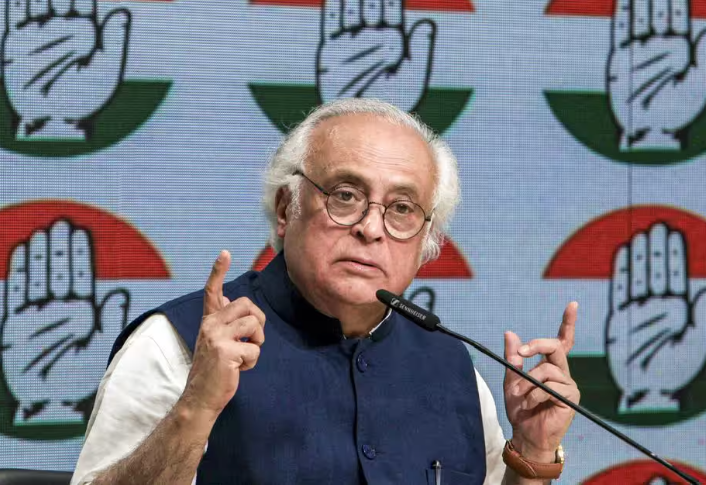
NEW DELHI, Oct 13: The Congress on Tuesday criticised the Centre over rising inflation, accusing the Narendra Modi government of putting additional pressure on household budgets and eroding public savings. The opposition party linked the increase in prices to its allegations of electoral irregularities and called on the prime minister to take responsibility for the economic difficulties faced by ordinary citizens.
Congress general secretary in-charge of communications Jairam Ramesh said inflation was continuing to rise while public anger over alleged “vote chori” was growing. He accused Prime Minister Narendra Modi of remaining silent on issues affecting the public and invoked the expression “mauni baba” to criticise his response.
In a post on X, Ramesh said the government had come to power promising “achche din” but was now, in the Congress’s words, “stealing votes” and “robbing savings”. He added that the time had come for the prime minister to pick up his “jhola” and leave.
The Congress leader’s remarks followed the release of September consumer price data showing that India’s retail inflation had climbed to 5.54 per cent, while food inflation increased to 7.74 per cent, according to figures attributed to the National Statistics Office (NSO).
Ramesh argued that the increase in food prices was particularly troubling for families already struggling to manage essential expenditure. He cited substantial year-on-year increases in the prices of onions, garlic, ginger and lemons to illustrate the pressure on consumers.
According to the figures he shared, onion prices rose by 108.09 per cent, silver jewellery by 87.8 per cent, ginger by 62.85 per cent, garlic by 54.62 per cent and lemons by 36.41 per cent.
The Congress leader said the impact of rising prices extended beyond food purchases, affecting transport, education, clothing, footwear and household goods. He alleged that low-income families were finding it increasingly difficult to meet daily expenses, while middle-class households were facing pressure on their savings and borrowing capacity.
Ramesh also pointed to the increase in retail inflation from 3.40 per cent in March to 5.54 per cent in September, describing the trend as evidence of growing economic hardship. He said the government needed to address the concerns of consumers rather than ignore their grievances.
The Congress has repeatedly criticised the Centre over the cost of living, arguing that rising prices disproportionately affect households with limited financial resources. The party has also accused the government of pursuing policies that, in its view, fail to adequately protect ordinary consumers.
The latest remarks follow another criticism issued by the opposition on Monday, when it demanded answers from the prime minister over price increases during the festive season. The party described the situation as an economic crisis for households and questioned the government’s claims of delivering prosperity.
Official data showed that September retail inflation stood at 6.08 per cent in rural areas and 4.88 per cent in urban areas. The all-India Consumer Price Index, based on the new 2024 series, recorded an inflation rate of 5.54 per cent.
The figures represent the highest inflation reading recorded since the revised statistical series was introduced in January, according to the information cited in the report.
The Reserve Bank of India has also expressed concern about the inflation outlook. The central bank recently raised its benchmark repo rate by 25 basis points to 5.50 per cent, marking its first increase in nearly four years, as policymakers responded to mounting price pressures, a weaker rupee and elevated crude oil costs.
The RBI also revised its retail inflation forecast for the current financial year to 5.2 per cent from its earlier projection of 5 per cent, citing indications that price pressures were spreading across a wider range of commodities.
Higher interest rates can help moderate demand and contain inflation over time, but they may also increase borrowing costs for households and businesses. The effect on consumers depends on the transmission of policy rates to lending rates, income growth and changes in commodity prices.
The government has rejected the opposition’s broader criticism of its economic management and has pointed to India’s gross domestic product performance in defending its record.
The latest exchange underscores the political debate surrounding inflation, purchasing power and the government’s economic policies. While the Congress has focused on the pressure that rising prices place on household finances, the Centre has defended its record by citing wider economic indicators.
With food prices and other essential expenses remaining central to household budgets, inflation is likely to remain a major issue in the political discussion over economic performance and the cost of living.

