Independent , Honest and Dignified Journalism

Constitutional Interpretation: Supreme Court Sets New Guidelines for Stay Orders, Upholds Judicial Autonomy
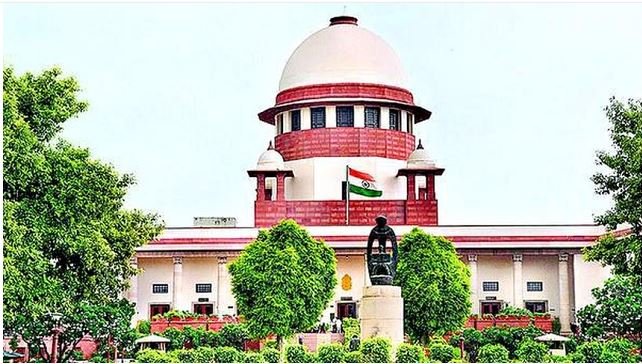
New Delhi, 29-02-2024 : In a landmark ruling, the Supreme Court asserted on Thursday that stay orders granted by lower courts or High Courts in civil and criminal cases cannot be automatically vacated after six months. This pivotal decision was made by a five-Judge Constitution Bench led by Chief Justice D Y Chandrachud. The bench, which also included justices A S Oka, J B Pardiwala, Pankaj Mithal, and Manoj Misra, emphasized that constitutional courts like the Supreme Court and High Courts should typically refrain from imposing time schedules for case disposals by lower courts.

The bench set aside its 2018 verdict in the case of Asian Resurfacing of Road Agency P Ltd Director Vs CBI, where a three-judge bench had ruled that interim stay orders would be vacated automatically unless expressly extended. This means that no trial or proceedings can remain stayed after six months, except in cases where the stay order was issued by the Supreme Court.

Justice Oka and Justice Misra delivered separate but concurring judgments in the matter. Justice Oka stated during the pronouncement of the judgment that they disagreed with the stance taken in the Asian Resurfacing of Road Agency P Ltd Director case.

The bench framed two key questions for consideration: firstly, whether the Supreme Court can order the automatic vacation of all interim orders issued by High Courts after a specified period, and secondly, whether the Supreme Court can direct High Courts to decide pending cases with interim stay orders within a fixed timeframe.

Article 142 of the Constitution empowers the Supreme Court to pass any decree or order necessary for complete justice. However, the bench emphasized that the priority for case disposals should generally be left to the discretion of the respective courts handling the cases.

According to Justice Oka, orders setting time limits for case disposals should only be made in exceptional circumstances to address extraordinary situations. He added that the nature of pending cases varies, and thus, the concerned courts are best placed to assess priorities.

The judgment also laid down guidelines for the exercise of powers under Article 142 by the Supreme Court. A detailed judgment is awaited as the court had reserved its decision on December 13, 2023, after hearing arguments from senior advocates and legal representatives. This case had been referred to a five-judge bench on December 1 the previous year for reconsideration.

WhatsApp Channel