


Court Says Criticism of Government or CM Is Not a War Against the Nation
Judge observes that questioning government policies or criticising the chief minister alone does not amount to threatening India's sovereignty, while granting bail with strict conditions.
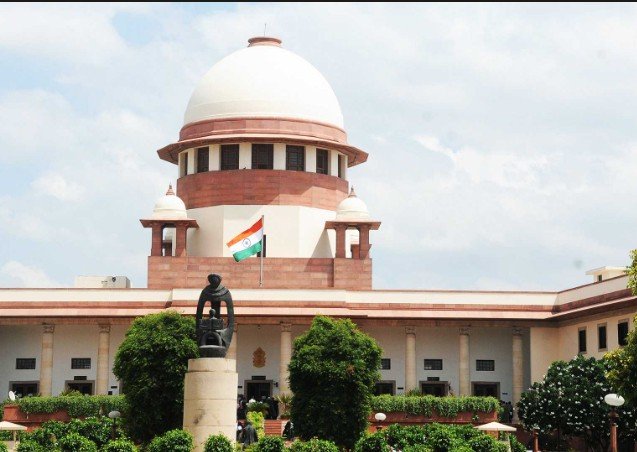
Pune , July 16: In a significant ruling reinforcing the importance of democratic freedoms, a Pune sessions court granted bail to Nationalist Congress Party (Sharad Pawar faction) social media functionary Mahadev Balgude, observing that criticism of the government or the chief minister, by itself, cannot be treated as an act of waging war against the nation.
The order, delivered by Additional Sessions Judge B.D. Kulkarni, underlined that the right to question, praise, or criticise the actions of an elected government is an essential component of India’s democratic framework and is protected under the Constitution. The court clarified that unless there is material indicating an attempt to endanger the country’s sovereignty, unity, or integrity, criticism alone cannot justify invoking stringent provisions related to offences against the State.
Balgude, who heads the social media wing of the Sharad Pawar-led NCP (SP) in Maharashtra, was arrested in April after police accused him of sharing altered images of Chief Minister Devendra Fadnavis and publishing social media posts allegedly expressing sympathy towards Naxalite ideology.
Court Finds No Evidence of Threat to National Sovereignty
While examining the case records, the court observed that the material presented by investigators mainly reflected criticism of government functioning, public policies, and investigative procedures in certain matters. Such expressions, the judge noted, fall within the domain of legitimate public discourse in a democratic society.
The court further stated that there was no evidence suggesting the accused had either declared war against the State or encouraged others to do so. Likewise, the available material did not indicate any act capable of undermining India’s sovereignty, unity, or territorial integrity.
According to the order, the prosecution had failed to establish a direct connection between the social media posts and the serious allegations invoked under the Bharatiya Nyaya Sanhita (BNS).
Section 152 Invocation Considered Debatable
One of the key aspects of the order was the court’s observation regarding Section 152 of the Bharatiya Nyaya Sanhita, a provision dealing with acts that intentionally threaten the sovereignty, unity, and integrity of India.
The judge remarked that the applicability of this section in the present matter remained open to legal debate. Since the other offences listed against the accused were bailable in nature, continued detention was not considered necessary.
The court also pointed out that the investigation had already concluded and the police had filed the chargesheet before the competent court. As a result, further custodial interrogation of the accused was no longer required.
Bail Granted with Strict Conditions
While allowing the bail application, the court directed Mahadev Balgude to furnish a personal bond of ₹25,000 along with one or two sureties.
The order imposed several conditions to ensure the smooth progress of the trial. Balgude has been instructed not to influence witnesses, tamper with evidence, or obstruct judicial proceedings in any manner.
Additionally, he must provide his residential address and mobile number to the investigating officer and cannot travel outside India without obtaining prior permission from the court.
The court indicated that compliance with these conditions would be necessary throughout the legal proceedings.
Defence Cites Constitutional Right to Free Speech
Appearing on behalf of the accused, advocate Sameer Shaikh argued that the prosecution was politically motivated and that the criminal case stemmed from criticism directed at those in power.
The defence maintained that freedom of speech and expression, guaranteed under Article 19(1)(a) of the Constitution, includes the right to question public authorities and government policies.
Counsel further argued that since the investigation had concluded and all electronic evidence had already been collected, keeping the accused in judicial custody served no investigative purpose.
The defence requested the court to consider the constitutional protections available to citizens while deciding the bail application.
Prosecution Raises Concerns Over Social Media Posts
The prosecution opposed the bail plea, arguing that the accused had used objectionable language in various social media posts and that some of the published material allegedly supported extremist ideology.
Government lawyers maintained that such online activity warranted serious legal scrutiny because it related to offences affecting the State.
However, while considering the available evidence, the court concluded that the legal requirements necessary to justify prolonged custody under the stringent provisions had not been sufficiently demonstrated at the bail stage.
Democratic Debate Distinguished from Criminal Conduct
The observations made by the Pune court highlight an important distinction between political criticism and criminal conduct under Indian law.
The order emphasises that disagreement with government policies, criticism of elected leaders, and public commentary on governance remain integral aspects of democratic participation. Such expression cannot automatically be interpreted as an attack on the nation unless supported by concrete evidence of unlawful intent or actions threatening national integrity.
Legal experts believe the ruling may contribute to ongoing discussions regarding the scope and interpretation of newly enacted provisions under the Bharatiya Nyaya Sanhita, particularly in cases involving online speech and political expression.
The case will now proceed before the trial court, where the charges and evidence presented by both sides will be examined in detail before any final determination is made.

