


Delhi Court Frames Charges Against Alka Lamba Over Jantar Mantar Protest
Congress leader accused of pushing police, jumping barricades, and instigating protesters; court cites video evidence
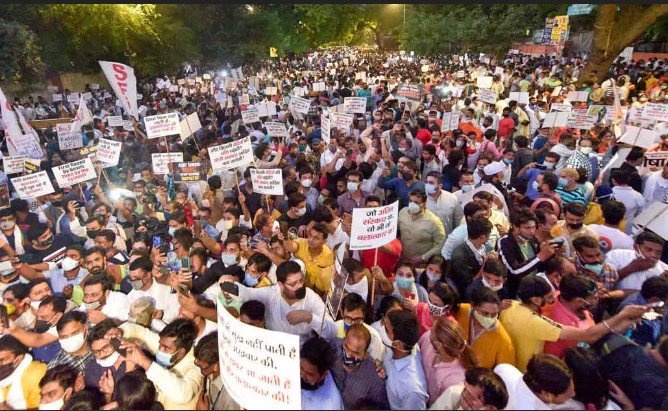
New Delhi, Dec 20: A Delhi court on Thursday framed criminal charges against Congress leader Alka Lamba for her alleged role in a protest near Jantar Mantar, which escalated into obstruction of public servants and disruption of public movement.
Observing that Lamba was “clearly seen pushing police officials, jumping barricades and instigating protesters to breach prohibitory orders,” the Additional Chief Judicial Magistrate Ashwani Panwar of the Rouse Avenue District Courts said that prima facie video evidence suggested her leading protesters beyond the permitted zone and violating orders under Section 163 of the Bharatiya Nagarik Suraksha Sanhita (BNSS).
The court noted that Lamba was the first to jump barricades and used gestures to prompt others to follow, resulting in obstruction of police functions and public roads. The magistrate emphasized that at the stage of framing charges, the court only needs material raising grave suspicion, with the defence arguments reserved for trial.
According to the prosecution, the incident occurred on July 29, 2024, when prohibitory orders were in force around Jantar Mantar. Despite being informed that permission to “gherao” Parliament had been denied, Lamba allegedly led protesters towards Tolstoy Road, pushed police personnel, jumped multiple barricades, and lay on the public road, causing obstruction and public inconvenience.
After reviewing the videos in court, the magistrate recorded that Lamba repeatedly instigated protesters, pushed women police officers, and crossed onto the main road before leaving the scene. The defence argued that the protest was peaceful and within a designated area, but the court dismissed these submissions, holding that the material disclosed “grave suspicion” sufficient to proceed to trial.
Charges framed against Lamba include Sections 132 (assault or criminal force to deter a public servant), 221 (obstructing public servant), 223(a) (disobedience to a duly promulgated order), and 285 (danger or obstruction in public way) of the BNSS. Her application seeking discharge under Section 281 BNSS was rejected.

