


Delhi Expands Newborn Screening to 63 Diseases, Doubles ASHA Incentives
Mission ANMOL widens early screening for newborns, while the revised incentive aims to strengthen community-level healthcare services.
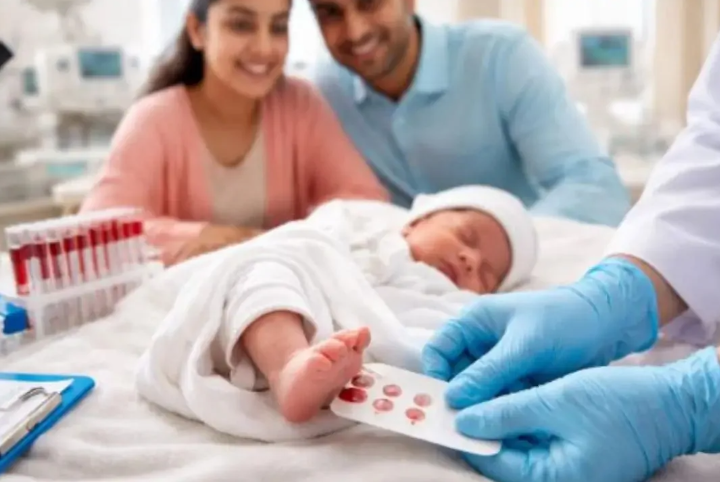
NEW DELHI, Oct 7: The Delhi Government has expanded its newborn healthcare programme to screen babies for 63 congenital diseases and doubled the monthly incentive for ASHA workers as part of a series of health initiatives launched under the Seva Sankalp Abhiyan.
The measures were announced on October 6 at the ASHA Sammelan-2026 and ASHA Samman Samaroh held at Thyagaraj Stadium. Chief Minister Rekha Gupta and Lieutenant Governor Taranjit Singh Sandhu launched the initiatives, which also included new measures related to organ and tissue transplantation and the regulation of private nursing homes.
A major component of the programme is the expansion of Mission ANMOL, or Advanced Newborn Monitoring and Optimal Life Care. The initiative focuses on identifying serious but treatable congenital, genetic and metabolic conditions at an early stage.
Under the expanded programme, newborns will be screened for 63 congenital diseases within 24 to 72 hours of birth. The number of conditions covered has increased from 56, widening the scope of early detection available to babies under the programme.
The government aims to increase annual screening coverage from around 1.5 lakh newborns to 2.5 lakh. Officials said more than 75,000 babies have already undergone screening under the initiative, while more than 700 children have received timely treatment.
Early detection is particularly important for conditions that may not be immediately apparent after birth. Some congenital and metabolic disorders can initially show few visible symptoms but may cause serious complications if diagnosis and treatment are delayed.
Newborn screening can help doctors identify such conditions before they progress and allow families to seek appropriate treatment at an earlier stage. The expansion of the programme is therefore aimed at strengthening preventive and early-intervention healthcare rather than waiting for symptoms to become severe.
The initiative also places greater emphasis on the period immediately following birth. By conducting screening within the first 24 to 72 hours, health authorities seek to reduce the delay between delivery, identification of a possible disorder and initiation of appropriate medical care.
The government plans to expand the number of babies covered each year as part of its effort to make early screening more widely available. Increasing coverage from approximately 1.5 lakh to 2.5 lakh newborns would allow a significantly larger number of children to be assessed during the earliest stage of life.
Alongside the newborn programme, the Delhi Government announced a substantial increase in financial incentives for ASHA workers. The monthly incentive for 6,690 Accredited Social Health Activists has been raised from Rs 3,000 to Rs 6,000.
ASHA workers play an important role at the community level by helping connect families with public healthcare services. Their work can include supporting maternal and child health programmes, encouraging healthcare access and helping communities interact with government health facilities.
The increased incentive is intended to recognise their contribution and strengthen the community-based healthcare network. The announcement is particularly significant because ASHA workers often serve as an important link between households and formal medical services.
The initiatives were unveiled alongside measures aimed at improving organ and tissue transplantation services in the national capital. The State Organ and Tissue Transplant Organisation headquarters at GB Pant Hospital was inaugurated virtually.
The new institutional facility is intended to strengthen coordination and awareness related to organ and tissue donation and transplantation in Delhi. Better coordination is important in a field where successful transplantation depends on multiple stages, including donor identification, consent procedures, medical assessment, allocation and coordination between hospitals.
The Delhi Government also launched a Nursing Home Management System portal. The digital platform is intended to bring registration and renewal procedures for private nursing homes online.
Moving such administrative processes to a digital system could make it easier for healthcare establishments to complete regulatory procedures while giving authorities a more structured mechanism for monitoring facilities.
The combination of these initiatives reflects an effort to address healthcare at several stages, from the first days of a child’s life to community-level services and advanced medical procedures.
Newborn screening represents the preventive side of the approach. By identifying serious disorders soon after birth, health authorities hope to improve the chances of timely treatment and reduce complications associated with delayed diagnosis.
ASHA workers represent the community-facing component. Their presence at the local level can help families access information and public healthcare services, particularly where residents may not regularly interact with hospitals or specialist centres.
The transplantation organisation, meanwhile, focuses on a highly specialised area of medical care that depends on institutional coordination and public awareness.
The nursing home portal adds an administrative dimension by attempting to make regulatory processes more transparent and technology-driven.
Health officials have emphasised the importance of combining technology with stronger public health systems. The measures announced in Delhi indicate that digital tools are increasingly being used not only for patient care but also for screening, registration, monitoring and coordination.
The expansion of Mission ANMOL could also provide health authorities with more information about the burden of congenital and metabolic conditions among newborns. Such information can support planning for specialised treatment and follow-up services.
For families, early identification can provide an opportunity to seek medical advice before a condition produces more serious complications. However, screening itself is only the first step. Children identified through the programme need confirmatory testing, specialist assessment, treatment and continued follow-up wherever required.
The reported treatment of more than 700 children following screening illustrates the importance of connecting diagnostic programmes with actual medical care. A screening system can have greater public-health value when positive cases are followed through to treatment and monitoring.
Expanding coverage to 2.5 lakh newborns will also require adequate laboratory capacity, trained healthcare personnel, referral systems and treatment facilities. As the programme grows, maintaining timely testing and follow-up will remain essential.
The increase in ASHA incentives similarly places greater emphasis on sustaining the workforce responsible for community-level healthcare. Their involvement can support the implementation of programmes by helping families understand available services and encouraging timely medical attention.
The Delhi Government’s October 6 announcements therefore combine early disease detection, frontline healthcare support, transplantation infrastructure and administrative digitisation.
The broader objective is to make healthcare more preventive, accessible and coordinated. With newborn screening being expanded and community health workers receiving higher incentives, the government is seeking to strengthen services from the earliest stages of life while improving the network that connects households with the healthcare system.

