


Delhi Shivers at Season’s Coldest 10.4°C Morning as Air Quality Remains ‘Very Poor’ at 362; GRAP Stage III Still on Hold
Capital sees sharpest November temperature drop in years amid persistent pollution; CAQM cites improving trend, avoids stricter anti smog measures.
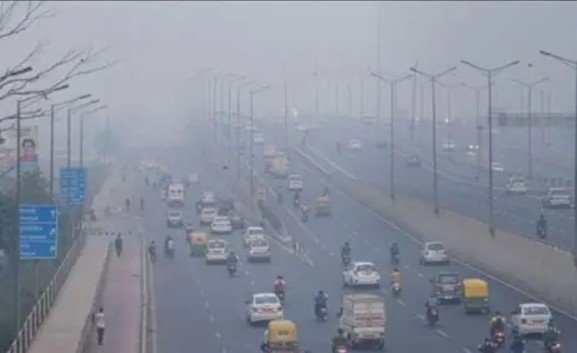
New Delhi, Nov 11: Delhi recorded its coldest morning of the season on Monday, with the minimum temperature plunging to 10.4°C, nearly 4°C below normal, according to the India Meteorological Department (IMD). This marks the first instance this season when the mercury touched the 10°C mark, signalling an unusually early onset of winter.
Sharpest November Temperature Drop in Years
Meteorological data shows Delhi’s temperature has fallen dramatically from 19.4°C on November 1 to 10.4°C on November 10 marking one of the steepest early November drops in recent years. Experts attribute the sharp decline to dry northwesterly winds and clear skies that facilitate rapid heat loss at night.
In comparison, November temperatures in 2022, 2023, and 2024 stayed above 14°C until mid-month. Only 2020 witnessed a similar early chill. IMD forecasts minimum temperatures between 9°C and 11°C through the week, with morning mist, haze, and shallow fog expected.
Air Quality Still ‘Very Poor’ at 362
Despite the chill, pollution levels remained a major concern. The Central Pollution Control Board (CPCB) reported an average Air Quality Index (AQI) of 362, placing the city in the ‘Very Poor’ category, which can trigger respiratory discomfort upon prolonged exposure.
Among city hotspots, Bawana recorded the worst air quality with an AQI of 411 (‘Severe’), followed by Wazirpur at 400.
GRAP Stage III Avoided Amid Slight Improvement
While pollution levels approached the ‘Severe’ threshold, the Commission for Air Quality Management (CAQM) decided not to invoke Stage III of the Graded Response Action Plan (GRAP), citing a marginally improving trend later in the day. Stage III typically comes into force when AQI ranges between 401 and 450.
Anti-Pollution Efforts Show Results
CAQM highlighted ongoing efforts to tackle pollution sources across transport, agriculture, and construction:
Transport: All inter city buses from NCR states must transition to EV/CNG/BS-VI diesel, while BS-III and below commercial vehicles are restricted from entering Delhi since November 1, 2025. By January 1, 2026, only CNG/electric three-wheelers will be allowed in aggregator fleets.
Stubble Burning: Farm fire incidents dropped sharply 35.2% in Punjab (4,062 vs. 6,266 in 2024) and 65.3% in Haryana (333 vs. 959 in 2024).
Industry & Construction: Over 96% of industries have adopted approved fuels, while 1,556 non-compliant units were shut down. Over 30,000 construction inspections led to the closure or fining of 250 sites for violations.
Delhi’s early winter chill, coupled with a stubborn layer of pollution, paints a stark reminder of the city’s dual environmental challenge battling both cold waves and toxic air as the season deepens.

