


DIPR Builds IFFJK-2026 Momentum
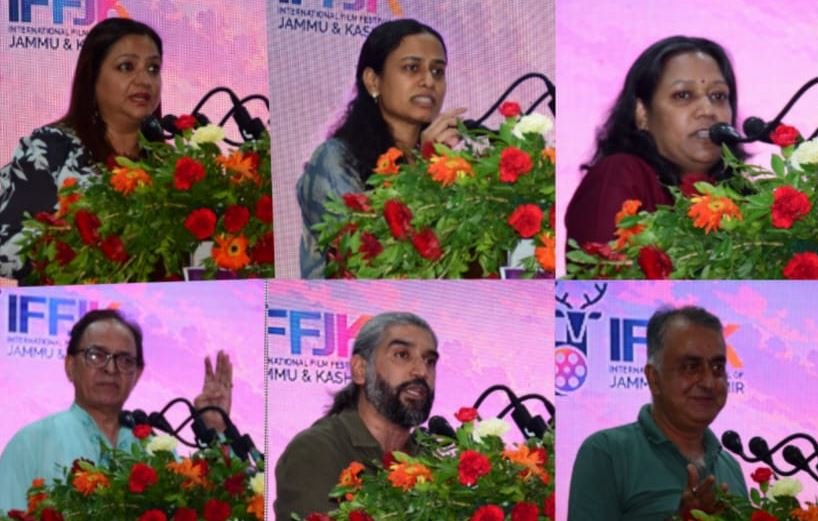
Jammu and Kashmir has lived in the imagination of Indian cinema for generations. Its mountains, lakes, gardens and valleys have framed countless stories, but the people of the region have too often remained outside the larger film economy built around those images. The first International Film Festival of Jammu & Kashmir, IFFJK-2026, offers a chance to change that. It should not simply celebrate films made elsewhere. It should help create an environment where stories can be written, filmed, edited and produced within Jammu and Kashmir itself.
The festival, scheduled from September 7 to 10 across Srinagar, Jammu and Gulmarg, has already attracted entries from more than 80 countries. For a maiden edition, this international response is encouraging and reflects the extraordinary cinematic appeal of the region. Yet global participation should not become merely a number used to measure prestige. It must be converted into professional connections, collaborations, production opportunities and meaningful exposure for local talent. The “Frame by Frame” interaction held in Jammu was therefore significant. Listening to filmmakers, producers, actors, writers and artists before shaping future initiatives is a sensible approach. But consultation becomes valuable only when suggestions find their way into policy. Local artists have repeatedly sought opportunities, visibility and professional access. Their concerns deserve more than acknowledgement. IFFJK should make local participation one of its strongest pillars. Young filmmakers from Jammu and Kashmir require opportunities long before they become established names. The Emerging Filmmakers Competition is a welcome beginning, but aspiring storytellers also need mentorship, small production grants, equipment facilities, script-development workshops and access to experienced professionals who can guide projects from concept to screen. Master classes and technical sessions on editing, sound, animation, artificial intelligence and contemporary filmmaking can broaden exposure. However, a few days of workshops cannot substitute for sustained skill development. Universities and training institutions in Jammu and Kashmir should introduce practical courses in screenwriting, cinematography, acting, post-production, animation, visual effects and digital storytelling so that local youth can participate professionally in an industry increasingly shaped by technology. There is also a substantial economic opportunity. Film production generates demand for hotels, transport, catering, construction, costumes, equipment, logistics and local services. A film shot in Jammu and Kashmir should therefore leave behind more than beautiful images. It should create local employment and circulate spending through the regional economy. That requires a stronger production ecosystem. Filmmakers should have access to simplified permissions, verified location databases, local crew directories and a single-window facilitation mechanism. The easier it becomes to shoot professionally in Jammu and Kashmir, the more likely production houses are to return. Tourism can benefit as well. Cinema has historically shaped perceptions of Kashmir for audiences across generations. A professionally managed film festival can strengthen destination branding and create film-tourism circuits around iconic locations. Jammu, with its own cultural landscape, heritage and stories, should receive equal visibility alongside Kashmir so that the festival genuinely represents the entire Union Territory. Film festivals can become annual celebrations filled with premieres, celebrities and photographs while producing little change after the lights go out. Jammu and Kashmir cannot afford that model. IFFJK should develop into a year-round institution rather than remain a four-day event. A permanent film commission could support production facilitation, training, co-productions, script labs and market linkages. Local writers should also be encouraged to bring the region’s history, literature, folklore and contemporary experiences to the screen rather than allowing Jammu and Kashmir to remain known mainly for its scenery.
In short, the response from over 80 countries gives IFFJK a strong beginning. The administration should now turn that attention into lasting creative capital by creating a local talent registry, annual film grants, professional training programmes, transparent production incentives and a single-window film facilitation system. Each edition should publicly report how many local artists were engaged, productions facilitated and jobs generated. The festival will truly succeed when Jammu and Kashmir is no longer merely where filmmakers come to capture a beautiful frame, but where its own storytellers have the tools, opportunities and confidence to decide what appears inside that frame. Finally, DIPR deserves strong appreciation for taking the bold step of giving Jammu and Kashmir’s cinema community an international platform and placing local storytellers at the heart of the conversation. The real legacy of IFFJK, however, should be built beyond the festival dates through assured space for regional films, transparent local participation norms, film markets, archival preservation, cinema clubs and district-level outreach. If pursued with continuity and conviction, this initiative can turn cultural visibility into creative opportunity and make Jammu and Kashmir a place where its own stories are not merely heard, but valued, preserved and carried to the world.

