


Doctors’ Day 2026 spotlights burnout crisis in India’s healthcare workforce
As the country marked National Doctors’ Day on July 1, tributes to the medical fraternity were accompanied by renewed concern over burnout, emotional fatigue, long hours and rising pressure on healthcare professionals.
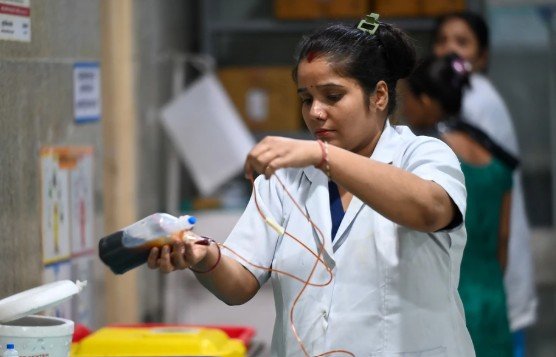
New Delhi, July 1: India marked National Doctors’ Day on Wednesday with messages of gratitude, official tributes and public acknowledgement of the role doctors play in sustaining the country’s healthcare system. But alongside the celebrations, the occasion also brought renewed attention to a growing concern within the medical fraternity: burnout, emotional exhaustion and the mounting pressure under which doctors continue to work across both public and private healthcare settings.
Observed every year on July 1 in memory of legendary physician and former West Bengal Chief Minister Dr Bidhan Chandra Roy, National Doctors’ Day is traditionally a moment to honour medical professionals for their service, dedication and contribution to public health. This year, however, the observance unfolded against a wider conversation about the mental and physical toll that modern healthcare is taking on doctors particularly in an environment shaped by long shifts, staff shortages, administrative burdens, medico legal anxieties and heightened expectations from patients and institutions alike.
Prime Minister Narendra Modi was among those who extended greetings to the medical community, praising doctors for their compassion, hard work and commitment to the nation’s health. In his message, he described doctors as a vital pillar of India’s progress and acknowledged their contribution to building a healthier and stronger country. Such tributes reflected the deep public respect for the profession, especially in a post-pandemic era where doctors have been widely recognised for their role in frontline care.
Yet beyond the ceremonial messages, the day also triggered a more sobering discussion. Reports and testimonies from doctors across the country pointed to a profession increasingly under strain. Many medical practitioners spoke about exhaustion, emotional fatigue and the silent endurance expected of them in a healthcare environment that often celebrates sacrifice but inadequately addresses the human cost of that sacrifice.
The burnout conversation is not new, but it has become harder to ignore. Doctors in India often work in conditions that combine high patient loads with limited support systems. In public hospitals, especially in large urban centres and district level institutions, physicians may see hundreds of patients in a single day, juggle emergency duties with administrative responsibilities and work in understaffed departments where every delay carries consequences. In the private sector, doctors may face productivity pressures, performance metrics, patient satisfaction concerns and increasing paperwork tied to insurance, compliance and digital records.
For young doctors and residents, the stress can be even more acute. Residency training in India is widely recognised as one of the most demanding phases in a doctor’s career. Junior doctors frequently work extended hours with minimal rest, rotating through emergency departments, wards, outpatient units and operation theatres while preparing for exams and managing intense clinical responsibilities. In many institutions, sleep deprivation and emotional stress are treated almost as rites of passage rather than warning signs of an unhealthy system.
Doctors’ Day 2026 has therefore become more than a commemorative occasion; it has also emerged as a moment of reflection on the sustainability of the profession itself. Behind the white coat, many doctors say, is a person coping with grief, fatigue, frustration and the constant pressure to perform flawlessly in a system where mistakes can be costly and compassion can become emotionally draining when repeated day after day without recovery.
One of the key themes highlighted in discussions around this year’s observance was the emotional burden of care. Doctors are expected not only to diagnose and treat illness, but also to communicate bad news, support anxious families, navigate conflict, absorb grief and make decisions under uncertainty. In critical care settings, oncology wards, trauma units and emergency rooms, that emotional labour can be relentless. Over time, the cumulative weight of these experiences can lead to compassion fatigue, depersonalisation and a sense of emotional numbness classic features of burnout.
The pressure is compounded by the changing nature of the doctor patient relationship in the digital age. Doctors now practise in an environment where every clinical decision may be scrutinised online, where misinformation circulates rapidly and where public expectations are often shaped by social media, internet searches and fragmented health advice. Patients and families are more informed than before, which can be positive, but they may also arrive with unrealistic expectations or mistrust shaped by viral narratives about negligence, overcharging or medical misconduct.
This atmosphere can increase stress for practitioners, especially when communication gaps escalate into confrontation. Across the country, doctors’ associations have repeatedly raised concerns about verbal abuse, threats and occasional violence against healthcare workers. Even where physical violence is absent, the fear of conflict can alter how doctors practise, pushing them toward defensive medicine, excessive documentation and heightened anxiety around adverse outcomes.
Another factor adding to burnout is the administrative load placed on clinicians. Modern healthcare increasingly requires doctors to spend time on documentation, digital entry, coding, billing related records, insurance forms and regulatory compliance. While digital systems are meant to streamline care, they can also create new layers of clerical work when poorly designed or inadequately staffed. Many doctors report spending large parts of their day not in direct patient care but in managing the paperwork and screen time that surrounds it.
This is particularly significant in a country like India, where doctor-population ratios, though improving, remain under pressure due to uneven distribution of healthcare workers. Rural and remote areas continue to face shortages of specialists and trained medical staff. Urban tertiary hospitals absorb large patient inflows not only from their own cities but from neighbouring districts and states, placing enormous pressure on doctors in government institutions. In such settings, burnout is not merely an individual mental health issue; it is a systems problem linked to infrastructure, staffing and public health planning.
National Doctors’ Day also brought attention to the contrast between public appreciation and everyday working conditions. During the pandemic, doctors were hailed as heroes, and the medical profession occupied a central place in the public imagination. But many doctors say that once the acute crisis passed, structural concerns such as inadequate rest spaces, poor resident stipends in some states, staffing shortages, delayed promotions, medico-legal vulnerability and lack of mental health support continued largely unresolved.
The issue of mental health among doctors remains especially under-discussed. Medical professionals are trained to care for others, but often struggle to seek help for themselves. Stigma, professional culture and fear of being perceived as weak or incapable can discourage doctors from acknowledging stress, anxiety or depression. In a profession built around competence and resilience, admitting burnout can feel risky, even when the symptoms are severe.
Experts say that the consequences of burnout are not limited to the doctors themselves. Persistent exhaustion and emotional depletion can affect attention, empathy, communication and decision-making, potentially influencing the quality of patient care. Burnout can also contribute to attrition, with doctors leaving clinical practice, shifting to less demanding roles or moving abroad in search of better work-life balance and professional support. For a health system already stretched by demand, that loss can be costly.
This is why the conversation around Doctors’ Day has increasingly shifted from symbolic appreciation to structural reform. Many in the medical community argue that gratitude, while meaningful, must be matched by policy and institutional change. That could include better staffing norms, safer workplaces, mental health services for healthcare workers, clearer grievance redressal mechanisms, limits on excessive duty hours for residents, and administrative support that allows doctors to focus more on care and less on paperwork.
There is also a call for a cultural change within medicine itself. The idea that suffering in silence is a professional virtue is being questioned more openly. Younger doctors, in particular, are pushing for a more humane work culture one that recognises the need for rest, emotional support, mentorship and psychological safety. The challenge is that medical training and hospital hierarchies are deeply entrenched, and reforming workplace culture can be slower than issuing policy statements.
At the same time, public trust in doctors remains one of the strongest foundations of the healthcare system. Despite the pressures and periodic controversies, millions of patients continue to rely on doctors not only for treatment but for reassurance, judgement and hope. That trust is built through daily acts of care often performed under difficult conditions and with little public visibility. Doctors’ Day serves as a reminder of that invisible labour, but it also raises a more difficult question: how long can a system depend on personal sacrifice before it begins to break the people sustaining it?
The answer may lie in treating doctor well being as a healthcare priority rather than a private matter. If the health of the medical workforce deteriorates, the consequences inevitably ripple through the system affecting patient access, continuity of care, training quality and institutional stability. Burnout is therefore not simply a personal issue for doctors; it is a public health concern that deserves serious attention from governments, hospital administrators, regulators and society at large.
This year’s National Doctors’ Day, then, carried two parallel messages. The first was one of gratitude and recognition for a profession that remains central to India’s health security and social well-being. The second was a warning that the people holding up the system are themselves under increasing strain. The tributes were deserved, but so too is the demand for change.
As India expands its healthcare infrastructure, digitises records, builds new medical colleges and pushes toward universal health coverage, the question of workforce sustainability will become even more important. Hospitals can add beds and governments can launch schemes, but a healthcare system ultimately depends on the people who diagnose, treat, counsel and care. If doctors are exhausted, unsupported and emotionally depleted, the system’s capacity to deliver humane and effective care will weaken over time.
National Doctors’ Day 2026 has once again placed that reality in the spotlight. Beyond the greetings, hashtags and ceremonial praise, the day has underscored the need to look inward at the pressures shaping the profession. For many doctors, the greatest tribute may not be a message of thanks but a meaningful effort to make their work safer, more sustainable and more humane. That would not only honour their service it would strengthen the future of healthcare itself.

