


Donald Trump Criticises Allies, Claims Lack of Support in Iran Conflict
US President says key European partners failed to provide expected backing, while NATO chief defends alliance’s logistical and strategic contribution.
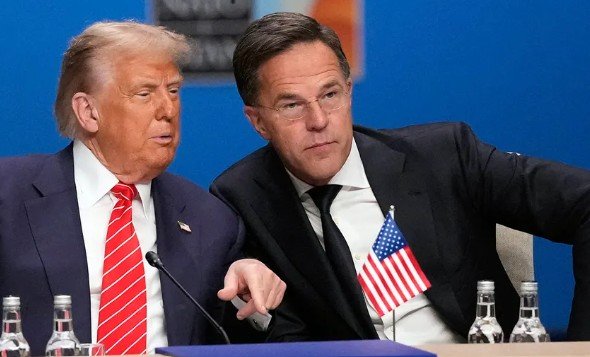
WASHINGTON, June 25: US President Donald Trump on Thursday voiced dissatisfaction with several NATO member nations, claiming that America did not receive the level of support it expected from its allies during the recent conflict involving Iran.
Speaking during a meeting with NATO Secretary General Mark Rutte, Trump said a number of European countries had fallen short in assisting the United States during a period of heightened military tensions in the Middle East. He specifically referred to Italy, the United Kingdom, Germany and France, while also taking aim at Spain.
According to Trump, the burden of managing the crisis rested heavily on Washington despite the broader security implications for the alliance. He argued that stronger and more visible backing from partner nations would have been appropriate given the scale of the confrontation.
“We were let down,” Trump remarked, suggesting that the response from some allies did not match the expectations typically associated with collective security partnerships. He further stated that a clear offer of assistance from allied governments would have demonstrated greater unity during the conflict.
The US President also implied that under similar circumstances, America would have been prepared to provide extensive support to its partners. He noted that stronger solidarity among alliance members could have reinforced the broader strategic message being sent during the crisis.
Despite the criticism, Trump maintained a cordial tone toward NATO leadership and said he continued to hold respect for Secretary-General Mark Rutte. He indicated that cooperation between Washington and the alliance would continue through ongoing consultations and security discussions.
Responding to Trump’s concerns, Rutte defended the role played by European allies and highlighted the extensive coordination that took place throughout the military campaign. He argued that allied nations provided significant operational and logistical assistance that contributed to the overall effort.
The NATO chief said the operation had substantially weakened Iran’s nuclear capabilities and described the outcome as an important strategic development. He added that leaders of the G7 had acknowledged the impact of the military action and viewed it as a significant step in addressing concerns over Tehran’s nuclear programme.
Rutte stressed that the issue at the centre of the conflict was preventing Iran from advancing its nuclear ambitions. He reiterated support for the actions undertaken by the United States and its partners in the region, saying the measures were aimed at addressing a major security challenge.
Highlighting the scale of allied involvement, Rutte noted that thousands of US military aircraft had operated from facilities across Europe during the six-week conflict. He said European nations facilitated crucial military movements, infrastructure access and operational support that enabled the mission to proceed effectively.
He further pointed to adjustments made at several European airports and military installations to accommodate increased defence activity. Facilities across the continent, including those in Eastern Europe, reportedly altered normal operations to assist military logistics during the campaign.
While acknowledging that there may have been isolated concerns or differences among individual countries, Rutte maintained that the alliance as a whole stood alongside the United States throughout the crisis. He emphasised that NATO members had demonstrated practical support behind the scenes, even if political messaging differed from country to country.
The exchange underscored ongoing debates within the alliance over burden-sharing and the extent of support expected from member states during international military operations. Although differences in perception were evident, both leaders signalled their intention to maintain close cooperation on future security challenges.
The discussion comes at a time when NATO members are seeking to strengthen unity amid growing geopolitical tensions and evolving security threats across multiple regions. The remarks from both leaders highlighted the continuing importance of transatlantic coordination while also revealing differing assessments of allied contributions during one of the most significant recent military confrontations involving Iran.

