


Donald Trump Triggers 1974 Trade Law, Plans 15% Global Tariff Hike
US President turns to Section 122 after Supreme Court curbs earlier tariff regime; 150-day measure to apply across all imports
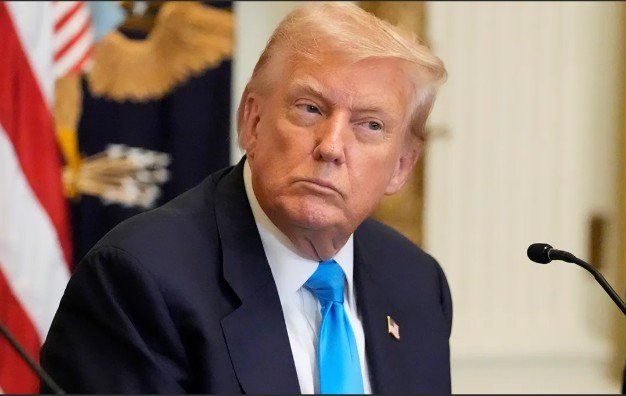
US, Feb 22 : Trump invokes 1974 Trade Act to impose 15% global tariff
US President Donald Trump has raised a newly imposed worldwide tariff to 15 per cent by activating Section 122 of the Trade Act of 1974, according to reports in The Wall Street Journal. The decision comes a day after the Supreme Court of the United States invalidated much of his previous tariff framework.
In a post on Truth Social, Trump said the increase followed what he described as an “anti-American” court ruling. He announced that the earlier 10 per cent rate would be lifted to the maximum 15 per cent level permitted under the statute, effective immediately. He added that his administration would soon outline additional legally sustainable tariff measures.
Section 122 allows the president to impose duties of up to 15 per cent for 150 days without prior congressional approval. The Journal reported that the provision has never previously been used to levy tariffs and requires the measure to apply uniformly to all imports rather than target specific countries.
Court ruling reshapes trade strategy
A separate report by The Washington Post said the Supreme Court, in a 6-3 verdict, rejected the administration’s reliance on the International Emergency Economic Powers Act to justify sweeping import taxes. Chief Justice John G. Roberts Jr., writing for the majority, held that the law did not grant unlimited authority to impose tariffs across products, countries or timeframes.
Trump criticised the ruling publicly, calling it disappointing and expressing support for the dissenting justices. Coverage in The New York Times indicated that the President had initially considered retaining a 10 per cent rate before opting for the statutory ceiling of 15 per cent, signalling his resolve to sustain an assertive trade posture.
The Post noted that the court’s decision struck down duties that had generated over $130 billion in revenue, potentially opening the door to refund claims and heightening uncertainty for businesses and trading partners.
Reports further indicated that imports already subject to national security tariffs such as steel and automobiles would be exempt from the additional levy. In the longer term, the administration may pursue alternative mechanisms, including Section 301 and Section 232 investigations, to craft more durable and targeted trade restrictions.
While the ruling represents a judicial constraint on executive trade powers, Trump’s rapid shift to a different statutory route underscores his intent to keep tariffs central to US economic policy.

