


EC Tells Supreme Court SIR Decisions Were Unanimous, Says Form 6 Remains Unchanged
Election Commission says the electoral roll revision was conducted under constitutional and legal provisions, maintaining that the declaration introduced for verification is separate from the statutory voter registration form.
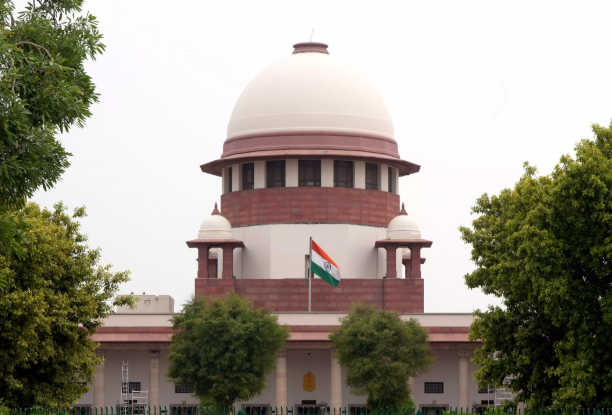
NEW DELHI, Oct 26: The Election Commission (EC) has defended its decision to conduct the Special Intensive Revision (SIR) of electoral rolls before the Supreme Court, asserting that all three orders governing the exercise were approved unanimously by the Commission’s three members.
In a counter affidavit filed before the apex court, the poll panel said the revision process was carried out within its constitutional mandate and that neither the law nor Form 6, the prescribed application for voter registration, had been amended.
The response came amid allegations that the Chief Election Commissioner (CEC) issued decisions concerning the SIR without the approval or knowledge of the other two Election Commissioners. The controversy also centres on claims that changes were made to Form 6 during the revision exercise.
The Commission maintained that its orders dated June 24, 2025, October 27, 2025, and May 14, 2026, received unanimous approval from CEC Gyanesh Kumar and Election Commissioners Sukhbir Singh Sandhu and Vivek Joshi. It added that the counter-affidavit itself had also been approved unanimously.
The poll body further argued that newspaper reports could not be treated as evidence in law and opposed any restriction on the CEC’s functioning on the basis of such reports.
On October 5, the Supreme Court had indicated that it would examine the Commission’s decisions and set aside any found to be contrary to the law. It had issued notices to the Centre and the EC while hearing petitions challenging aspects of the SIR process.
The controversy intensified following a September 25 report by The Indian Express, which stated that Sandhu and Joshi had recorded objections on at least 14 occasions over 10 months concerning SIR-related decisions allegedly issued without their knowledge or recommendation. The allegations prompted opposition parties and the Cockroach Janta Party (CJP) to demand Kumar’s removal.
In its affidavit, the EC said the revision was undertaken in accordance with Article 324 of the Constitution, the Representation of the People Act, 1950, and the relevant rules governing electoral registration.
Addressing the allegations concerning Form 6, the Commission clarified that the declaration introduced for the SIR exercise was a separate document and did not constitute an amendment to the statutory application form. It said the declaration was designed to verify applicants’ eligibility and establish links with electoral rolls prepared during earlier intensive revisions.
The affidavit explained that the declaration format used in subsequent phases had been modified to simplify the process. Applicants were allowed to provide details of their own names or those of relatives appearing in previous electoral rolls, helping authorities verify their records.
According to the Commission, applicants whose details could be matched with earlier electoral rolls could submit the declaration along with Form 6 without furnishing additional documents. Those whose information could not be linked, or who were unable to provide the relevant details, would have to submit supporting documents in accordance with the prescribed requirements.
The poll panel also cited the Supreme Court’s May 27, 2026, judgment in the Association for Democratic Reforms versus Election Commission of India case, arguing that the ruling recognised its authority to establish a documentation framework for electoral roll revision.
The Commission said it had also put arrangements in place to assist electors whose details could not be matched with previous rolls or whose records contained discrepancies. Under the mechanism, booth-level officers would visit applicants’ homes to collect the necessary documents and upload them for examination by electoral registration officers.
The EC further clarified that the SIR exercise would not prevent eligible citizens from seeking enrolment after its completion. The regular mechanism for updating electoral rolls would remain operational under the existing legal framework.
Seeking dismissal of the petitions, the Commission described the allegations against it as misconceived and maintained that the revision exercise and the procedures adopted for it were consistent with the law.

