


End of an Era: Tata Group’s Visionary Leader Ratan Tata Dies at 86
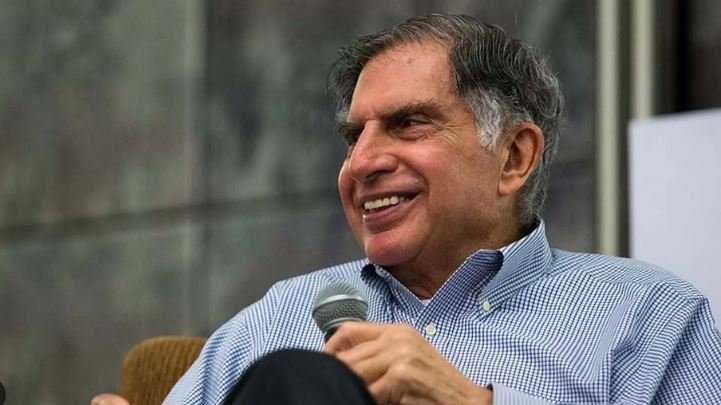
MUMBAI, Oct 9: Tata Sons Chairman, Ratan Naval Tata, passed away on October 9, 2024, at the age of 86 due to age-related complications at Mumbai’s Breach Candy Hospital. His demise marks the end of an era in Indian industry, leaving a legacy that profoundly shaped not only the business world but also the philanthropic landscape of the nation. Widely celebrated for his visionary leadership, Tata transformed the Tata Group from a predominantly India-centric conglomerate into a global powerhouse. His business acumen, combined with his commitment to social welfare, established him as one of the greatest industrialists of modern India.
Born on December 28, 1937, into the prestigious Tata family, Ratan Tata’s early life was shaped by his lineage and the family’s deep involvement in business and philanthropy. Despite challenges such as his parents’ separation when he was just ten, Tata was raised by his grandmother, Navajbai Tata, and went on to receive a well-rounded education. He attended several elite institutions, including Campion School, Cathedral and John Connon School in Mumbai, and Riverdale Country School in New York. Later, he pursued architecture at Cornell University, earning his degree in 1962, and completed the Advanced Management Program at Harvard Business School in 1975.
Ratan Tata began his career at the Tata Group in 1961, working on the shop floor of Tata Steel to gain firsthand experience. His early years were marked by his role in turning around National Radio and Electronics (NELCO), although the business eventually succumbed to economic pressures. His real influence, however, was felt after he took over as chairman of Tata Sons in 1991, succeeding J.R.D. Tata. At that time, the Tata Group was vast but lacked a cohesive global strategy. Under Tata’s leadership, the group underwent a transformation, expanding its international footprint and diversifying its operations.
One of Tata’s most significant achievements was his leadership in global acquisitions that redefined the Tata Group’s business trajectory. Landmark deals included the acquisition of the UK-based Tetley in 2000, followed by the purchase of Corus Steel in 2007 for £6.2 billion, and later the iconic Jaguar Land Rover in 2008 for $2.3 billion. These strategic moves not only enhanced Tata’s reputation as a global business leader but also positioned the Tata Group as a multinational conglomerate with a diverse portfolio. Under his leadership, Tata Consultancy Services (TCS) also went public in 2004, setting a milestone in the Indian IT industry and establishing TCS as a global technology leader.
Tata’s impact was not limited to global acquisitions; he also championed innovative products and solutions aimed at making a difference in Indian society. One of his notable projects was the Tata Nano, an affordable car designed to make vehicle ownership accessible to the average Indian family. Though the project faced challenges, it highlighted Tata’s visionary approach to addressing societal needs through business innovation. By the time he retired in 2012, the Tata Group’s revenue had grown exponentially, with over 65% of its earnings derived from international markets. This growth trajectory underscored his successful strategy of expanding the group’s global presence and influence.
Ratan Tata’s influence extended beyond the boardroom to his significant philanthropic endeavors. Deeply involved with Tata Trusts, one of India’s oldest and most significant charitable organizations, Tata dedicated a substantial portion of his wealth to causes such as education, healthcare, rural development, and disaster relief. His contributions were not only financial; he was personally invested in ensuring that the initiatives had a meaningful impact on society. Notable contributions included a $50 million donation to Cornell University, making him the institution’s largest international donor. His efforts to enhance cancer care facilities in Assam earned him the prestigious Assam Baibhav award in 2021.
Despite his vast influence and the high profile associated with his role, Ratan Tata was known for his humility and simple lifestyle. He led a relatively private life, showing a passion for cars, aviation, and architecture. Although he never married, he remained closely connected to his family, including his brother Jimmy and half-brother Noel Tata. His modest and unassuming demeanor endeared him to many, making him a respected figure not just in business circles but across Indian society.
Even after his retirement in 2012, Tata’s involvement with the Tata Group continued. He briefly returned as interim chairman in 2016 following the removal of Cyrus Mistry. He later passed the leadership baton to N. Chandrasekaran in 2017, ensuring that the group’s legacy and values continued under capable leadership. His role during this period highlighted his commitment to the Tata Group’s stability and growth, even after formally stepping down from his official duties.
Throughout his life, Tata received numerous awards and honors, reflecting his contributions to both business and society. Among these accolades were the Padma Bhushan in 2000 and the Padma Vibhushan in 2008, two of India’s highest civilian honors. International recognition followed, including an honorary knighthood (KBE) from Queen Elizabeth II in 2009 and the Honorary Officer of the Order of Australia in 2023. These awards underscored his influence and contributions not only within India but also on the global stage.
The legacy of Ratan Tata is one of transformative leadership, innovation, and a deep commitment to social responsibility. His life and career have left an indelible mark on the Indian economy and beyond, inspiring millions worldwide. As an industrialist, he demonstrated that businesses could achieve global success while upholding ethical values and contributing to societal welfare. As a philanthropist, he showed that wealth, when used with a sense of responsibility, could create lasting positive change.
Ratan Tata’s passing is a significant loss, but his legacy will continue to guide future generations. His achievements in transforming the Tata Group, his contributions to society, and his vision for an equitable world will remain a source of inspiration.
#RatanTata #TataSons #IndianIndustrialist #BusinessLegacy #Philanthropy #TataGroup #Leadership #RatanTataLegacy #CorporateIndia #TataTrusts #Innovation #IndianEconomy #PadmaBhushan #GlobalBusinessLeader #EndOfAnEra

