


EU Warns of New Terror Threat as Online Youths Are Drawn to Violent Extremism
Authorities say nihilistic violent extremism is increasingly spreading through encrypted online communities, with AI amplifying propaganda, recruitment and attack-related content
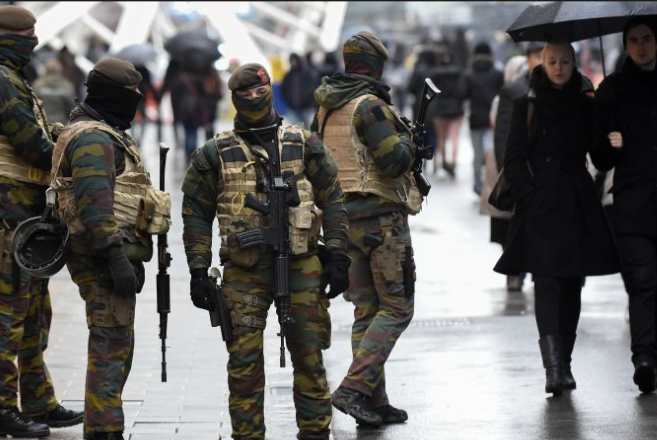
BRUSSELS, Sept 8: Twenty-five years after the September 11 attacks, jihadist organisations remain a serious security concern in Europe, but European authorities are increasingly focused on a newer form of violent extremism that is attracting young people through online communities.
The emerging threat, described by European authorities as nihilistic violent extremism, is characterised by a fascination with violence rather than a clearly defined political or ideological objective.
The scale of the phenomenon remains difficult to determine. However, investigators from nine European countries identified around 4,340 web addresses associated with an online community known as “The COM” during a joint operation in June and July aimed at disrupting its activities.
EU Counter Terrorism Coordinator Bartjan Wegter described the phenomenon as violence pursued for its own sake and warned that online communities can encourage young people to seek recognition and status through increasingly extreme acts.
Young People Increasingly Involved
The concern comes amid continuing terrorist activity across the European Union. According to EU data, 45 terrorist attacks were reported across 10 member states last year. Although none resulted in mass casualties, six people were killed, while authorities prevented or disrupted roughly half of the reported incidents.
Europol recorded 486 arrests linked to suspected terrorist activities across 21 EU member states. Jihadist groups were responsible for 24 of the attacks and accounted for more than 70 per cent of the arrests.
Authorities are particularly concerned about the age profile of those coming under investigation. Around one-third of the people arrested were under 18, most of them boys.
Europol does not maintain separate statistics for nihilistic violent extremism because definitions vary and some incidents may be treated as conventional crimes rather than terrorism.
Violence Used to Gain Online Notoriety
Recent cases have nevertheless highlighted the potential danger.
In Finland, a 16-year-old boy allegedly stabbed three female student classmates in 2025. Investigators said he shared a manifesto through WhatsApp groups, filmed the attack for Snapchat and sought assistance online to preserve and distribute the footage after his release.
According to an EU document examining the emerging threat, the teenager described his intended act as something significant and exciting but did not identify a political motivation.
In Italy, authorities said a 15-year-old boy planned a killing to gain notoriety online. His smartphone reportedly contained images and videos depicting assaults, murders, school shootings and child sexual abuse.
Wegter said such incidents have increased over the past two to three years and are increasingly connected to online networks populated largely by young people.
The concern is that online fascination with extreme violence can eventually translate into real-world attacks, including seemingly random assaults.
Encrypted Platforms Complicate Prevention
European authorities face significant difficulties in identifying potential perpetrators before violence occurs.
Many individuals involved in these communities are young and have no previous criminal record. Their main digital activity may take place behind encrypted platforms, leaving investigators with limited warning signs.
The online group 764 has emerged as one of the networks attracting particular attention. Founded by American Bradley Cadenhead, the group has continued operating despite its founder serving an 80-year prison sentence for child pornography and sexual offences.
A 20 year old man in Germany believed to have been a leading member of 764 faced 123 charges last year involving alleged acts including murder, rape and child sexual abuse, according to an EU document.
AI Amplifying Extremist Content
European authorities say the threat landscape has changed dramatically since the September 11 attacks in 2001.
While the earlier generation of jihadist terrorism relied heavily on physical networks and training camps, today’s emerging threats can develop almost entirely online before spilling into the real world.
Wegter said the internet remains too permissive and can function as an environment where different forms of criminality and extremism intersect.
Europol has also warned that criminals and extremists are increasingly using artificial intelligence to produce and distribute propaganda. Deepfakes, memes and GIFs can be used to spread violent material, while AI-powered bots can increase the reach of recruitment campaigns and extremist messaging.
AI tools are also reportedly being used to research targets and prepare attacks.
Authorities say the growing use of technology means law enforcement agencies need appropriate capabilities to investigate threats that increasingly originate and develop in digital spaces.
Europe Seeks Greater International Cooperation
Wegter stressed that combating the evolving threat will require stronger cooperation between European authorities and countries outside the EU.
Online networks frequently operate across borders, while material hosted or amplified in one country can influence individuals elsewhere.
European officials therefore argue that international cooperation, improved digital investigations and closer engagement with technology platforms will be essential to prevent online radicalisation from turning into real-world violence.
The challenge for authorities is to strengthen their ability to detect genuine threats while protecting fundamental rights to privacy and private communication.

