


Europe Heatwave Turns Deadly as Record Temperatures Trigger Health Emergency
Britain, France, Switzerland and several European nations battle unprecedented June heat, prompting school closures, health alerts and emergency measures.
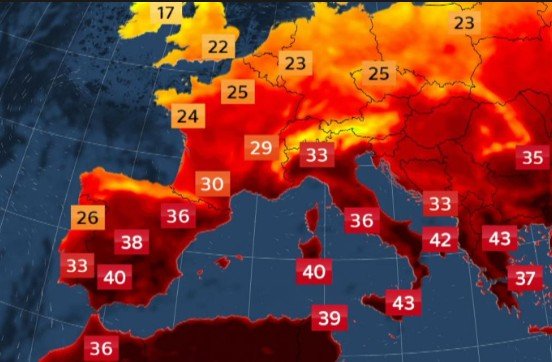
LONDON/PARIS, Jun 26: Europe is witnessing one of its most severe early summer heatwaves in recorded history, with several countries registering all time June temperature records as governments scramble to protect millions of residents from dangerous heat.
The extreme weather has engulfed large parts of Western and Central Europe, pushing temperatures beyond 40 degrees Celsius in several regions. Britain and Switzerland recorded their hottest June days on record, while France, Italy, Spain, Germany and the Netherlands issued widespread heat alerts amid growing concerns over public health, infrastructure and agriculture.
Authorities across the continent have described the situation as a major public health emergency. Hospitals have reported a sharp increase in heat related illnesses, while emergency services are responding to dehydration, heatstroke and respiratory complications, particularly among elderly people, children and those with pre-existing medical conditions.
In the United Kingdom, meteorological authorities confirmed that temperatures climbed above previous June records, forcing local administrations to activate emergency response plans. Schools in several regions suspended classes or shifted to remote learning to protect students and staff from the intense heat.
France experienced similar disruptions, with temperatures exceeding 40 degrees Celsius in several areas. Thousands of schools either closed completely or modified examination schedules as classrooms became unsafe. Local authorities also imposed restrictions on outdoor activities during peak afternoon hours.
Switzerland also witnessed unprecedented June temperatures, with weather stations recording historic highs. Officials urged residents to remain indoors during the hottest parts of the day and advised employers to protect outdoor workers.
Italy introduced temporary bans on outdoor construction and agricultural work in several regions where temperatures crossed dangerous thresholds. Labour unions welcomed the measures, citing the increasing risks faced by workers exposed to prolonged heat.
Spain continued to battle extreme temperatures, with meteorological agencies warning that prolonged heat could significantly increase wildfire risks across forests and rural landscapes. Emergency firefighting units remained on high alert throughout the affected provinces.
The heatwave has also placed enormous pressure on Europe’s electricity networks. Electricity demand surged as households and businesses relied heavily on air conditioning systems. Several countries warned of possible strain on power infrastructure if the heat persisted.
Agricultural experts expressed concern over the impact on crops, livestock and water resources. Farmers across France, Spain and Italy warned that prolonged high temperatures could reduce yields of cereals, fruits and vegetables while increasing irrigation costs.
Environmental agencies reported declining river levels and rising water temperatures, creating challenges for industries dependent on freshwater supplies. In France, authorities temporarily adjusted operations at certain nuclear power facilities because warmer river water limited cooling efficiency.
Public transport systems also experienced disruptions as railway tracks expanded under extreme temperatures while road surfaces softened in some locations.
Tourist destinations across Europe faced mixed situations. While beaches remained crowded, officials repeatedly urged visitors to avoid direct sunlight during afternoon hours and stay adequately hydrated.
Climate scientists noted that heatwaves are becoming more frequent, longer lasting and more intense because of global climate change. Researchers said weather patterns trapping hot air over Europe significantly amplified the impact of already rising global temperatures.
International climate experts stressed that such extreme weather events, once considered rare, are increasingly becoming part of Europe’s summer climate.
Health agencies advised citizens to drink sufficient water, avoid unnecessary travel during peak heat hours, wear light clothing and regularly check on elderly neighbours and relatives.
The World Meteorological Organization said governments must continue investing in heat preparedness, early warning systems and climate adaptation strategies as extreme weather events become more common.
Emergency authorities continue monitoring weather developments, warning that several regions may experience additional temperature records before conditions gradually improve.
The ongoing heatwave has once again highlighted the growing challenges posed by climate change and the urgent need for stronger global efforts to reduce greenhouse gas emissions while strengthening resilience against increasingly frequent climate-related disasters.

