


Explosions Shake Tehran as Israel-U.S. Strikes Intensify and Bombing Campaign Seen Escalating
Missile exchanges escalate Middle East conflict, global energy markets jitter as oil prices surge
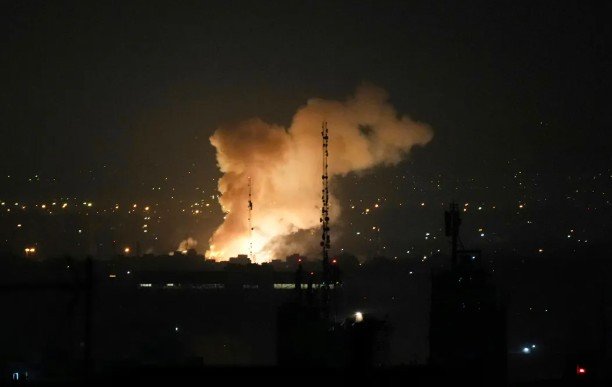
Dubai, Mar 7: Explosions rocked Tehran early Saturday, sending thick plumes of smoke into the sky, as the Iranian capital came under a wave of Israeli strikes. Tehran responded by firing missiles toward Israel, while the United States warned that the bombing campaign in the weeklong conflict would intensify to its most severe level yet.
The US administration, under President Donald Trump, approved a USD 151 million arms sale to Israel, with Trump asserting that he would not negotiate with Iran without its “unconditional surrender.” In response, Iran’s UN ambassador vowed that Tehran would take “all necessary measures” to defend the nation.
Associated Press footage captured bright flashes and smoke over western Tehran, with the Israeli military reporting efforts to intercept incoming Iranian missiles. The conflict’s reach extended to the Gulf region, with sirens sounding in Bahrain following an Iranian attack. Saudi Arabia intercepted drones and a ballistic missile targeting its Shaybah oil field and Prince Sultan Air Base, which hosts US forces.
The US and Israel have focused strikes on Iran’s military infrastructure, leadership positions, and nuclear facilities. Shifting war objectives have included discussions of regime change, though the timeline and scope remain uncertain. Reports indicate that Russia has provided Iran with intelligence that could assist attacks against US forces, following a call between President Vladimir Putin and Iranian President Masoud Pezeshkian.
Amid the chaos, investigations suggest that a recent explosion killing dozens of Iranian students at a school may have resulted from US airstrikes targeting an adjacent Revolutionary Guard compound.
The conflict has triggered global energy concerns. Qatar’s Energy Minister Saad al-Kaabi warned that the war could disrupt Gulf energy exports, potentially pushing oil prices to USD 150 per barrel. Benchmark US crude surpassed USD 90 on Friday for the first time in over two years, reflecting fears of a wider economic fallout.
The situation shows no signs of abating as both sides maintain aggressive postures, heightening regional tensions and international economic uncertainty.

