


FM Sitharaman to Table Taxation and Other Laws (Amendment) Bill in Lok Sabha Today
Finance Minister Nirmala Sitharaman will introduce a key taxation reform Bill, seek approval for excess expenditure, and table an explanatory statement on the Income-tax Ordinance during Tuesday's parliamentary proceedings.
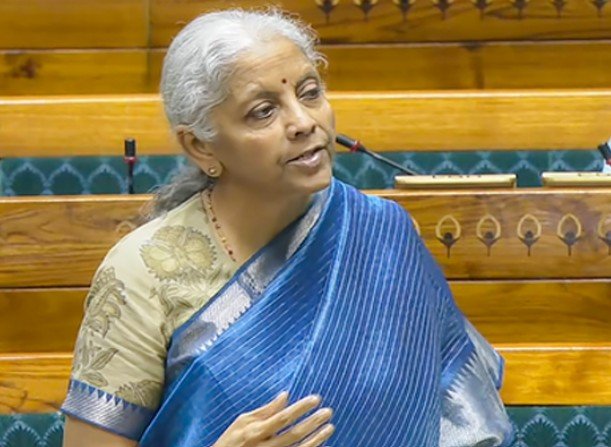
New Delhi: The Lok Sabha is set for a busy legislative day on Tuesday as Union Finance Minister Nirmala Sitharaman will introduce the Taxation and Other Laws (Amendment) Bill, 2026, alongside several important financial and legislative measures aimed at strengthening India’s fiscal and legal framework.
According to the revised List of Business, the proposed legislation seeks to amend three key laws—the Payment and Settlement Systems Act, 2007, the Income-tax Act, 2025, and the Finance Act, 2026. The proposed amendments are expected to streamline taxation-related provisions while addressing evolving requirements in the country’s financial and payment ecosystem.
In addition to introducing the Bill, Sitharaman will table an explanatory statement in both Hindi and English explaining the circumstances that necessitated the promulgation of the Income-tax (Amendment) Ordinance, 2026 (No. 2 of 2026) before Parliament could consider the legislation. The statement is intended to provide the rationale behind the government’s decision to enact the ordinance as an immediate measure.
Following the introduction of the proposed legislation, the House will deliberate on the Demands for Excess Grants for the financial year 2022-23. The discussion relates to government expenditure that exceeded the amounts originally approved by Parliament during the previous financial year.
After the debate concludes, the Finance Minister will seek parliamentary approval through the Appropriation (No. 3) Bill, 2026, which authorises expenditure incurred in excess of sanctioned allocations for the financial year ending March 31, 2023. The Bill is a constitutional requirement to regularise such additional spending.
Apart from financial business, Parliament will also review the implementation of recommendations submitted by various Department-related Parliamentary Standing Committees. Union Minister Jitin Prasada will brief the House on action taken regarding recommendations linked to the Department for Promotion of Industry and Internal Trade (DPIIT).
Minister of State Chandra Sekhar Pemmasani is scheduled to present the government’s response to recommendations concerning the Department of Land Resources. Meanwhile, Minister of State Bhagirath Choudhary will outline progress made on recommendations related to the Department of Agricultural Research and Education.
The Lok Sabha will also consider the Bankers’ Books Evidence Bill, 2026, a proposed law designed to modernise legal provisions governing banking records. The legislation seeks to align evidentiary standards with the growing use of digital banking and electronic financial transactions, reflecting the changing nature of India’s banking sector.
The day’s parliamentary agenda will further include matters raised under Rule 377, after which the House is expected to continue with the remaining legislative business scheduled for the session.
The introduction of the taxation reform legislation, combined with discussions on public expenditure and banking law modernisation, highlights the government’s focus on updating financial governance and ensuring greater efficiency in the country’s fiscal administration.

