


Gadkari Proposes Water Grid, River Dredging Plan to Make Bihar Flood-Free
The Union minister also outlined major road infrastructure projects and urged greater use of technology and waste to wealth initiatives to support the state's economic growth.
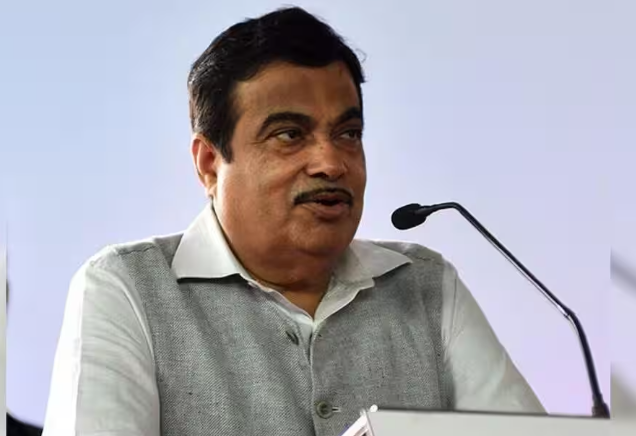
PATNA, Oct 1: Union Minister Nitin Gadkari on Thursday called for an integrated water management strategy to address Bihar’s recurring flood problem, proposing a water grid, river dredging and protective structures along waterways.
Speaking at the ‘Bihar Investor Summit 2026: The Emerging Investment Destination of India’ in Patna, Gadkari said innovative policies, modern technology and long-term planning could help control excess water flow while keeping costs manageable.
He suggested developing a water grid similar to the country’s highway and power networks. Under the proposed system, surplus water could be transferred between river basins to improve water management across the state.
Gadkari also advocated large scale dredging of rivers to increase their carrying capacity and lower flood risks. He said he had discussed the proposal with National Highways Authority of India officials and offered to undertake dredging without charging the state government.
According to Gadkari, the silt removed from rivers could be utilised in highway construction, potentially reducing the cost of both dredging and infrastructure development. He said Bihar could address its flood-related challenges more efficiently if the state government permitted such an approach.
The minister further suggested constructing embankments and protective walls to create deeper water channels. Apart from helping regulate floodwaters, he said such waterways could strengthen inland transport and reduce logistics expenses for businesses and industries.
Recalling his tenure as Union water resources minister, Gadkari referred to a proposed dam project on the Kosi River in Nepal. He said the project could have substantially reduced Bihar’s exposure to floods but could not progress because of land acquisition issues and other factors.
Gadkari also detailed the Centre’s infrastructure plans for Bihar, saying highway projects worth Rs 3.88 lakh crore were planned across the state. The government is targeting completion of works valued at about Rs 5 lakh crore during its current tenure, he said.
National highway projects covering 2,910 km have already been completed at a cost of nearly Rs 33,000 crore, while construction covering another 1,878 km is in progress with an investment of approximately Rs 65,100 crore. Future projects are expected to account for nearly Rs 3.25 lakh crore, according to the minister.
The national highway network in Bihar has expanded from about 4,615 km in 2014 to nearly 6,500 km at present, Gadkari said.
Among the major projects, the 440-km Ram-Janki Marg, involving an estimated expenditure of Rs 5,440 crore, is around 27 per cent complete and is scheduled to be finished by November 2028.
Work is also progressing on projects worth nearly Rs 22,000 crore under a corridor linking important Buddhist sites, with about 90 per cent of the construction completed.
The Gorakhpur-Siliguri high-speed corridor, estimated at Rs 72,000 crore, is another significant connectivity project. Gadkari said around Rs 52,000 crore of the investment was expected to be spent in Bihar, where 410 km of the 526-km corridor would pass.
He added that the Patna-Purnia Greenfield Expressway proposal had been forwarded for Cabinet approval. The proposed 218-km Buxar-Bhagalpur high-speed corridor, costing around Rs 10,000 crore, would include both brownfield and greenfield stretches.
A proposal for the 13.4-km Anisabad-Didarganj project in Patna, estimated to cost Rs 8,500 crore, has also been sent for Cabinet consideration, Gadkari said.
Beyond transport and water infrastructure, the minister highlighted the potential of converting waste into commercially useful resources. He said the ‘Waste to Wealth’ approach, supported by innovation, knowledge and technology, would play an important role in future development.
Gadkari cited projects involving sludge-to-water treatment and the conversion of organic waste into CNG as examples of how waste could be turned into economic assets. He estimated that the solid and liquid waste management sector alone could develop into an economy worth around Rs 5 lakh crore.
Chief Minister Samrat Choudhary, Road Construction Minister Kumar Shailendra and Industries Minister Shreyasi Singh were among those present at the event.

