


Gehlot Slams Jaishankar’s ‘Dalaal’ Remark, Calls It Highly Inappropriate
Congress veteran questions language used by External Affairs Minister, raises concerns over global tensions and diplomatic tone
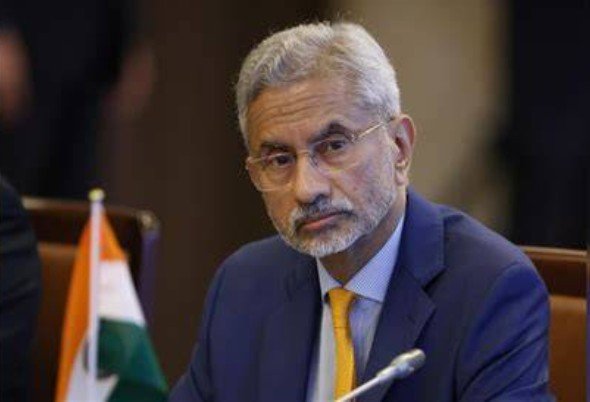
India, March 27: Senior Congress leader Ashok Gehlot on Thursday strongly criticised External Affairs Minister S. Jaishankar for using the term “dalaal” during an all party meeting on the West Asia crisis, calling the remark inappropriate for someone holding such a key diplomatic position.
Addressing the media, Gehlot said that the choice of words by the external affairs minister was not in line with the standards expected in international diplomacy. “No external affairs minister should use such language while referring to another nation. If it was a slip of the tongue, it should be acknowledged with regret; otherwise, it invites serious criticism,” he stated.
Jaishankar had made the comment while responding to discussions on Pakistan’s role in mediation efforts related to the ongoing West Asia conflict. During the meeting held in the Parliament complex, he remarked that India is “not a dalaal nation,” while asserting that Pakistan’s involvement in such matters is not new and has historically been influenced by the United States.
Taking exception to this, Gehlot questioned the appropriateness of accusing any country of “dalaali,” stressing that such rhetoric could undermine the broader objective of peace. He emphasised that at a time when global tensions are rising, nations should focus on dialogue and stability rather than provocative language.
The former Rajasthan chief minister also raised concerns about Pakistan’s claims of mediation, recalling past conflicts including the 1965 and 1971 wars, as well as the Kargil conflict, where India emerged stronger. He pointed out the contrast between India’s position and Pakistan’s current diplomatic stance, suggesting that the evolving global scenario has led to unusual developments.
Gehlot further highlighted the fragile international environment, warning that unchecked conflicts could escalate into larger crises. He urged governments worldwide to prioritise peace efforts and maintain responsible communication.
Commenting on domestic preparedness, Gehlot said the Centre’s response to the West Asia crisis appeared slow despite earlier warnings. He noted that the opposition had flagged potential challenges in advance and stressed the need for better planning and public reassurance during such situations.
He also referred to Prime Minister Narendra Modi’s recent address in Parliament, suggesting that the level of preparedness did not fully reflect the seriousness of the situation.
In addition, Gehlot expressed concern over the conduct of US President Donald Trump, describing his remarks about Prime Minister Modi as “difficult to understand.” He said such inconsistent statements were unusual in diplomatic relations between major nations.
Gehlot concluded by pointing to broader global concerns, citing instances of international instability and the lack of unified global response to certain incidents, which he said reflects a worrying trend in world affairs.

