


Gold Could Reach $5,000 an Ounce on Strong Central Bank and Asian Demand
NDB Wealth Management expects gold to trade between $4,200 and $5,000 per ounce over the next 12–24 months, supported by reserve diversification, strong Asian investment flows and limited growth in mine supply.
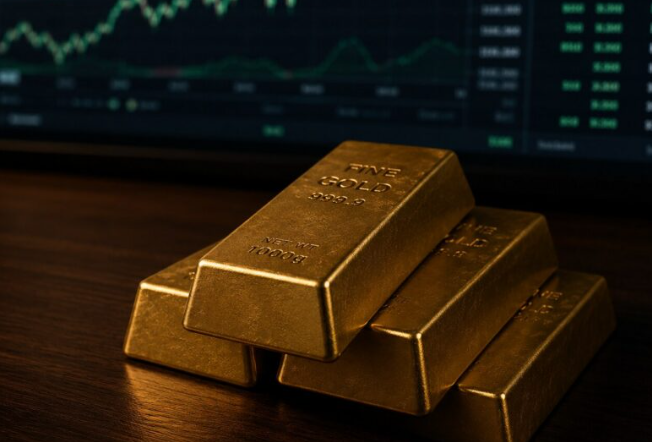
NEW DELHI: Gold prices could remain elevated over the next two years, potentially reaching $5,000 per ounce, as central banks continue to diversify their reserves and Asian investors increase their exposure to the precious metal, according to a report by NDB Wealth Management.
Gold was trading at $4,118.91 per ounce at the time of reporting, down $5.82, or 0.14 per cent. However, the report suggested that the broader outlook remains positive despite short-term price fluctuations and economic conditions that have traditionally weighed on bullion.
The report highlighted a shift in the factors influencing gold prices, with official-sector purchases and demand from Asian investors increasingly offsetting the effects of US interest rates and currency movements.
Gold has demonstrated resilience even amid elevated US borrowing costs, persistent inflation and a stronger dollar, indicating that investors may be placing greater emphasis on the metal’s role as a store of value and a means of diversifying financial assets.
Central banks remain key buyers
Central banks continued to accumulate gold during the second quarter of 2026, purchasing 289 tonnes, according to the report. Their buying reflects a broader strategy to diversify national reserves and reduce reliance on the US dollar.
The World Gold Council has projected central bank purchases of approximately 850 tonnes for the full year, close to the 863 tonnes recorded in 2025.
Unlike investors seeking short-term gains, monetary authorities generally consider gold a strategic reserve asset. Its appeal is linked to its role in diversifying portfolios, reducing exposure to individual currencies and providing an alternative during periods of financial or geopolitical uncertainty.
NDB Wealth Management expects this structural demand to remain an important source of support for prices, even if movements in US monetary policy produce temporary volatility.
Asian investment demand strengthens
Investment flows from Asia have emerged as another important driver of the market. Asian gold funds attracted nearly 70 tonnes in net inflows during the first half of 2026, marking their strongest first-half performance on record, the report said.
North American gold funds, by comparison, experienced outflows of around 61 tonnes over the same period. The difference highlights the contrasting investment patterns between the two regions.
Higher US real yields and a stronger dollar can make non-yielding assets such as gold less attractive to some Western investors. However, sustained buying across Asian markets has helped offset part of that pressure.
The report’s assessment suggests that regional investment preferences and demand for portfolio diversification are becoming increasingly important in determining bullion’s direction.
Limited supply supports the outlook
Constraints on gold production could further underpin prices. Global mine output is forecast to increase by just 2.4 per cent to 3,907 tonnes in 2026.
Mining companies cannot rapidly expand production in response to rising prices because developing new deposits involves lengthy exploration, regulatory approvals, infrastructure investment and substantial capital expenditure.
Higher operating costs can also limit the pace at which producers increase output. Consequently, even when market prices rise, additional supply may take considerable time to reach the market.
With central banks and investors continuing to purchase gold, relatively modest production growth could help maintain a balance that supports elevated prices.
Price scenarios depend on global developments
NDB Wealth Management’s base-case scenario, assigned a 50 per cent probability, places gold within a range of $4,200 to $5,000 per ounce over the next 12–24 months.
The report identified several factors that could influence whether prices move towards the upper or lower end of that range. Concerns about US government finances, doubts over the Federal Reserve’s independence and geopolitical uncertainty could encourage further investment in gold.
Conversely, a lasting peace in the Gulf, easing inflation and a pause in US interest-rate increases could reduce demand for defensive assets and put downward pressure on prices.
The trajectory will also depend on whether central bank purchases and Asian investment inflows remain strong enough to counter changes in Western demand and currency markets.
The report’s outlook points to a market increasingly shaped by reserve diversification and longer-term investment decisions rather than interest-rate expectations alone. However, shifts in monetary policy, geopolitical conditions and investor sentiment could still produce significant price swings.
While the $5,000-per-ounce level remains a potential target rather than a certainty, NDB Wealth Management expects sustained official-sector buying, resilient Asian demand and limited supply growth to remain central to gold’s performance over the coming months.

