Google Pledges $5 Million to IIT Kharagpur to Strengthen AI Research and Education
The funding will support research in Indic languages, agriculture, materials science and educational technology, alongside AI training and infrastructure development at the premier institute.
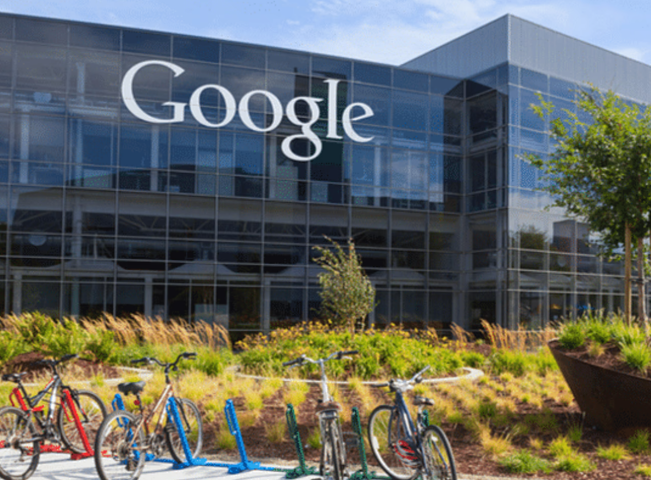
KOLKATA, Nov 22: Global technology major Google has pledged $5 million to the Indian Institute of Technology (IIT) Kharagpur to accelerate advanced artificial intelligence (AI) research, expand academic opportunities and strengthen the country’s pipeline of technology professionals.
The announcement was made during the institute’s platinum jubilee celebrations on November 21, marking an important development in its efforts to expand research capabilities and strengthen collaboration between academia and the global technology industry.
IIT Kharagpur Director Suman Chakraborty confirmed the funding while speaking to PTI, acknowledging the contribution of Google and the role played by the institute’s alumnus, Sundar Pichai, who currently serves as the chief executive officer of Google and its parent company, Alphabet.
Chakraborty expressed gratitude for the financial commitment and said Pichai had assisted the institute in securing the support.
The funding is expected to be directed towards three major areas: advanced AI research, educational opportunities and institutional capacity building. The initiative will focus on developing practical technological solutions while providing students, faculty members and researchers with greater exposure to emerging developments in artificial intelligence.
One of the principal research priorities will be the application of AI in Indic languages, agriculture, materials science and educational technology. These fields have significant relevance for India, where technological innovation is increasingly being explored as a means of addressing challenges related to language accessibility, agricultural productivity, scientific research and the delivery of education.
Focus on research with practical applications
The emphasis on Indic languages is particularly important for a country with extensive linguistic diversity. Although digital technologies have expanded rapidly, language barriers continue to restrict access to information and online services for sections of the population.
AI-based language technologies could help improve translation, speech recognition, digital communication and access to educational resources in regional languages. Research in this area may also support the development of applications that allow people to interact with digital platforms without depending exclusively on English.
For educational institutions, such developments could create opportunities to make learning material more accessible to students from different linguistic backgrounds.
Agriculture is another priority area identified under the collaboration. Artificial intelligence is increasingly being explored for applications such as crop monitoring, weather-related decision support, identification of plant diseases and efficient management of agricultural resources.
Research in these areas could help develop tools that provide farmers and agricultural researchers with better information for decision-making. However, the practical value of such technologies will depend on their affordability, accessibility and suitability for local farming conditions.
The materials science component is expected to encourage research into advanced materials and their potential applications across manufacturing, energy, engineering and other industrial sectors.
Educational technology will form another important part of the research programme. AI-based systems have the potential to support personalised learning, improve access to educational resources and assist teachers in identifying students’ learning requirements.
The collaboration could therefore connect advanced technological research with practical needs in classrooms and higher education institutions.
Expanding AI education and training
Apart from research funding, Google will support the expansion of AI training and curriculum development for students, faculty members and teachers.
This component is significant as artificial intelligence becomes increasingly relevant across professional disciplines. Knowledge of AI is no longer restricted to computer science and engineering students, with applications emerging in healthcare, business, agriculture, law, education and scientific research.
The availability of specialised training could help students understand the principles behind emerging technologies and develop the skills required to work with AI-based systems.
Faculty development will also be important in ensuring that technological advancements are reflected in academic programmes. Teachers and researchers need opportunities to update their knowledge, understand new tools and incorporate relevant applications into classroom instruction and research activities.
The initiative may also encourage interdisciplinary learning by bringing together researchers from different academic backgrounds to work on common technological challenges.
However, the institute has not yet specified the individual courses, research projects or implementation schedules that will be supported through the funding.
Strengthening campus infrastructure
The third component of the funding will focus on building AI capacity across the IIT Kharagpur campus.
This includes support for developing technological frameworks, infrastructure and tools that can strengthen the institute’s research ecosystem.
Access to suitable computing resources and research infrastructure is essential for institutions working on advanced AI applications. Such facilities can help researchers experiment with complex models, process large datasets and develop technologies that can be tested in practical settings.
Institutional capacity building can also create opportunities for collaboration between students, academic departments, research laboratories and industry partners.
The funding is expected to support a broader environment in which research ideas can move from academic investigation towards practical applications.
For students, exposure to such an ecosystem could provide opportunities to participate in research projects, develop technical expertise and understand how emerging technologies are used to solve real-world problems.
Additional support from another alumnus
The announcement also coincided with another major contribution to the institute’s development.
IIT Kharagpur Director Suman Chakraborty said alumnus Jyoti Chatterjee had pledged an additional $5 million as seed endowment for developing a next-generation data initiative.
The two contributions together represent a substantial commitment towards strengthening the institute’s research and technological capabilities.
While Google’s funding is specifically directed towards AI research, education and campus capacity building, the additional endowment is intended to support a next-generation data initiative.
The contributions reflect the potential role of alumni networks and corporate partnerships in supporting the development of higher education institutions.
Financial assistance from industry can provide universities with additional resources to explore emerging research areas, improve infrastructure and offer students opportunities to engage with technologies that are shaping the global economy.
At the same time, sustained academic leadership and independent research priorities will remain important in ensuring that such collaborations deliver meaningful educational and scientific outcomes.
Sundar Pichai’s connection with IIT Kharagpur
The partnership also highlights the continuing association between IIT Kharagpur and one of its most prominent former students.
Pichai graduated from the institute with a degree in metallurgical engineering before pursuing further studies at Stanford University and the Wharton School of the University of Pennsylvania.
He joined Google in 2004 and subsequently rose through the organisation’s leadership structure, becoming its chief executive in 2015. He also became CEO of Alphabet in 2019.
His professional journey has frequently drawn attention to the contribution of Indian higher education institutions in preparing graduates for leadership positions in international technology companies.
The latest funding commitment creates another link between his professional achievements and the institution where he began his academic journey.
A wider opportunity for Indian higher education
The development comes at a time when Indian universities and technical institutions are seeking to strengthen their research capabilities in artificial intelligence, semiconductor technology, data science and other emerging fields.
The growing importance of AI has increased the demand for specialised skills, research infrastructure and partnerships between universities and technology companies.
Institutions are also facing the challenge of ensuring that students receive education that remains relevant to changing industry requirements.
The IIT Kharagpur initiative could contribute to these objectives by combining research funding, curriculum development and institutional infrastructure support.
Its focus on Indian languages, agriculture and educational technology also provides an opportunity to develop applications that address domestic requirements rather than concentrating exclusively on technologies designed for international markets.
For India, the ability to develop AI systems suited to local languages, industries and social conditions could become an important element of its broader technological ambitions.
The collaboration’s success will ultimately depend on how effectively the pledged resources are translated into research outcomes, educational opportunities and practical innovations.
With support from Google and its alumni community, IIT Kharagpur is seeking to strengthen its position as a centre for advanced technological research while preparing students and researchers for an increasingly AI-driven world.