


Governance With a Heart
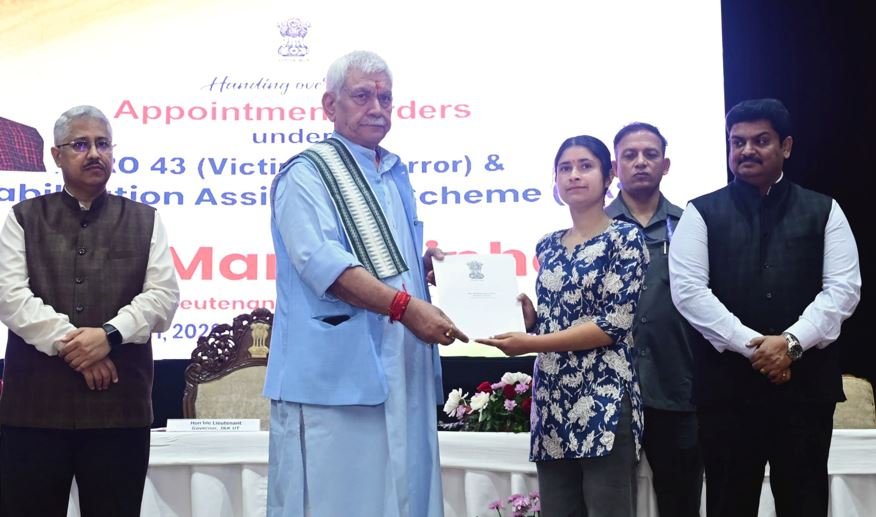
The recent outreach to the families of terror victims in Jammu carries a significance that goes beyond the formal distribution of appointment letters. It reflects an effort to respond to pain that has remained with many families for years, often quietly and without sufficient recognition. When public employment is extended to the next of kin of those who lost their lives to terrorism, as well as to the families of government employees who died in service, the gesture assumes a wider meaning. It becomes not only a measure of economic support but also an expression of acknowledgment, compassion, and institutional responsibility.
For families affected by terrorism, the loss they endure is never limited to one tragic moment. It often changes the entire course of life. The absence of a loved one brings emotional grief, financial uncertainty, and social hardship, all of which can continue for years. In such circumstances, support from the state becomes important not only in practical terms but also in moral terms. A government appointment cannot erase suffering, nor can it replace what has been lost, but it can provide stability, reassurance, and a sense that the sacrifice and pain of these families have not been forgotten. This is why such an initiative deserves to be seen in the broader framework of rehabilitation and restorative justice. In conflict-affected regions, justice is not fulfilled only when the guilty are identified and punished. It must also include meaningful care for those who were left behind. Victim families need recognition, support, and pathways to rebuild their lives with dignity. Public employment, in that sense, becomes one part of a larger process of social restoration. It offers a means through which the administration can extend both relief and respect. The value of this kind of assistance is especially important in a place like Jammu and Kashmir, where many families have lived through years of violence, uncertainty, and personal tragedy. In such an environment, governance cannot be limited to administration in the narrow sense. It must also respond to human suffering with sensitivity and continuity. Welfare measures for terror victim families should therefore be seen as part of a compassionate and responsible approach to public administration, one that recognizes that development and justice must move together. There is also a broader lesson in this development. For a long time, many victim families remained at the edges of public attention. Their stories were known, yet their needs did not always receive the sustained institutional response they required. Any effort to correct that imbalance is important because it signals a shift from neglect to recognition. It suggests that the State is willing to engage not only with policy and procedure but also with the human consequences of conflict. That change in approach matters deeply, especially to those who have waited for years to be seen and heard with dignity. At the same time, rehabilitation should be understood as a continuing responsibility rather than a single gesture. Employment support is valuable, but families affected by terrorism may also require educational assistance, psychological support, legal facilitation, and social inclusion. Their well-being depends on whether the system remains engaged with them over time. A truly meaningful policy is one that accompanies people beyond the moment of announcement and helps them regain confidence in everyday life. Such initiatives also remind society of the importance of collective memory. The lives lost to terrorism should not fade into silence. The families left behind deserve not only sympathy but sustained solidarity. Remembering them is essential because it affirms the values of justice, humanity, and moral responsibility. It tells those who suffered that their pain is neither invisible nor forgotten. Seen in this light, the recent appointment outreach in Jammu is a thoughtful and humane step. It may not undo the wounds of the past, but it can help bring some measure of stability and dignity to families who have carried those wounds for far too long. In regions touched by conflict, even such measured acts of support can become meaningful steps toward healing, trust, and social restoration.
The Lieutenant Governor and the Jammu and Kashmir administration deserve high appreciation for translating compassion into concrete action with seriousness, sensitivity, and moral clarity. By extending dignified employment support to families scarred by terrorism, the administration has demonstrated that governance is strongest when it stands firmly with victims and restores their rightful place in society. It sends a powerful message that sacrifice will not be forgotten, suffering will not be ignored, and the State remains resolute in protecting dignity, honour and hope for those who have endured immeasurable loss.

