


Growing Kashmir’s Bat Economy
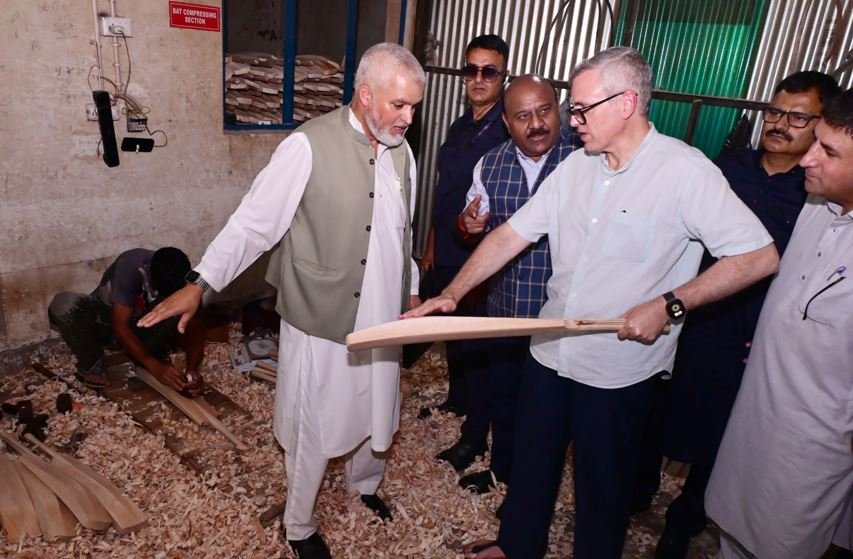
Kashmir’s cricket bat industry carries a value that goes far beyond the factories where bats are shaped and finished. It represents local skill, traditional knowledge, employment and a product that has given Kashmir a distinct place in the sporting world. An industry with such natural advantages should not have to struggle for basic raw material, reliable power or essential infrastructure.
The biggest concern is willow. Without a steady supply of quality wood, the future of the industry will remain uncertain. Trees that are harvested today take years to replace, which makes planned plantation and replantation absolutely essential. The government must therefore look at willow not simply as a forest resource, but as the lifeline of an entire manufacturing sector. A proper long-term plan should identify existing willow reserves, assess future requirements and expand plantation in suitable areas. Improved varieties can be considered after scientific evaluation, but the focus must remain on quality and sustainability. Manufacturers need confidence that raw material will remain available not only next year, but ten and twenty years from now. The reported illegal movement of willow clefts is another issue that cannot be ignored. Strong monitoring is necessary to protect legitimate manufacturers and prevent local resources from being diverted through unauthorized channels. At the same time, controls must be simple and transparent so that honest businesses are not forced through unnecessary delays. Basic infrastructure also demands attention. Manufacturers cannot compete effectively if production is interrupted by unreliable electricity. A dedicated and dependable power arrangement for industrial clusters such as Sangam would improve productivity and reduce uncertainty. Fire services and proper medical support for workers are equally important. These are basic industrial safeguards, especially in units where cutting machinery and manual processing are part of daily work. The demand for common facilities also deserves an early response. Smaller manufacturers may not have the financial capacity to install every modern facility individually. A properly managed Common Treatment Facility Centre can reduce costs, improve quality and allow more units to modernize without losing their traditional character. There is also a need to make government procedures easier. Local manufacturers should not spend valuable time moving between offices for permissions, renewals and routine clearances. Ease of doing business should be experienced by the entrepreneur on the ground, not merely mentioned in policy documents. Traditional industries that have supported families for generations deserve quick and responsive administration. Modernization should also protect the people behind the product. Kashmir bats are valued because of the skill of artisans who understand the character of willow and the delicate process of turning it into a finished bat. Better machinery, safety standards and professional training should improve their working conditions and earning potential. The industry must also think beyond manufacturing and build stronger brands. Quality certification, product traceability, professional marketing and direct access to sporting markets can help genuine Kashmir willow bats command greater recognition and value. The objective should be to ensure that Kashmir earns not only for supplying willow, but also for producing and marketing premium finished products. The government’s assurance of support is encouraging, but the industry now needs coordinated action. Willow plantation, uninterrupted power, emergency services, simpler procedures, worker welfare and market promotion must move together.
Kashmir already has what many regions spend years trying to create: raw material, skilled hands and an established identity. Protecting and expanding this industry is therefore not about preserving the past. It is about securing jobs, strengthening local enterprise and giving a valuable home-grown industry the future it deserves. At the same time, the J&K Government deserves appreciation for recognizing the strategic value of Kashmir’s cricket bat industry. It should now follow through with scientific willow plantations, uninterrupted power, fire and medical facilities, simpler clearances, worker training and stronger branding support. A dedicated long-term policy, backed by strict implementation, can protect livelihoods, preserve craftsmanship and expand Kashmir’s presence in global sporting markets.

