Gukesh Begins World Championship Title Defence Against Sindarov in Historic Chess Showdown
The Indian grandmaster faces Uzbekistan's rising star in a 14-game contest in Geneva, with both 20 year olds making history as the youngest pairing ever to compete for the classical world championship.
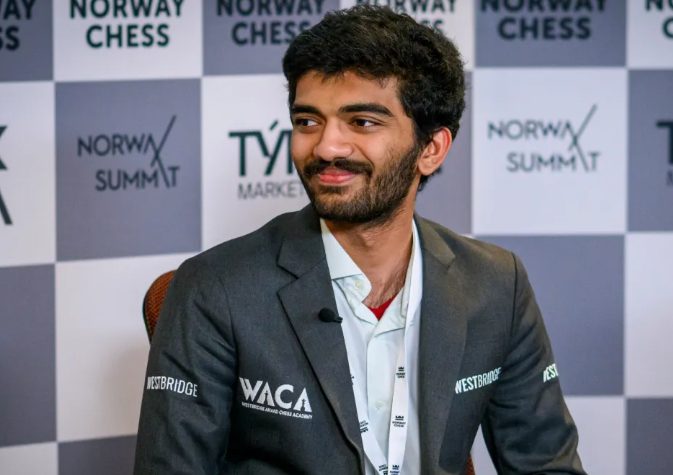
GENEVA, Nov 24: India’s reigning world champion D Gukesh is set to begin his title defence against Uzbekistan’s Javokhir Sindarov on Tuesday, as the chess world turns its attention to an unprecedented battle between two players of the same generation.
The Salesforce FIDE World Championship match, scheduled to take place at the Fondation Martin Bodmer in Cologny near Geneva, Switzerland, will feature two 20 year olds competing for the most prestigious title in classical chess.
The encounter represents a significant moment for international chess, with Gukesh attempting to retain the crown he secured in 2024 and Sindarov seeking to become the first Uzbek player to win the undisputed classical world championship.
The opening game is scheduled for November 24, with the contest extending until December 11 if all 14 classical games are required. A tie-break competition is scheduled for December 12 if the scores remain level at seven points apiece.
The first player to reach 7.5 points will be declared the world champion. Both competitors will therefore need to combine technical accuracy, strategic preparation and physical endurance throughout the demanding championship.
Gukesh made history in December 2024 when he defeated China’s Ding Liren to become the youngest undisputed world champion in the history of classical chess at the age of 18.
His achievement marked a major milestone for Indian chess and continued the country’s growing influence in international competitions.
However, defending the title has presented a different challenge. Gukesh has experienced inconsistent results during recent tournaments and has slipped to 26th in the world rankings, raising questions about his current form.
His opponent arrives in Geneva with considerable momentum.
Sindarov established himself as one of the most promising players in international chess through a series of impressive performances, including his victory at the 2025 World Cup.
He subsequently produced a dominant campaign in the Candidates Tournament, securing qualification for the championship match ahead of the final round.
The Uzbek grandmaster has also maintained an impressive record in classical chess, and his recent performances have strengthened expectations that he could challenge Gukesh for the title.
Sindarov enters the contest 72 rating points ahead of the Indian champion, making him the higher-rated competitor.
Five-time world champion Magnus Carlsen has also identified the Uzbek challenger as the favourite, reflecting the strong impression created by his recent performances.
Nevertheless, Sindarov has avoided treating the championship as a straightforward assignment. He has indicated that he is preparing to face Gukesh at his strongest, recognising the Indian player’s ability to produce exceptional performances under pressure.
The contrasting positions of the two competitors have added another dimension to the championship.
Gukesh has the experience of winning the world title and understands the demands of competing in a prolonged match. Sindarov, meanwhile, has the confidence of a challenger who has enjoyed a remarkable rise and is entering the biggest contest of his career.
The Indian champion’s recent performances have also offered some encouragement.
His participation in the September Chess Olympiad helped restore confidence after a difficult period. Gukesh delivered strong individual performances and contributed to India’s silver-medal campaign, demonstrating that he remains capable of competing against the strongest players.
His preparation has also focused on maintaining mental stability throughout the championship.
Gukesh has spoken about the importance of meditation and managing psychological pressure, particularly in a contest where a single mistake can significantly influence the outcome.
The coaching team believes the Olympiad experience provided an opportunity to rebuild confidence and sharpen his competitive approach.
For Sindarov, the challenge will be to translate his recent success into consistent performances against an opponent who has already experienced the pressure of defending a world championship title.
The Uzbek player has demonstrated strong opening preparation, tactical awareness and the ability to maintain control in complicated positions.
His victory at the World Cup and successful Candidates campaign have established him as a serious contender rather than an unexpected challenger.
The championship will consist of up to 14 classical games, with each player required to demonstrate consistency over several weeks.
Under the time control arrangements, competitors will receive 120 minutes for the first 40 moves, followed by an additional 30 minutes for the remainder of the game. A 30-second increment will be added after the 40th move.
The format is designed to encourage deep strategic competition while reducing the likelihood of premature conclusions.
The players will also face restrictions on agreeing to draws before Black’s 40th move, except in situations involving repetition or stalemate.
The first game will see Sindarov playing with the white pieces, giving him the opportunity to make the opening move and establish the initial strategic direction.
The venue itself offers an unusual setting for a world championship. The Fondation Martin Bodmer, known for its collection of historical manuscripts and literary works, provides a distinctive backdrop for a competition that brings together two of the youngest players ever to contest the title.
The prize fund for the championship stands at USD 2.5 million, adding further significance to the contest.
Beyond the financial reward, the outcome could influence the future direction of international chess, particularly given the growing strength of young players from India and Uzbekistan.
India has emerged as one of the leading nations in the sport, producing several world-class grandmasters and establishing a strong presence in team competitions.
Gukesh’s championship victory in 2024 was part of this broader rise, while the performances of players such as R Praggnanandhaa, Arjun Erigaisi and other young talents have further strengthened India’s position.
Uzbekistan has also made considerable progress, with Sindarov representing a generation that has benefited from increased investment and development in chess.
The rivalry between the two countries is therefore expected to attract significant attention throughout the championship.
For Gukesh, the immediate objective will be to demonstrate that his recent ranking decline does not reflect his ability to compete at the highest level.
His previous world championship experience could prove valuable in managing the psychological pressure and maintaining concentration during difficult positions.
Sindarov, on the other hand, will attempt to use his recent form and higher rating to challenge the defending champion from the opening game.
The contest is expected to feature extensive opening preparation, positional battles and tactical opportunities, with both players likely to avoid unnecessary risks during the early stages.
As the championship begins, the spotlight will remain firmly on two young grandmasters representing different chess traditions but sharing the same ambition.
The winner will not only claim the world title but also establish an important milestone in the rapidly evolving landscape of international chess.