


High-Altitude Flower Farming
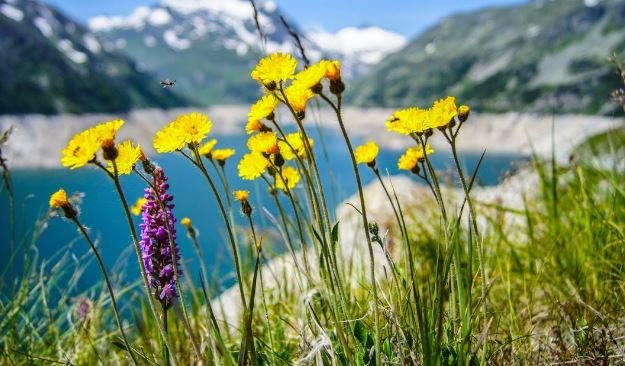
The launch of India’s first high-altitude flower fields in Ladakh marks an important shift in the development thinking of the Himalayan region. For a land known for its difficult terrain, fragile ecology and limited agricultural season, the Choglamsar and Stakna floriculture projects open a new possibility where science, livelihood, tourism and environmental harmony can work together. This is not merely about creating flower gardens. It is about introducing a new economic activity that can benefit farmers, youth, entrepreneurs and the wider green economy of Ladakh.
High-altitude floriculture has the potential to become a meaningful model of agricultural diversification. Ladakh’s traditional livelihood systems have always required resilience because of harsh climatic conditions and geographical challenges. By promoting high-value ornamental flowers such as Lilium, Gladiolus, Tulips and other marketable species, the region can move beyond limited cropping patterns and explore a sector that carries strong demand in national and international markets. If nurtured properly, floriculture can offer farmers a profitable alternative and reduce dependence on conventional income sources. The proposed flower fields at Choglamsar and Stakna are significant because they combine commercial cultivation with demonstration, training and tourism. Choglamsar’s flower park, being developed as one of the largest organised high-altitude floriculture parks in the country, can become a model centre for education, recreation and scientific farming. Stakna’s floriculture project, located at the School of Agriculture Science and Technology, University of Ladakh, can support research, crop trials and technical capacity building. Together, these two projects can create a strong foundation for Ladakh’s floriculture future. The decision to train farmers and later involve them through cooperatives is particularly important. Any development model becomes truly meaningful only when local communities become its beneficiaries and stakeholders. Floriculture should not remain a government-managed display project. It must evolve into a farmer-oriented economic ecosystem where growers receive training, planting material, technical support, market linkages, cold-chain assistance and fair returns. Cooperatives can help farmers negotiate better, reduce risk and enter markets with confidence. The collaboration between the Department of Agriculture, UT Ladakh, and CSIR-Institute of Himalayan Bioresource Technology, Palampur, adds scientific credibility to the initiative. Ladakh’s climate is unique, and flower cultivation cannot be promoted through guesswork. Crop suitability, soil conditions, altitude behaviour, water management, pest control and post-harvest handling must be guided by research. Technical support from a specialised institution can ensure that the projects are not only attractive but also commercially viable and environmentally sound. The tourism potential of these flower fields is equally promising. Ladakh already attracts visitors for its landscapes, monasteries, adventure routes and cultural richness. Organised flower fields can add a new dimension to this tourism economy by creating seasonal attractions, photography destinations, educational visits and eco-tourism experiences. Such spaces can generate livelihoods for local youth through guiding, local produce sales, transport, small enterprises and hospitality services. However, tourism must be carefully managed so that beauty does not turn into pressure on ecology. The larger value of these projects lies in linking green development with livelihood security. Ladakh needs growth that respects its environment. Floriculture, if practiced responsibly, can support this balance by promoting high-value cultivation without large-scale ecological disturbance. It can also encourage entrepreneurship among youth who are seeking new opportunities within the region. Cut flower production, nursery development, packaging, transport, marketing and value-added products can create a chain of employment beyond the field itself. Yet the success of the initiative will depend on sustained execution. Foundation stones create hope, but outcomes require patience, monitoring and institutional commitment. Farmers must not be left unsupported after initial training. Market access must be planned before production expands. Water use must be rational. Infrastructure must be maintained. Quality standards must be protected. Without these measures, even a promising project can lose direction.
Ladakh has an opportunity to create a distinct identity in sustainable high-altitude floriculture. The vision deserves appreciation because it looks beyond routine development and seeks to build a greener, more creative and income-generating future. If implemented with seriousness, the Choglamsar and Stakna flower fields can become symbols of agricultural innovation, farmer empowerment, eco-tourism and responsible development in the Himalayas.

