


High Court to Hear NIA Plea Seeking Death Penalty for Yasin Malik on April 22
Court says no urgency as separatist leader is already serving life sentence NIA seeks in camera proceedings
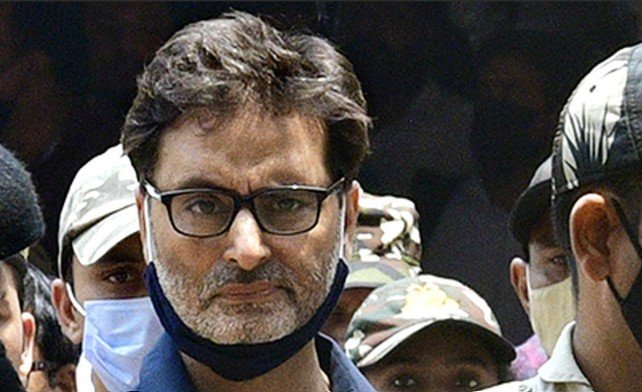
New Delhi, Jan 28: The Delhi High Court on Wednesday granted the National Investigation Agency (NIA) four weeks to file its rejoinder to separatist leader Yasin Malik’s response in a case where the agency has sought the death penalty for him in a terror funding matter. The court has scheduled the next hearing for April 22.
A bench comprising Justices Navin Chawla and Ravinder Dudeja observed that there was no urgency in the appeal, noting that Malik is already undergoing a life sentence. “There is no urgency. This is a case of enhancement of sentence,” the bench remarked while giving the NIA what it described as a last opportunity to submit its reply.
Malik, appearing via video conference from Tihar Jail, alleged that the agency was prolonging the proceedings and subjecting him to mental distress by repeatedly seeking adjournments. The NIA, however, countered the claim, stating that Malik himself took nearly a year to file his response to the appeal. The agency also informed the court that it was considering requesting an in-camera hearing.
The NIA’s counsel said Malik’s reply was extensive and included material not directly related to the case, adding that the rejoinder was currently under vetting.
Malik, chief of the banned Jammu and Kashmir Liberation Front (JKLF), was sentenced to life imprisonment by a trial court in May 2022 after being convicted under the Unlawful Activities (Prevention) Act and provisions of the Indian Penal Code. In 2023, the NIA approached the High Court seeking enhancement of the sentence to capital punishment.
In its plea, the agency argued that awarding life imprisonment to convicted terrorists undermines sentencing principles and fails to reflect the gravity of crimes that have resulted in the loss of lives of security personnel and civilians. The NIA has maintained that the trial court’s conclusion that the case did not fall within the “rarest of rare” category was legally unsustainable.
In his reply, Malik claimed he had spent decades engaged in backchannel efforts with political leaders and state agencies to promote peace in Jammu and Kashmir, alleging that the state was now attempting to erase that history. He described himself as a political scapegoat and questioned the moral basis of the prosecution’s pursuit of the death penalty.

