


Himalayan Yak Gets FSSAI Approval as ‘Food Animal’
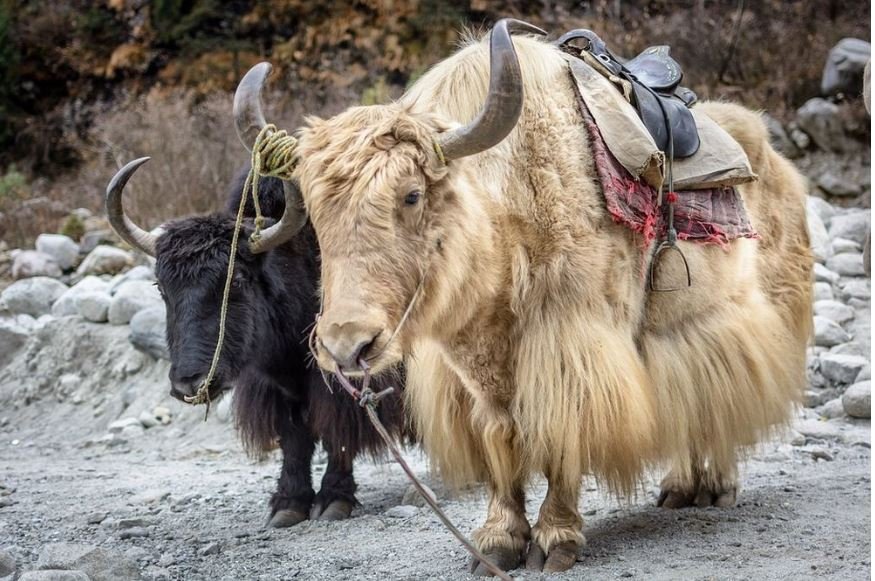
06-12-2022 : The Indian Food Safety and Standard Authority has authorized the Himalayan Yak as a “food animal” (FSSAI). According to a representative of the National Research Centre (NRC) on Yak in Dirang, West Kameng district, Arunachal Pradesh, the action is anticipated to prevent the decrease of the high-altitude bovine animal population by merging it into the mainstream milk and meat businesses.
Once it is published in the gazette after receiving approval from the appropriate government, the label “food animal” will be considered official. Yak farming will become more profitable for farmers as a result of the FSSAI’s identification of the animal as a food-producing animal. This development will also offer up a number of new economic opportunities for both farmers and food processors.
Yaks are traditionally raised in a crude, disorganized, and complicated transhumance system. The FSSAI’s designation of the yak as a food animal is widely believed to open the door for its commercial growing and consumption using the yak-rearing model created by NRC-Yak.
At the highest altitude on earth, YAK resides. YAK originated in the Himalayan regions of Nepal, Tibet, and Mongolia before being introduced to North America, Canada, New Zealand, and some regions of Europe. Because hemoglobin is present throughout life, YAKs have larger hearts and lungs as well as a higher ability to distribute oxygen through their blood.
Arunachal Pradesh, Sikkim, North Bengal, Uttarakhand, Himachal Pradesh, Ladakh, and Jammu & Kashmir are just a few of the Himalayan regions of India where you can see yaks.

