


How Britain Gets a New Prime Minister Without Calling a General Election
Veteran Labour leader Andy Burnham is set to replace Keir Starmer after winning overwhelming support from Labour MPs, highlighting how Britain's parliamentary system enables a change in national leadership without holding a fresh general election.
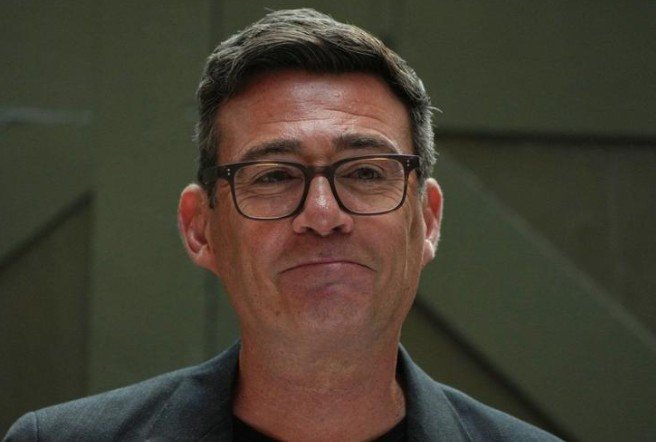
LONDON, July 18: Britain is preparing for another major political transition as veteran Labour politician Andy Burnham is set to become the country’s next Prime Minister on Monday. The leadership change follows the resignation of Keir Starmer, who stepped down as Labour Party leader after facing mounting political pressure despite leading the party to a decisive general election victory in 2024.
Burnham’s elevation marks another chapter in the United Kingdom’s dynamic parliamentary democracy, where governing parties can replace their leaders without triggering a nationwide election. As Labour continues to command a majority in the House of Commons, the party’s new leader automatically assumes the office of Prime Minister.
Burnham Wins Labour Leadership by a Huge Margin
The Labour Party formally confirmed Andy Burnham as its new leader after he secured overwhelming backing from fellow Members of Parliament. Receiving the support of 349 out of 401 Labour lawmakers, Burnham emerged as the sole candidate to qualify for the leadership contest.
His decisive victory reflected the broad confidence many Labour MPs have placed in his experience and political leadership. Although he has already been elected party leader, Burnham will officially assume the role of Prime Minister only after completing the constitutional formalities at Buckingham Palace.
Until that ceremony takes place, Keir Starmer continues to serve as caretaker Prime Minister, ensuring continuity in government during the transition.
Formal Appointment Scheduled at Buckingham Palace
On Monday, Burnham will travel to Buckingham Palace for the traditional constitutional process that officially installs a new British Prime Minister.
King Charles III will invite him to form a government during a private audience, completing a centuries-old constitutional convention that symbolizes the peaceful transfer of executive authority.
Following the meeting, Burnham will proceed to 10 Downing Street, the official residence of the British Prime Minister, where he is expected to deliver his first address outlining his government’s priorities and immediate policy agenda.
Why Britain Does Not Need a General Election
Unlike presidential systems, Britain’s parliamentary model does not require voters to return to the polls whenever a Prime Minister resigns.
Citizens elect Members of Parliament rather than directly electing the Prime Minister. The individual who commands the confidence of the majority party in Parliament becomes the country’s head of government.
Since Labour continues to hold a comfortable parliamentary majority earned during the 2024 general election, the party retains the authority to choose a new leader who automatically assumes the premiership.
The next scheduled UK general election is not due until 2029 unless Parliament is dissolved earlier.
This constitutional arrangement has allowed several British governments to change leaders between elections while maintaining parliamentary stability.
Political Pressure Led to Starmer’s Exit
Keir Starmer’s resignation came after a difficult period marked by political controversies and declining public confidence.
His administration faced sustained criticism following several high-profile decisions that generated significant debate within both the Labour Party and the wider political establishment.
One of the most damaging controversies surrounded the appointment of a British ambassador to the United States whose previous associations became a major political issue. The decision attracted widespread criticism and intensified pressure on the government.
Labour also suffered disappointing results during local elections held in May, raising concerns among MPs about the party’s electoral prospects before the next national vote.
As dissatisfaction grew inside the parliamentary party, calls for fresh leadership became increasingly difficult to ignore.
Labour’s Internal Leadership Process
After Starmer announced his resignation as party leader, Labour initiated its formal leadership selection process.
Under Labour Party rules, any leadership contender must receive the backing of at least one-fifth of Labour MPs in the House of Commons before entering the contest.
Burnham comfortably exceeded that requirement and ultimately became the only eligible candidate, effectively securing the leadership without a contested ballot.
The smooth transition reflected the broad consensus within Labour that Burnham represented the strongest option to guide both the party and the government through the coming years.
A Familiar Feature of British Politics
Leadership transitions without elections have become increasingly common in modern British politics.
Over the past decade, several Prime Ministers have entered Downing Street through internal party leadership contests rather than general elections.
Theresa May succeeded David Cameron after his resignation following the Brexit referendum. Boris Johnson later replaced May after winning the Conservative leadership race.
Following Johnson’s resignation in 2022, Liz Truss became Prime Minister after another internal Conservative contest. Her brief tenure ended after only weeks in office, leading to Rishi Sunak’s appointment through a further leadership process.
Andy Burnham now joins this growing list of leaders who reached Britain’s highest political office through Parliament rather than a nationwide election.
Britain’s Constitutional Stability on Display
Although leadership changes may appear dramatic, Britain’s constitutional system is specifically designed to ensure orderly transitions of power.
The resignation of one Prime Minister does not automatically dissolve Parliament or interrupt the functioning of government.
Instead, established constitutional conventions allow a new leader to take office quickly while preserving political stability and administrative continuity.
This framework enables government departments, Parliament and public institutions to continue operating without disruption during leadership changes.
Monday’s Carefully Choreographed Transition
The transfer of power follows a well-established sequence observed repeatedly throughout British political history.
The outgoing Prime Minister traditionally delivers a farewell statement before travelling to Buckingham Palace to submit a formal resignation to the monarch.
Once that meeting concludes, the incoming leader arrives separately to receive the King’s invitation to form a government.
The ceremony—historically known as the “Kissing of Hands”—is now largely symbolic and usually involves a handshake rather than its traditional form.
Following the palace audience, the new Prime Minister travels directly to Downing Street, where the first official address signals the beginning of a new administration.
The entire transition is typically completed within a few hours and is broadcast live across the United Kingdom.
Challenges Await the Incoming Government
Burnham inherits office during a period of significant political and economic challenges.
His administration will be expected to restore public confidence, strengthen Labour’s political standing and address pressing national issues including economic growth, public services, healthcare, housing and Britain’s international relationships.
Observers will also closely watch how the new Prime Minister reshapes the Cabinet and outlines his government’s legislative priorities for the remainder of Parliament’s term.
With several years remaining before the next scheduled general election, Burnham has an opportunity to establish his own leadership style while preparing Labour for the electoral challenges ahead.
A New Political Chapter Begins
Andy Burnham’s appointment represents another significant moment in Britain’s evolving political landscape. While no general election accompanies the leadership change, the transition fully reflects the principles of the UK’s parliamentary democracy, where governments derive authority from Parliament rather than the direct election of a Prime Minister.
As Burnham prepares to enter Downing Street, attention will now turn to how effectively he can unite his party, respond to public expectations and steer Britain through the next phase of its political journey.

