


IFFM 2026 Nominations Put Aamir Khan, Mammootty, Rishab Shetty and Ranveer Singh in the Spotlight
The Indian Film Festival of Melbourne unveiled its 2026 nominations on July 8, celebrating a broad field of performances and films while underlining the growing global visibility of Indian cinema across languages and regions.
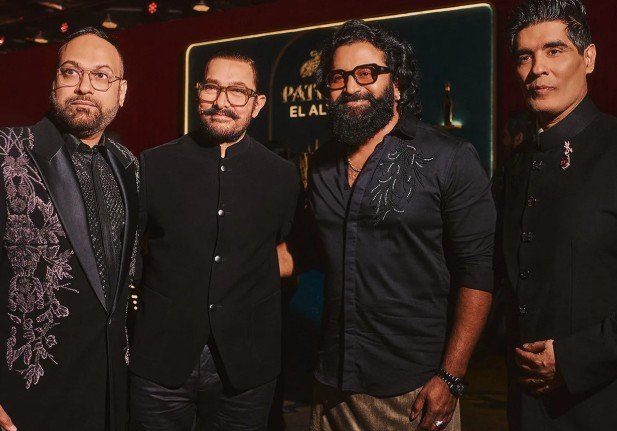
India, July 08 : The Indian Film Festival of Melbourne’s 2026 nominations emerged as one of the biggest entertainment stories of July 8, with the annual event unveiling a line up that immediately drew attention for both its star power and its cross-industry breadth. Among the headline developments was a high-profile best actor field featuring names such as Aamir Khan, Mammootty, Rishab Shetty and Ranveer Singh, a line-up that reflected not only the continued prestige of established stars but also the increasingly pan-Indian character of major film recognition platforms. At a time when Indian cinema is more linguistically and regionally interconnected than ever before, the IFFM nominations became more than an awards update—they became a snapshot of where Indian screen culture stands in 2026 and how it is being seen on the global festival circuit.
For years, the Indian Film Festival of Melbourne has occupied a distinct place in the international calendar of Indian cinema. It is not merely a diaspora celebration or a red-carpet extension of the Bollywood publicity ecosystem. Instead, it has steadily evolved into a platform where Hindi cinema, southern industries, independent voices and streaming-era storytelling all meet under a common umbrella. That makes its nomination list especially interesting. Unlike narrowly sectoral awards that tend to stay confined within one language or one industrial ecosystem, IFFM’s curation often carries a broader representative ambition. The 2026 nominations appear to continue that trend, foregrounding performers and films from different corners of Indian cinema and reminding audiences that the country’s screen culture can no longer be meaningfully described through Mumbai alone.
The presence of Aamir Khan in the nominations automatically lends the announcement a certain weight. Few actors in Indian cinema carry his combination of longevity, prestige, commercial reach and curatorial reputation. A nomination featuring Aamir is not simply about star recognition; it also activates a larger conversation about how his work continues to be read in a changing industry. He has long been associated with a certain seriousness of intent, with projects that aim for a balance between mass appeal and thematic conviction. Whenever his name appears in an awards line-up, it tends to frame the competition itself as significant.
Mammootty’s inclusion adds a different but equally powerful dimension. Over the past several years, the Malayalam superstar has continued to build one of the most formidable late-career bodies of work in Indian cinema, moving with remarkable ease between commercial star turns and critically acclaimed performances. His presence in the IFFM line up is a reminder of how Malayalam cinema’s creative influence has expanded well beyond regional boundaries, with actors like Mammootty increasingly functioning as national artistic benchmarks rather than industry-specific icons. A nomination for him is never just a nod to stardom; it is also an acknowledgment of longevity, reinvention and craft.
Rishab Shetty’s appearance in the field speaks to yet another major shift in Indian entertainment the rise of Kannada cinema and the growing prestige of filmmakers and actors who move between regional rootedness and national visibility. Shetty’s trajectory has come to represent the confidence of a cinema culture that is no longer waiting for validation from Mumbai before it asserts its significance. Whether as a performer, filmmaker or cultural figure, he carries the energy of a new pan-Indian screen ecosystem in which linguistic boundaries still matter, but no longer define the limits of recognition.
Then there is Ranveer Singh, whose presence in the nominations reflects the continued centrality of performance-led mainstream Hindi stardom to India’s awards and publicity culture. Ranveer occupies a distinct place among contemporary Hindi actors: he is both hyper-visible and highly performative, capable of turning each role into a full-bodied public event. Awards nominations matter to actors like him not only because they validate a specific performance but because they help shape the narrative of career momentum, range and relevance. In a line-up that includes veterans and regional powerhouses, his inclusion also reinforces the idea that the current Indian acting landscape is less about one hierarchy than about multiple overlapping centres of influence.
The larger significance of the IFFM 2026 nominations lies in how they mirror the current structure of Indian cinema itself. The old binaries—Bollywood versus regional cinema, art-house versus mainstream, festival film versus box-office film—have become increasingly unstable. Audiences stream across languages. Actors collaborate across industries. Pan-Indian releases and dubbed circulation have altered what visibility means. Streaming platforms have created new pathways for discovery, while social media has made national conversation around regional films much more common. In that context, a festival nomination list that places stars from different industries alongside one another is not just inclusive programming; it is a reflection of reality.
This is especially important for a festival like Melbourne, which serves both diaspora audiences and international observers trying to understand the shape of Indian cinema beyond clichés. For many viewers outside India, festivals and curated awards events function as entry points into the country’s screen culture. The choices such platforms make therefore matter. A nomination slate that recognises different languages, different styles of acting and different cinematic traditions helps present a more truthful picture of Indian cinema as a plural ecosystem rather than a single industry.
The timing of the announcement also gave it added resonance. July is a month when entertainment discourse is often dominated by box-office figures, trailers, celebrity weddings and big-banner marketing campaigns. Against that backdrop, the IFFM nominations offered something slightly different: a moment of reflection on performance, craft and critical recognition. That does not mean the nominations were separate from star culture—far from it. Aamir, Mammootty, Rishab Shetty and Ranveer Singh are all major public figures. But the framing of the announcement shifted the conversation, however briefly, from commerce to recognition and from hype to appraisal.
There is also an institutional story here. Indian cinema’s relationship with international festivals has become more layered over time. At one end are the major global festivals with auteur driven prestige; at the other are diaspora-focused events that celebrate popular culture, nostalgia and community. IFFM sits somewhere in between. It is accessible enough to attract star participation and public excitement, but curated enough to carry cultural credibility. That middle position is precisely what makes its nominations worth watching. They often reveal which films and performances are travelling across both critical and popular circuits, and which actors continue to command respect beyond their domestic box-office footprint.
Another striking aspect of the 2026 nomination discussion is the way it reflects the decentralisation of Indian stardom. For decades, the most visible film awards discourse outside India tended to orbit around Hindi cinema almost by default. That is no longer sustainable. Malayalam, Kannada, Tamil and Telugu cinema now routinely produce actors, directors and films that shape national conversation, not just regional pride. When an awards platform acknowledges that fact in a visible way, it helps normalise a broader understanding of Indian cinema for both domestic and international audiences.
The nomination slate also has implications for how performances are remembered in a fast-moving entertainment cycle. Awards lists do not simply reward work; they help create an archive of significance. In a year crowded with streaming content, theatrical releases and short-lived publicity storms, a nomination can stabilise a performance in public memory. It tells audiences that amid the noise, this work is worth revisiting, discussing and comparing. For actors like Mammootty or Aamir Khan, that may reinforce an already strong critical legacy. For others, it can sharpen a narrative of momentum or artistic transition.
From a publicity standpoint, the IFFM nominations also offer a useful bridge between national and international visibility. Indian stars increasingly operate in a transnational media environment where festival appearances, global interviews, overseas fan bases and streaming distribution all feed into a broader image economy. A nomination at Melbourne is therefore not just a trophy race marker; it is part of how films and actors continue to travel after release. It can renew attention, widen discoverability and add another layer of prestige to ongoing campaigns.
There is a broader cultural reason these nominations matter as well. Indian cinema in 2026 is being shaped by a complex mix of forces: the search for pan-Indian blockbusters, the rise of streaming originals, renewed interest in rooted regional storytelling, the persistence of star systems and the growing appetite for biographical, historical and issuebased narratives. Awards lists and festival nominations do not determine those trends, but they do illuminate them. By looking at who gets nominated and which performances rise to the surface, one gets a sense of what kinds of storytelling are resonating at this moment what emotional registers, industrial regions and performance styles are commanding attention.
That is why the best actor line-up drew immediate notice. It was not only a roster of famous names; it was a compressed map of contemporary Indian acting cultures. Aamir Khan represents the prestige-minded Hindi superstar. Mammootty represents the veteran regional titan whose work now circulates as national cinematic capital. Rishab Shetty represents the new confidence of Kannada storytelling. Ranveer Singh represents the shape shifting energy of modern Hindi stardom. Put them together and the result is less a competition than a conversation about what Indian screen performance looks like in 2026.
The nominations also create anticipation around the festival itself. Once the line-up is out, the event becomes a space of speculation: who will attend, which films will dominate, what acceptance speeches or red-carpet appearances might shape the headlines, and whether any win could shift the momentum of an actor’s awards season narrative. Festivals today are no longer quiet cultural gatherings; they are media ecosystems. The IFFM announcement, therefore, is not a standalone news item but the opening act of a larger publicity cycle that will play out through interviews, social media posts, international coverage and fan discourse.
At a deeper level, the nominations reaffirm something increasingly obvious but still worth stating: Indian cinema is no longer organised around a single centre of gravity. It is a multilingual, multi-platform, multi-market field in which prestige can come from very different directions. A mainstream Hindi star, a Malayalam legend, a Kannada filmmaker-actor and a contemporary Bollywood performer can all coexist in the same awards conversation without it feeling unusual. That normalisation is one of the most important cultural shifts in Indian entertainment over the past decade, and the IFFM 2026 nominations capture it well.
For the actors involved, the road from nomination to eventual outcome will of course carry its own stakes. Awards do not define careers, but they do shape perception. They can influence the afterlife of a performance, affect how a project is remembered, and reinforce or complicate an actor’s public narrative. Yet even before any trophy is handed out, the nominations themselves have already performed an important function: they have turned attention toward the breadth and vitality of Indian cinema at a moment when the industry is simultaneously fragmented and flourishing.
As one of the key entertainment stories of July 8, the IFFM 2026 nomination announcement did exactly what a strong awards reveal should do. It celebrated star power without reducing cinema to celebrity alone, highlighted performance while hinting at larger industrial shifts, and offered audiences a snapshot of Indian screen culture that felt expansive rather than narrow. In a year where entertainment headlines are often dominated by box office, controversy and algorithmic buzz, the nominations served as a reminder that recognition still matters and that the map of who gets recognised in Indian cinema is broader, richer and more interconnected than ever before.

