


IIM Bangalore to Open First Overseas Campus in Indonesia, Marking a New Phase in India’s Global Education Outreach
Prime Minister Narendra Modi announced during his Indonesia visit that the Indian Institute of Management Bangalore will establish a campus in Indonesia, a move expected to deepen India-ASEAN academic ties, expand executive education in Southeast Asia and position Indian higher education institutions more prominently on the global stage.
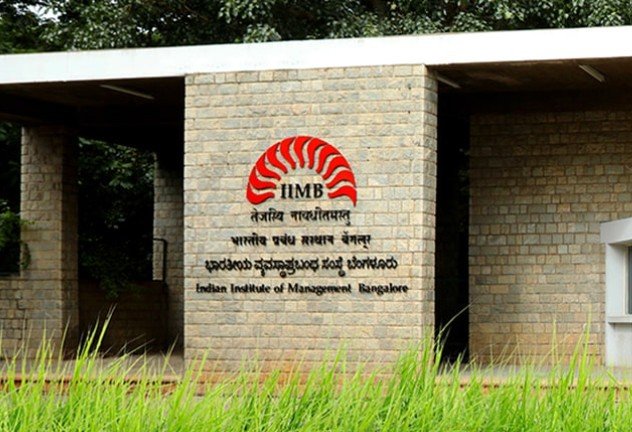
India, July 08 : India’s higher education diplomacy received a major boost on July 7 with the announcement that the Indian Institute of Management Bangalore will set up its first overseas campus in Indonesia. The decision, unveiled during Prime Minister Narendra Modi’s visit to Jakarta, is being seen as a landmark step not only for IIM Bangalore but also for India’s wider ambition to build an international footprint for its premier educational institutions.
The proposed campus, to come up at the Singhasari Special Economic Zone in Malang, East Java, is expected to begin with executive education offerings before gradually moving toward degree programmes in a later phase. The development marks a significant moment for Indian higher education because it signals a transition from India being primarily a destination for international students to also becoming an exporter of institutional education, academic expertise and management training.
The announcement came as part of a broader India-Indonesia push to deepen ties across education, culture, tourism and people-to-people engagement. During the visit, the two sides also launched the “Tagore-Dewantara Year”, invoking the legacies of Rabindranath Tagore and Ki Hajar Dewantara to underline a shared commitment to cultural and educational exchange. But among the many bilateral outcomes, the IIM Bangalore expansion stands out as one of the most consequential for the education sector.
For India, the decision carries both symbolic and strategic significance. Symbolically, it signals confidence in the global reputation of Indian management education. Strategically, it aligns with New Delhi’s effort to strengthen engagement with Southeast Asia through institutions, talent development and long-term knowledge partnerships. Instead of limiting cooperation to scholarships, MoUs and faculty exchange, India is now placing one of its most respected business schools directly within the ASEAN region.
IIM Bangalore is among India’s leading management institutions, with a strong reputation in business education, executive training, entrepreneurship and research. An overseas campus gives it the opportunity to tap into a new pool of learners, executives and institutions while also showcasing Indian pedagogical models abroad. For Indonesia, the arrival of an IIM campus offers access to one of South Asia’s most prominent management education brands at a time when demand for leadership training, business innovation and global management skills is rising rapidly across Southeast Asia.
The proposed campus at Singhasari SEZ is expected to be developed in phases. The initial focus on executive education is significant because it allows the institution to build presence, local partnerships and market understanding without immediately taking on the full regulatory and academic load of a conventional degree campus. Executive programmes can cater to working professionals, corporate leaders, entrepreneurs, policymakers and public-sector managers, creating a practical bridge between Indian academic expertise and Indonesian industry needs.
In the second phase, the campus is expected to expand into degree programmes. If executed successfully, that move could make the Indonesia campus one of the most visible examples of India’s outward higher education expansion. It could also encourage other Indian institutions including IIMs, IITs, central universities and specialised institutes to explore international partnerships or branch campuses in strategically important regions.
The timing of the announcement matters. India has spent the last several years trying to reposition its higher education system under the framework of the National Education Policy 2020, which encourages internationalisation, institutional autonomy, multidisciplinary education and global academic collaboration. The establishment of an overseas campus by IIM Bangalore fits neatly into this policy direction. It demonstrates that internationalisation is no longer being imagined only as foreign universities coming to India, but also as Indian institutions stepping out to build their own presence overseas.
This outward move is particularly important because Indian higher education has long suffered from a paradox. On the one hand, the country has world-class islands of excellence — especially in management, engineering, medicine and some research areas. On the other, it has not always been able to convert that reputation into institutional global presence. Students know the brand of the IIMs, IITs and certain universities, but the international expansion of these institutions has historically been limited. That may now be beginning to change.
The choice of Indonesia is also notable. It is the world’s fourth most populous country, Southeast Asia’s largest economy and a strategically important partner for India under the Act East policy. Both countries share maritime interests, economic complementarities and a growing interest in deeper people-to-people links. Education offers a durable channel to reinforce those ties because it creates long-term networks among students, professionals, businesses and public institutions.
From Indonesia’s perspective, an IIM Bangalore campus could support domestic capacity-building in management and leadership education, especially in sectors tied to economic transformation, digital business, manufacturing, services and public administration. Indonesia is a rapidly growing economy with a young population and expanding corporate ecosystem. Access to internationally respected management education within the country could be attractive not just for Indonesian students and executives, but also for learners from neighbouring ASEAN nations.
The move may also help India improve its academic visibility in a region where Western, Australian, Singaporean and increasingly East Asian universities have long maintained a strong presence. Indian institutions have often had intellectual influence and historical ties, but less physical footprint. An IIM campus changes that equation by creating a visible, operational base in Southeast Asia. It tells the region that Indian institutions are prepared to compete, collaborate and contribute at a much higher level than before.
There is another dimension to the story: soft power. Education is one of the most effective long-term instruments of influence because it shapes elite networks, professional culture and intellectual exchange over decades. When students or executives study at an institution, they do not simply consume a course; they enter a network of ideas, mentors, peers and future collaborations. An IIM Bangalore campus in Indonesia therefore serves not only an academic function but also a diplomatic one. It can become a platform for trust-building between India and ASEAN at the level of talent and institutions.
The success of the project, however, will depend on execution. International campuses are not easy to build or sustain. They require regulatory clarity, financial planning, local partnerships, faculty deployment, curriculum adaptation and a clear value proposition for students. A global brand alone is not enough. The campus will have to establish credibility in the Indonesian and ASEAN education market, respond to local business realities, and balance Indian institutional identity with regional relevance.
Questions will also arise about the academic model. Will the Indonesia campus replicate IIM Bangalore’s flagship teaching methods, case-based learning style and faculty standards? Will it rely on visiting faculty from India, recruit local academics, or use a hybrid approach? How will it position itself relative to business schools in Singapore, Malaysia, Indonesia and beyond? Will it target fresh graduates, mid-career executives, family-business leaders or public policy professionals? The answers to these questions will shape whether the project becomes a pioneering success or remains a symbolic gesture.
Still, the significance of the announcement should not be understated. It opens up a new imagination for Indian higher education. For years, the dominant conversation was about Indian students going abroad — to the United States, United Kingdom, Australia, Canada, Europe or Singapore. Increasingly, the question is also becoming: can Indian institutions go abroad? Can they build campuses, executive centres, joint programmes and academic ecosystems outside India? The IIM Bangalore move suggests that the answer may be yes.
The overseas campus also reflects a broader trend in global education: the rise of regional hubs and transnational learning models. Students today do not always want to relocate across continents for every academic programme. Professionals often prefer high-quality executive education closer to home. Governments are keen to attract reputed institutions that can contribute to workforce development without sending talent abroad. In this environment, an IIM campus in Indonesia makes strategic sense for both countries.
For India’s domestic higher education ecosystem, the move could have a demonstration effect. If IIM Bangalore is able to establish a credible and financially viable international campus, it may encourage other elite Indian institutions to think more ambitiously about overseas expansion. Some may pursue branch campuses, others may create executive education centres, research hubs or joint schools with foreign partners. Over time, this could reshape the global standing of Indian higher education, moving it from a system known mainly for sending students abroad to one that also plants institutional roots overseas.
The government, too, has an interest in seeing such ventures succeed. A stronger global presence for Indian institutions supports multiple policy goals: it enhances India’s knowledge economy image, strengthens diplomatic relationships, attracts international learners into Indian academic networks, and builds influence in emerging regions. In a world where education, technology and geopolitics increasingly overlap, universities and institutes are no longer just teaching centres they are instruments of national capability.
The Indonesia announcement also fits into a larger pattern of India using education as part of its external engagement. Scholarships for foreign students, partnerships under the Indian Technical and Economic Cooperation programme, digital learning platforms, cultural exchange initiatives, and academic agreements have all been part of this strategy. But a full institutional campus abroad takes that engagement to another level. It represents not just cooperation, but presence.
That presence could also help Indian business and industry. An IIM campus abroad creates a natural platform for connecting Indian companies, startups, alumni, policymakers and regional enterprises. Executive education programmes can become sites for business networking, policy dialogue and innovation collaboration. Faculty research can feed into trade, supply chains, digital economy discussions and sector-specific partnerships. In that sense, the campus is not merely an education project; it can become part of a broader India-ASEAN economic architecture.
Of course, the announcement arrives at a time when Indian higher education still faces serious challenges at home — uneven quality, faculty shortages in many institutions, employability concerns, infrastructure gaps and intense competition for seats in top colleges. Some may argue that India should focus on strengthening domestic campuses before exporting its institutions abroad. That concern is understandable. But the two goals are not necessarily in conflict. In fact, international expansion can raise standards, attract partnerships, generate new revenue streams and improve institutional ambition — provided it is managed carefully and does not come at the expense of domestic commitments.
The success of the IIM Bangalore Indonesia campus will likely depend on whether it is conceived as a serious academic institution with long-term regional purpose, rather than as a prestige project. If the curriculum is robust, the faculty model is strong, the industry linkages are real and the academic standards remain high, the campus could become a flagship example of India’s educational rise beyond its borders. If it becomes a lightly staffed satellite with weak programme design, the promise will fade quickly. The stakes are therefore high.
Yet even with those caveats, the July 7 announcement marks a turning point. It places Indian higher education in a new conversation — one about international expansion, academic diplomacy and the export of institutional capability. For IIM Bangalore, it is an opportunity to extend its influence into one of the world’s most dynamic regions. For Indonesia, it offers access to a globally respected management school within its own growing educational and business ecosystem. And for India, it provides a powerful example of how education can support foreign policy, economic engagement and global positioning all at once.
As details of the project emerge, attention will shift to timelines, courses, partnerships, funding and governance. But the broader significance is already clear. The proposed IIM Bangalore campus in Indonesia is more than a bilateral announcement tucked into a diplomatic visit. It is a statement of intent — that Indian institutions are ready to think beyond national boundaries, that education is becoming a central pillar of India’s external engagement, and that the future of Indian higher education may increasingly be written not only in Bengaluru, Delhi or Mumbai, but also in classrooms and boardrooms across the wider world.

