


India and West Indies Share T20I Series After Rain Abandons Bengaluru Decider
India set a new record for their fastest team fifty in men’s T20 internationals, but persistent rain prevents either side from claiming the five-match series.
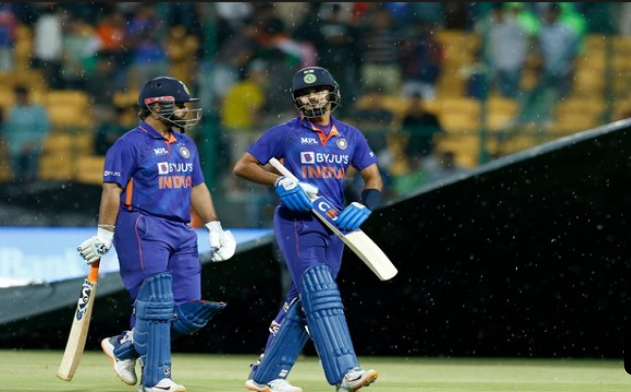
BENGALURU, Oct 17: India and the West Indies finished their five-match T20 international series on level terms after persistent rain forced the abandonment of the final encounter at the M Chinnaswamy Stadium in Bengaluru on Saturday. The series ended in a 2-2 draw, denying both teams a decisive result after a competitive contest that featured a new batting milestone for the hosts.
India produced a blistering start after being asked to bat, reaching 50 runs in just 2.5 overs to establish their fastest team fifty in men’s T20 internationals. However, the remarkable beginning could not be converted into a complete innings as West Indies bowlers fought back with regular wickets before the weather interrupted proceedings.
The match had already been shortened because of rain, and further interruptions eventually brought the contest to an end. India were 108 for five after 7.4 overs when the game was abandoned, leaving the West Indies without an opportunity to complete the chase.
The outcome was disappointing for spectators hoping for a conclusive finish to the series, particularly after both teams had demonstrated their ability to recover from difficult positions during the preceding matches.
India make a record-breaking start
India began their innings aggressively despite losing an early wicket. The opening over produced 14 runs, helped by a combination of extras and a six, giving the home side immediate momentum.
Ishan Kishan then took charge during the second over, attacking Romario Shepherd and collecting 24 runs. His aggressive strokeplay carried India to 38 for one, putting the visitors under pressure before the innings had properly settled.
Sanju Samson continued the charge, striking a boundary off Shamar Joseph as India crossed the 50-run mark in only 2.5 overs.
The achievement surpassed India’s previous best of reaching 50 in three overs against the West Indies in Hyderabad earlier in 2026. It also improved upon the team’s previous rapid starts against New Zealand, Pakistan and Afghanistan.
India’s new benchmark underlined the importance of attacking intent in the shortest international format, where teams increasingly attempt to maximise scoring opportunities during the powerplay.
However, the explosive beginning also came with risks. The West Indies responded by tightening their bowling and taking wickets at regular intervals, preventing India from building a sustained partnership.
Kishan was dismissed for 30, while Samson departed after scoring 16. Their wickets interrupted the early momentum and forced the middle order to rebuild rather than continue scoring at the same extraordinary rate.
Shreyas Iyer contributed 22 from 14 deliveries but could not establish a lengthy innings. Tilak Varma also fell for seven as the visitors continued to find breakthroughs.
The contrasting phases of India’s innings illustrated the balance between aggression and stability required in T20 cricket. Although the opening batters established a record, the West Indies demonstrated that disciplined bowling could still bring a high-scoring side back under control.
Naman Dhir provides late momentum
Naman Dhir emerged as one of the major attractions during the later stages of India’s innings. He immediately attacked the bowling after coming to the crease, striking Keemo Paul for a six followed by a four before adding another maximum.
Dhir continued to find boundaries against the West Indies attack and reached 17 from only four deliveries during one explosive passage of play. His contribution helped India move beyond the 100-run mark in the seventh over.
The right-handed batter’s approach gave the innings fresh energy after the loss of several established players. His ability to score quickly also offered India an opportunity to recover some of the momentum lost through the middle-order dismissals.
Nevertheless, the weather increasingly threatened the contest. Rain disrupted the proceedings as India attempted to accelerate, leaving little room for a conventional finish.
The innings had already been reduced from its original length, and officials subsequently considered a five-over chase, under which the West Indies would have needed 85 runs to win.
That prospect promised a short but potentially dramatic conclusion. However, the continuing rain made further play impossible, and the players eventually shook hands as the match was called off.
India’s score of 108 for five therefore remained the final total of the abandoned encounter.
West Indies fight back after early setback
Although India’s record-setting opening attracted attention, the West Indies also had reasons to take encouragement from their response with the ball.
The visitors faced an aggressive Indian batting order capable of scoring rapidly, but they recovered after the initial assault and prevented the hosts from reaching an overwhelming position.
The dismissals of Kishan and Samson were particularly important because both had contributed to the early scoring surge. Their departures reduced India’s immediate attacking threat and allowed the West Indies to target the incoming batters.
Iyer’s dismissal further disrupted the innings, while the loss of Varma added to the pressure on the remaining batters.
Dhir’s counterattack subsequently restored some of India’s momentum, but the West Indies continued to search for wickets rather than allowing the innings to develop into an uninterrupted scoring spree.
The bowling effort was significant in the context of a series that had remained closely contested. Both teams had opportunities to establish control, and the final match offered another chance to demonstrate their strengths under pressure.
The weather, however, prevented the visitors from testing themselves against India’s final total. With the chase reduced to a possible five-over contest, the match was approaching a different tactical challenge from a conventional T20 international.
A shortened chase would have required the West Indies to score rapidly from the first delivery, while India would have needed to defend their target through attacking field placements and precise bowling.
Neither side received the opportunity to complete that contest.
Series ends without a winner
The 2-2 result reflected the closely fought nature of the five-match series, although the abandoned finale left the teams without a final opportunity to separate themselves.
For India, the record-breaking fifty provided a notable individual achievement for the team and demonstrated the potential of an aggressive approach at the top of the order.
At the same time, the loss of wickets after the initial burst offered lessons about maintaining partnerships and managing the transition between the powerplay and middle overs. A rapid start can create pressure on the opposition, but converting it into a substantial total remains essential.
The West Indies, meanwhile, could draw confidence from their ability to recover after India’s explosive beginning. Their bowling attack showed that early scoring does not necessarily determine the direction of a T20 innings.
The absence of a completed final match also meant that neither side could use the decider to settle tactical questions that had emerged during the series.
For India, maintaining consistency with the ball and finding the right balance between aggressive batting and wicket preservation remain important considerations. The West Indies will similarly look to build on their ability to contain the hosts after an initially difficult passage.
Rain takes centre stage
Weather interruptions have a particular impact on T20 cricket because the format relies on a limited number of overs and leaves little time to recover lost playing opportunities.
A delayed start or shortened innings can change team strategies, influence batting orders and increase the importance of every delivery. In a series decider, such interruptions can be especially frustrating because both teams enter the contest knowing that the result will determine the final standings.
The Bengaluru encounter provided a clear example. India had started strongly enough to establish a national T20I batting record, while the West Indies had begun taking wickets to limit the damage.
The rain prevented those competing phases from developing into a full contest.
The final result therefore belonged neither to the side that produced the fastest start nor to the team that fought back with the ball. Instead, the series concluded with both sides sharing the honours.
India will take the record-breaking opening as a positive, while the West Indies can point to their recovery with the ball. Yet the abandoned decider will remain a reminder that weather can ultimately override the plans of even the most prepared teams.
With the series ending 2-2, both sides leave Bengaluru without a definitive winner, but with useful lessons from a closely contested international campaign.

