


India at UN: Democracy ‘Alien’ to Pakistan, Calls for End to Rights Abuses in Occupied Areas
Ambassador Harish calls for comprehensive UN reforms and highlights Jammu & Kashmir as integral part of India at Security Council debate on UN’s future.
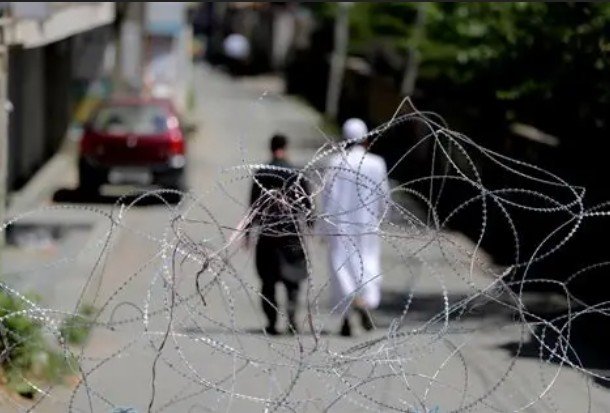
United Nations, Oct 25: India has strongly called upon Pakistan to end grave human rights violations in territories under its illegal occupation, asserting that democracy is an “alien concept” for Islamabad. The statement came during the UN Security Council’s open debate on “The United Nations Organisation: Looking into the Future” on Friday.
Addressing the Council, India’s Permanent Representative to the UN, Ambassador Parvathaneni Harish, said the people of Jammu and Kashmir exercise their fundamental rights in accordance with India’s democratic traditions and constitutional framework.
“We, of course, know that these are concepts alien to Pakistan,” he remarked, reiterating that Jammu and Kashmir “has been, is, and will always be an integral and inalienable part of India.”
Harish condemned Pakistan’s military occupation, repression, brutality, and illegal exploitation of resources, stating:
“We call upon Pakistan to end the grave and ongoing human rights violations in the areas illegally occupied by it, where the population is in open revolt.”
The Indian envoy also emphasized the need for real and comprehensive reforms of the UN, highlighting that the Security Council’s structure, rooted in 1945, no longer reflects contemporary geopolitical realities.
“An outdated Council architecture is not equipped to handle the challenges of 2025. Expansion in both permanent and non-permanent categories through time-bound negotiations is essential,” Harish said.
He stressed that the Global South must have a greater voice in decision-making, adding that postponing reforms does a disservice to the majority of humanity facing development, climate, and financing challenges.
“Global decision-making must be more democratic and inclusive. Progress that is not universal is neither sustainable nor tenable,” he said.
Harish highlighted the urgent need to make UN mechanisms more agile, particularly for peacekeepers facing complex modern challenges, calling for realistic mandates, adequate resources, and technological support.
He urged member states to move beyond divisive politics, saying:
“In a world fractured along multiple fault lines, the United Nations is the only vehicle to harness our collective energies for global public good.”
Invoking India’s civilisational ethos of Vasudhaiva Kutumbakam — “the world is one family” — Harish called for all nations to unite in making the UN fit for the new era of global challenges, including pandemics, terrorism, economic instability, and climate change.

