


India, Bhutan Welcome Progress in Bilateral Development Cooperation
Jaishankar’s September 16–18 visit saw discussions on energy, connectivity, digital payments, trade, education and the Gelephu Mindfulness City.
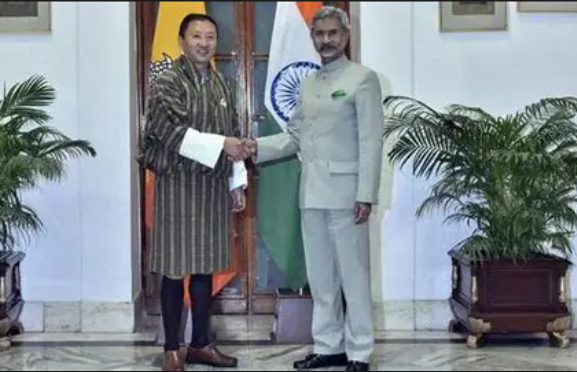
THIMPHU, Sep 18: India and Bhutan reviewed the full range of their bilateral cooperation and welcomed progress in development partnership during External Affairs Minister S Jaishankar’s official visit to Bhutan.
Jaishankar visited Bhutan from September 16 to 18 at the invitation of Bhutan’s Foreign Affairs and External Trade Minister D N Dhungyel. During the visit, he received an audience with King Jigme Khesar Namgyel Wangchuck, called on Prime Minister Tshering Tobgay and held discussions with Dhungyel in Bumthang.
According to a joint press release issued by the two countries, the sides reviewed bilateral cooperation along with regional and international issues of mutual importance. They welcomed the continued strengthening of the special and multi-faceted partnership between India and Bhutan.
Jaishankar reaffirmed India’s support for Bhutan’s developmental goals and priorities, while Bhutan appreciated India’s assistance for programmes under its 13th Five Year Plan for 2024-29. The two sides also discussed ways to expand cooperation in development partnership, energy, trade, connectivity, culture and people-to-people exchanges.
During the visit, several development initiatives were inaugurated or launched. These included the 65-bed Gyaltsuen Jetsun Pema Mother and Child Hospital in Mongar and the Jaganathan Bridge on the Samdrup Jongkhar-Trashigang Highway. The foundation stone for the 500 KW Lunana Hydropower Project in Gasa was also laid.
India also handed over 43 Jersey cows to the National Cattle Breeding Centre in Bumthang and 54 electric vehicles to the Royal Government of Bhutan.
Energy cooperation emerged as a key area of discussion. The two sides expressed satisfaction with the implementation of their Joint Vision on Energy Partnership adopted in March 2024. They welcomed an agreement for a concessional Line of Credit of INR 4,000 crore for energy projects in Bhutan and noted the growing participation of Indian companies in the country’s hydropower sector.
The two countries also discussed connectivity and trade. They welcomed the operationalisation of a new Land Customs Station at Samrang in Assam and reviewed progress on proposed cross border railway links between Gelephu and Kokrajhar and between Samtse and Banarhat.
A UPI-based payment facility has also become operational, allowing Bhutanese nationals to make digital payments in India through Bhutanese mobile applications. The sides further discussed cooperation in the space sector, including the use of satellite data for glacier monitoring, forest resources, flood management and agriculture.
Jaishankar reaffirmed India’s support for the Bhutanese King’s vision for the Gelephu Mindfulness City. Both sides agreed to continue engagement through the Joint Working Group and work towards developing cooperation related to the project.
India also reaffirmed its commitment to establish an Immigration Check Post at Hatisar in Assam to facilitate the movement of investors and visitors to Gelephu.
Education and people-to-people exchanges were another area of cooperation. The two countries welcomed measures to increase scholarship opportunities for Bhutanese students, including doubling seats under Indian Council for Cultural Relations scholarships from 30 to 60 and raising seats under the Nalanda University Scholarship Scheme from 30 to 55. They also agreed to renew the Nehru-Wangchuck Scholarship agreement.
The two sides exchanged views on regional and global developments and recognised the importance of maintaining close bilateral ties. India thanked Bhutan for its support for its candidature for a non-permanent seat on the United Nations Security Council for the 2028-29 term, while India welcomed Bhutan’s ratification of the Framework Agreement of the International Big Cat Alliance.
The visit reaffirmed the longstanding engagement between the two neighbouring countries across development, energy, connectivity, education and other areas of mutual interest. At the conclusion of the visit, Jaishankar invited Dhungyel to visit India at his earliest convenience.

