


India-Canada Trade Talks Enter Fresh Phase as Ottawa Plans 300-Member Business Mission
The two countries are preparing for another round of CEPA negotiations while Canada plans a large business delegation to India to explore investment and commercial opportunities.
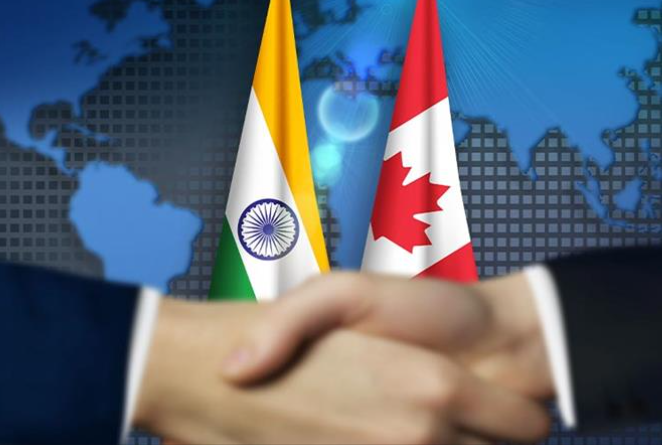
NEW DELHI, Oct 3: India and Canada are stepping up economic engagement as negotiations for a proposed Comprehensive Economic Partnership Agreement enter another phase, with the fifth round of talks scheduled to begin in Ottawa on October 5.
The latest development comes alongside plans by Canadian Trade Minister Maninder Sidhu to lead a business delegation of nearly 300 representatives to India later this month. The mission is intended to help Canadian companies explore commercial opportunities, establish partnerships and expand their presence across sectors of the Indian economy.
Sidhu announced the planned mission after meeting Union Commerce and Industry Minister Piyush Goyal on the sidelines of the G20 Trade Ministers’ Meeting in Milwaukee. The two sides also reviewed progress in negotiations for the proposed trade agreement.
The CEPA talks are aimed at creating a broader framework for trade and investment between the two countries. The negotiations cover areas that can influence the movement of goods, services, investment and business activity between the markets.
The next round in Ottawa follows the fourth round of negotiations held in Mumbai. Indian and Canadian officials have agreed to accelerate discussions, with both governments working toward completing the agreement by the end of 2026.
The proposed agreement has gained significance as both countries seek to expand economic links across several industries. India’s exports to Canada include pharmaceuticals, iron and steel products, seafood, cotton garments, electronic goods and chemicals. Canada supplies India with products including pulses, coal, fertilisers, paper and crude petroleum.
Services are another important part of the relationship. India’s services exports to Canada include telecommunications, computer and information services and other business services.
According to figures cited by Indian officials, bilateral trade has substantial room for expansion. Canada’s trade minister has said the two countries are working toward a target of C$70 billion in two-way trade by 2030. The target was set as both governments renewed their economic engagement and sought to broaden cooperation.
The planned Canadian business mission is expected to give companies from both countries an opportunity to identify specific commercial projects rather than limiting discussions to government-to-government negotiations.
Sidhu said Canadian companies would be looking at opportunities in areas including critical minerals, energy, agriculture, technology and other sectors where Canadian businesses have expertise. During his recent India visit, he also met executives from companies including Mahindra & Mahindra and JSW Group to discuss areas such as life sciences, clean technology, energy transition and aerospace.
Critical minerals have emerged as an important area of potential cooperation because they are increasingly important for batteries, electric vehicles, renewable-energy equipment and advanced manufacturing. Closer commercial ties in this field could connect Canadian resource capabilities with India’s expanding manufacturing and clean-energy requirements.
Energy is another area where the two countries see scope for collaboration. Canada has resources and technological capabilities that can complement India’s growing energy requirements, while Indian companies have been expanding their participation in international supply chains.
The trade negotiations also come after a period in which India-Canada economic relations faced significant diplomatic difficulties. Engagement between the two countries subsequently resumed, and the CEPA process was revived as both governments looked to establish a wider economic framework.
The current negotiations are not limited to tariff reductions. A comprehensive trade agreement can address market access, investment, services and regulatory issues, although the final scope will depend on what negotiators agree.
For Indian exporters, greater access to the Canadian market could create opportunities in sectors where Indian companies already have established capabilities. Pharmaceuticals, textiles, engineering products, electronics and chemicals are among the areas with existing trade links.
Canadian companies, meanwhile, can look to India’s large consumer market and expanding industrial base. Opportunities could emerge in areas such as food and agriculture, mining-related technologies, clean energy, advanced manufacturing and professional services.
The planned 300-member delegation could therefore become an important platform for business-to-business discussions alongside the formal negotiations. Canadian companies will be able to assess local partnerships, potential customers and investment opportunities directly.
The talks are also taking place as India pursues several trade agreements with major economies. New Delhi has been working to diversify export markets and strengthen supply-chain relationships at a time when international trade is being reshaped by tariffs, geopolitical tensions and changing production patterns.
For Canadian businesses, India represents a major market with expanding demand across consumer goods, infrastructure, technology and industrial sectors. For Indian exporters, Canada offers access to a developed market as well as potential opportunities to deepen commercial links across North America.
The two governments are therefore approaching the CEPA negotiations with a broader economic agenda. The objective is not only to increase the value of merchandise trade but also to create conditions for investment and long-term cooperation.
The October 5 round will provide an opportunity for negotiators to address unresolved areas and move discussions forward. Officials on both sides have indicated that they want to maintain the current pace and work toward an agreement before the end of the year.
At the same time, a trade agreement can only be concluded once all major issues have been settled. Businesses will consequently be watching the negotiations for clarity on tariffs, market access, investment provisions and other rules that could affect their operations.
The economic relationship is already supported by established trade flows and a growing network of business contacts. A formal CEPA could provide a wider structure for those relationships if negotiations result in an agreement acceptable to both governments.
The upcoming Canadian trade mission is expected to complement that process by bringing companies directly into the conversation. With representatives from multiple sectors travelling to India, the mission could help identify projects and partnerships that may continue irrespective of the pace of the government-level negotiations.
For India, the development comes as policymakers seek to strengthen external trade while supporting domestic manufacturing and services. Greater access to international markets can provide exporters with additional opportunities, while foreign investment can bring capital, technology and commercial connections.
For Canada, stronger ties with India can support efforts by businesses to expand their presence in a major Asian economy and develop new partnerships in strategic sectors.
The next few weeks will therefore be closely watched by companies engaged in India-Canada trade. The fifth negotiating round, followed by the planned Canadian business mission, will bring government officials and industry representatives into parallel discussions on how bilateral economic ties can be expanded.
The immediate focus remains the CEPA negotiations beginning October 5. The longer-term objective is to build a broader commercial relationship covering trade, investment, technology, energy and critical minerals, with both sides working toward their 2030 trade target.

