


India-China Ties Cannot Be Held Hostage to Boundary Issues Alone: Former CDS Chauhan
Former Chief of Defence Staff Anil Chauhan says unresolved LAC differences and growing military infrastructure pose risks, but India must continue engaging Beijing amid shifting global alliances.
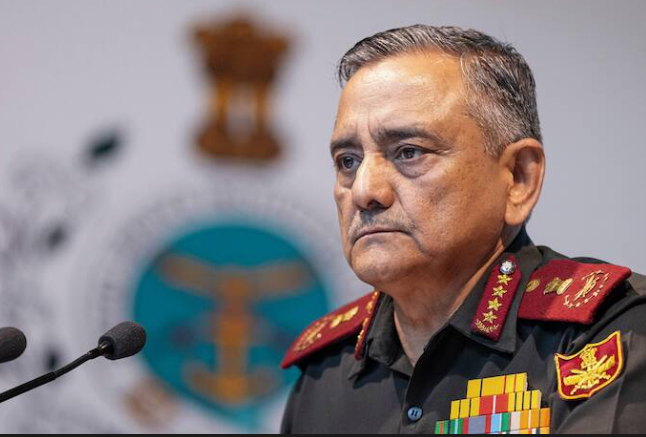
NEW DELHI, Sept 5: Former Chief of Defence Staff Anil Chauhan on Saturday described China as a long-term and wide ranging challenge for India, while stressing that bilateral ties with Beijing should not be restricted solely to the unresolved boundary dispute.
Speaking at a lecture titled ‘Threats and Challenges to India’s Security’ at the Teen Murti Bhawan complex, Chauhan said the absence of a mutually accepted Line of Actual Control (LAC), differences in perceptions and increasing military infrastructure along the frontier continue to create the potential for friction and escalation.
“The boundary issue remains unresolved, and there’s no mutually agreed definition even on Line of Actual Control,” Chauhan said, adding that border stability would require constant vigilance, credible capabilities, clear agreements and consistent compliance with them.
His remarks came shortly after National Security Advisor Ajit Doval met Chinese Foreign Minister Wang Yi in Beijing under the Special Representatives mechanism. The discussions focused on the delimitation of the India-China boundary and strengthening cooperation on trans-boundary matters.
The talks were held ahead of Chinese President Xi Jinping’s expected visit to India for the BRICS summit scheduled to take place on September 12-13.
Chauhan also welcomed reports about the possible establishment of military hotlines and corps commander-level discussions in the Northeast, calling such measures a positive development for maintaining communication and reducing the risk of misunderstandings.
Highlighting the complexity of the relationship, the former CDS said India and China are major Asian powers, large economies and civilisational states. While the two countries compete and cooperate in different areas and have contrasting perspectives on regional and global affairs, sustained engagement remains necessary.
He pointed to India’s participation alongside China in platforms such as the Shanghai Cooperation Organisation (SCO) and BRICS as examples of areas where dialogue continues despite differences.
According to Chauhan, how New Delhi and Beijing manage their simultaneous rise will have a significant bearing on the future security and strategic landscape of Asia.
He also flagged instability in several countries in India’s neighbourhood as another major security concern, saying developments in the region would need to be closely monitored and managed.
Turning to the broader international environment, Chauhan said the world is undergoing a period of geopolitical uncertainty in which established power balances have weakened while a new global order has yet to fully take shape.
He described the emerging situation as a possible period of prolonged “disorder”, warning that it could pose a significant challenge for India.
The former CDS said international partnerships were increasingly becoming issue-based and transactional, making it difficult to permanently categorise countries as either friends or adversaries.
“A partner in trade may be a competitor in technology. A security partner in one theatre may hold different position in the different theatre,” he said, underlining the rapidly changing nature of international relations.
Chauhan further observed that strategic alignments could vary across regions, with countries adopting different positions in the Indo-Pacific and Eurasian theatres depending on their interests.
He cautioned that the changing global environment was contributing to a greater willingness among nations to employ force.
While international law continues to have an important role, its enforcement remains uneven, he said, adding that powerful nations often interpret international rules according to their national interests.
Against this backdrop, Chauhan stressed the importance of India remaining prepared for a wide range of security contingencies.
He also underlined the significance of self reliance, saying reducing dependence on external sources would help India minimise vulnerabilities and strengthen its ability to respond to emerging strategic challenges.

