


India Eye Strong Comeback Against England as Rain-Hit T20 Series Moves to Manchester
After the opening T20I was washed out, India and England gear up for a crucial second clash in Manchester, with both teams looking to seize momentum in the five-match series.
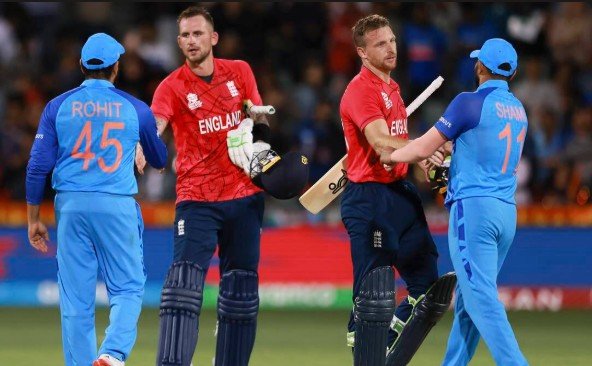
NEW DELHI/MANCHESTER, Jul 4: India will look to make a strong statement in the second T20 International against England in Manchester on Saturday after the opening game of the five-match series ended without a result due to persistent rain. With the series still level at 0-0, the contest at Old Trafford assumes added significance as both sides aim to grab the early advantage in what promises to be a closely fought white-ball battle.
The first match, played at Chester-le-Street earlier this week, was heavily affected by wet weather and had to be called off, denying fans a proper start to the series. For the Indian camp, the abandonment meant unfinished business rather than disappointment. The visitors had arrived in England hoping to build rhythm quickly in the shortest format, and the washout only heightened the importance of the second game.
Saturday’s fixture in Manchester is therefore not just another bilateral T20I. It is effectively the true beginning of the series a match that could shape tactics, combinations and confidence for the remainder of the tour. India, known for their batting depth and improved adaptability in overseas conditions, will be keen to make the most of a fresh start.
Series Begins for Real After Chester-le-Street Washout
The abandonment of the opening match left both teams with little more than a training hit in match conditions. Team managements on both sides would have preferred a proper outing to test combinations, but the rain meant plans had to be reworked quickly.
For India, the rain-enforced break may have offered extra time to assess balance and conditions, especially given the challenge of English surfaces in early July. The weather has remained a talking point throughout the tour, with overhead conditions often influencing team selection, bowling changes and batting strategy.
The lack of a result in the first game means the five-match series is now effectively reduced in terms of margin for error. A victory in Manchester would put either side in control, while a defeat would increase pressure heading into the third match at Nottingham.
India’s Focus on Fast Start and Middle-Order Stability
India’s biggest objective in Manchester will be to secure a solid start with the bat and ensure that the middle order is not left with too much to do. In recent T20 outings, India have often looked most dangerous when the top order has provided a platform inside the powerplay, allowing the middle overs to be used for controlled acceleration rather than rescue work.
The team management is likely to back an aggressive approach at the top, but without abandoning game awareness. English conditions can tempt batters into risky strokes early, particularly when the ball swings under cloud cover. India’s challenge will be to strike the right balance between intent and patience.
The middle order will also be under scrutiny. T20 cricket increasingly revolves around role clarity who anchors, who attacks spin, who handles pace off the ball, and who finishes the innings in the final five overs. India’s think tank is expected to lean on flexibility, but the team will still want a more settled batting flow than what rain allowed in the opening game.
Bowlers Could Decide the Manchester Contest
If the weather remains overcast and the pitch offers seam movement, India’s pace attack could become the defining factor in the second T20I. The bowlers are expected to enjoy greater assistance in Manchester than they would on flatter subcontinental tracks, and the contest may well be decided by who adapts quicker with the new ball.
India’s seamers are likely to target hard lengths early, mixing conventional swing with cross-seam deliveries and variations into the surface. The death overs will also be crucial, particularly if the match becomes high-scoring in the second half under better batting conditions.
England, meanwhile, will be eager to exploit familiar home conditions. Their batting line-up traditionally thrives on momentum and fearless strokeplay, especially in T20 cricket where they have often taken the game away from opponents in quick bursts. India’s bowlers will therefore need to control not just the scoreboard but also the tempo of the innings.
England Banking on Home Conditions and Firepower
England enter the Manchester match with the advantage of local familiarity, but they too face a challenge after the opening washout denied them competitive time in the middle. Their strategy is expected to revolve around attacking from the outset, especially if the surface settles and the weather allows a full game.
The hosts possess the kind of batting depth that can recover quickly from early setbacks, making them dangerous even if wickets fall in the powerplay. Their approach is generally built on calculated aggression rather than conservative accumulation, and India’s bowlers will have to stay disciplined with line and pace.
On the bowling front, England are likely to rely on a mix of seam movement upfront and pace variations later in the innings. They know that India’s batting unit can punish width and loose lengths, so execution will be central to their plans.
Tactical Battle: Powerplay, Spin Matchups and Death Overs
One of the most intriguing aspects of the Manchester contest will be how both teams handle the three defining phases of T20 cricket — the powerplay, the middle overs and the death overs.
For India, a productive powerplay with bat and ball could immediately tilt the game in their favour. If the top order can survive the initial swing and convert starts into a stable launchpad, India’s middle-order hitters will have the freedom to attack. Conversely, if the bowlers can strike early against England’s aggressive openers, the pressure may shift rapidly to the home side.
The middle overs could bring spin into play, depending on the surface. On English pitches, spin does not always dominate through turn, but clever spinners can still control scoring by varying pace, angles and lengths. India’s spin resources may be used as much for control as for wickets, especially against batters looking to force the tempo.
Then comes the decisive final phase. T20 matches are often won or lost in the last five overs, and both sides have enough hitting power to add 50 or more in that stretch. Death bowling yorkers, slower balls, wide lines and boundary protection — will be under the spotlight.
Team Selection Questions Before the Second Match
With the first game washed out, the second T20I offers the first real opportunity for both camps to test their combinations under pressure. India’s management could be tempted to retain the same core group, but conditions in Manchester may influence the final balance between batting depth and bowling variety.
If the pitch appears green and the weather remains cloudy, India may prefer an extra seamer or a pace-bowling all-round option. If it looks drier, an additional spin option could come into the equation. The final call will likely depend on how much the team expects the surface to change between innings.
England too will weigh flexibility against familiarity. At home, they usually trust their batting depth and back their bowlers to defend totals or control chases. But against a side like India, even small selection decisions can have a major impact on matchups.
A Key Match in the Build-Up to Bigger White-Ball Targets
Though bilateral T20I series are often viewed as short-term contests, matches like the one in Manchester carry broader significance. Both India and England are in phases where squad depth, role clarity and tactical adaptability matter greatly in the lead-up to larger ICC assignments.
For India, every overseas T20I series serves as a testing ground for combinations, temperament and flexibility in different conditions. Winning in England requires more than talent; it demands control over phases, composure under pressure and quick tactical adjustments. A strong performance in Manchester would therefore be important not just for the series scoreline but also for the team’s broader white-ball development.
England, similarly, will want to assert themselves at home and re-establish rhythm in familiar conditions. Their white-ball identity has long been built on aggressive cricket, and they will be eager to show that they can still dictate terms against top opposition.
Fans Expect a Full Contest After Rain Frustration
After the washout in Chester-le-Street, fans on both sides will be hoping the Manchester weather allows a complete game. The opening abandonment was a dampener for a series that had generated significant interest, and a full contest at Old Trafford would restore momentum to the tour.
Indian supporters will be especially keen to see how the side approaches the challenge after a stop-start beginning. England, too, will want to deliver a strong home performance in front of their crowd.
If conditions cooperate, the second T20I has all the ingredients of a gripping encounter — two deep batting line-ups, contrasting tactical strengths, quality bowling options and the added pressure of a series still waiting for its first decisive result.
What Is at Stake in Manchester
At one level, the equation is simple: the winner goes 1-0 up in a five-match series and gains a psychological edge. But at another level, the match is about much more. It is about combinations, momentum, confidence and the ability to handle English conditions under pressure.
India will see this as a chance to stamp authority early and remind England that their T20 ambitions are not limited to home conditions or subcontinental surfaces. England will view it as an opportunity to use familiarity, power and tactical aggression to seize control.
With the first match lost to rain, Manchester now becomes the true launchpad of the series. And if both teams play to potential, the second T20I could end up being one of the most defining contests of the tour.

