


India Face Series Survival Test in Bristol as Fourth T20I Against England Turns Into Must-Win Clash
Shreyas Iyer’s side heads into a high-pressure night at the County Ground with the series slipping away, while England look to finish the contest in front of home fans
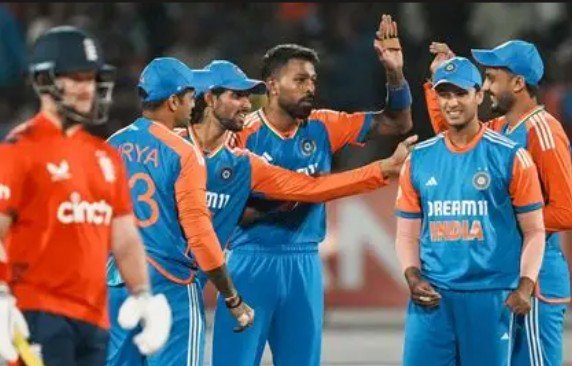
NEW DELHI, Jul 10: India headed into the fourth T20 International against England with the five-match series hanging in the balance, turning the Bristol fixture into a defining test of nerve, execution and adaptability for a side still searching for consistency on the tour. With England holding the advantage and India under pressure to keep the contest alive, the County Ground clash has emerged as one of the most important matches of the series so far, not only because of the scoreline but because of what it may reveal about India’s ability to respond under sustained pressure in overseas conditions.
The build-up to the fourth match has been dominated by one simple reality: India can no longer afford another slip. Having fallen behind in the series, the visitors now find themselves in a position where every tactical call, batting partnership and bowling spell could shape the fate of the tour. A defeat would hand England the series, while a win for India would restore momentum and take the contest into a decider-like finish. In a short bilateral series, the margin between recovery and collapse can be brutally thin, and Bristol now represents that line for the Indian side.
From India’s perspective, the concern has not been a complete absence of quality but rather the inability to stitch together a complete T20 performance across all three departments at the same time. There have been moments of promise with the bat, flashes of control with the ball and occasional bursts of athletic fielding, but England have repeatedly been the side better able to turn those moments into match-winning phases. India’s challenge, therefore, is not merely technical; it is about sustaining intensity for the full 40 overs and showing the clarity required in pressure situations.
Captain Shreyas Iyer’s role comes under special focus in such circumstances. Leadership in a T20 series is often judged in accelerated time. Decisions on bowling changes, batting order adjustments, match-ups and tempo management are magnified because the format offers so little room to recover from errors. Iyer’s own batting becomes equally important, because when a side is chasing rhythm, the captain’s innings often set the emotional tone for the dressing room. India will want both authority and calm from their skipper in Bristol, particularly if the game swings through a difficult middle phase.
India’s batting unit has shown enough talent to suggest it can post or chase a winning total, but the order has lacked collective fluency at crucial moments. There have been stretches where batters have looked comfortable, only for the innings to stall through poor shot selection, mistimed acceleration or a cluster of wickets that shifted control back to England. In T20 cricket, the difference between a total of 165 and 190 can often be traced to one ten-over period where a side either maximises momentum or wastes it. India’s task in the fourth match is to ensure that such passages are handled with greater discipline.
The top order, in particular, will carry a significant burden. A strong start not only places runs on the board but also allows the middle order to play with freedom rather than repair damage. If India can secure a stable platform inside the powerplay, they can begin to dictate terms rather than constantly respond to the game. But if early wickets continue to fall, England’s bowlers will once again be able to squeeze the middle overs and force India into risk-heavy recovery mode.
England, by contrast, arrive with the confidence of a side that has managed key phases better and capitalised on India’s uncertainty. Their approach has been assertive without becoming reckless, and their bowlers have shown an ability to identify moments of vulnerability and attack them. The home side’s batting depth also gives them flexibility, allowing them to absorb an early setback without abandoning aggression. This combination of tactical clarity and home familiarity has given England the edge so far, and they will see Bristol as an opportunity to close the series before India can gather momentum.
Conditions at the County Ground could prove influential. Bristol has often been associated with good batting surfaces, but as with many English venues, weather, overhead conditions and the pace of the wicket can alter the contest quickly. If there is assistance for seamers early on, the opening exchanges become especially important. Equally, if the pitch remains true, the side that handles the middle overs with smarter intent could take control. For India, reading conditions quickly and adapting their plans without delay will be essential.
The bowling attack remains another key area of concern and opportunity. India’s bowlers have had moments where they looked capable of dragging the side back into the game, only for a loose over or a poor finish to undo that work. Against a powerful England batting line-up, the margin for error is slim. Lengths must be precise, yorkers must land, slower balls need variation and field placements have to support the plan rather than merely react to it. If India are to stay alive in the series, the bowlers must deliver not just isolated breakthroughs but a full innings of pressure.
Death bowling could once again decide the contest. Modern T20 matches are frequently won in the last five overs, where a side either launches a late surge or watches a manageable total spiral out of reach. India will need control at the back end, both with ball and bat. That means bowlers who trust their execution under pressure and finishers who can turn set up overs into a decisive assault. The team that owns the final stretch in Bristol is likely to own the night.
There is also a larger narrative around this series for India. Bilateral T20 contests may not carry the weight of a World Cup, but they remain crucial laboratories for team-building, role clarity and temperament under pressure. India’s management will be evaluating not just results but combinations, flexibility and the readiness of players to handle difficult overseas assignments. A must-win game against England, in English conditions, provides a revealing test of all three.
The middle order will be under particular scrutiny. In recent T20 cricket, the value of adaptable middle-order batters has grown sharply. These are the players who must either stabilise after early wickets or accelerate immediately if the platform is strong. India need that segment of the batting order to read the game better. Too often in pressure chases, sides fall into one of two traps: retreating into caution when acceleration is needed, or overcompensating with high-risk strokes when patience would serve better. Bristol demands better judgement.
Fielding, often treated as a supporting theme, could be decisive as well. In a series where margins have been narrow, one dropped catch, one misfield at the rope or one missed run-out can shift momentum dramatically. England have often prided themselves on energy in the field, and India cannot afford to give away extra runs or extra chances. A high-pressure T20I tends to reward the side that stays sharper for longer, and that sharpness must extend beyond batting and bowling.
For England, the equation is simpler but no less significant. A win would not just secure the series; it would confirm the depth and control they have shown through most of the tour. They have managed key moments better, and their ability to keep India under scoreboard and tactical pressure has been central to their advantage. Closing the series in Bristol would also underline the consistency of their white-ball structure and reinforce their comfort in home conditions against one of the game’s strongest cricketing nations.
India, however, still have enough quality to flip the script. One dominant top-order innings, one spell of disciplined pace bowling or one all-round performance from a key player can alter the emotional and competitive direction of a T20 series very quickly. The challenge is not whether India have match-winners; they do. The challenge is whether those match-winners can deliver together on the same night when the consequences are immediate.
This is what makes the fourth T20I more than just another fixture. It is a pressure chamber for India’s tactical planning, leadership and composure. It is also a chance to demonstrate resilience after a difficult start to the series. Teams are often defined not by how they perform when everything is flowing, but by how they respond when one more defeat would end the contest. Bristol gives India that test.
If the visitors can produce a complete performance, the series narrative changes at once. England’s control would be challenged, the final match would gain fresh significance and India’s belief would be restored. If they fall short, the story becomes one of missed chances, uneven execution and a home side that knew how to finish the job. Either way, the fourth T20I stands as the pivotal moment of the tour so far.
As the teams take the field, India know what is at stake. The margin for experimentation has disappeared. This is now about urgency, clarity and execution. Bristol will ask whether India can respond when the series is slipping away. Their answer will shape not only the result of this match, but the entire tone of the tour.

