


India Name Pickleball World Cup Squad as Emerging Sport Targets Breakthrough on Global Stage
Indian Pickleball Association unveils contingent for Vietnam event, signalling growing ambition in one of the country’s fastest-rising sports and a push to convert domestic momentum into international success
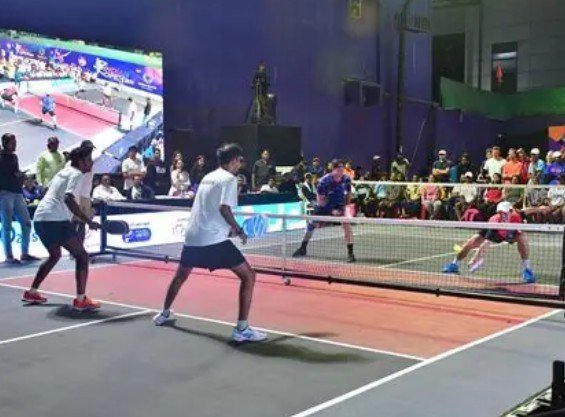
NEW DELHI, Jul 9: India’s growing presence in pickleball received a significant boost after the Indian Pickleball Association announced the national contingent for the Pickleball World Cup 2026, setting the stage for a major international test as the sport continues its rapid rise across the country. The tournament, scheduled to be held in Da Nang, Vietnam, from August 30 to September 6, is expected to provide India with one of its biggest opportunities yet to measure its progress against leading international competition and strengthen its credentials in a sport that has moved from novelty to serious competitive pursuit in a remarkably short span of time.
The naming of the squad is important not only because it identifies the athletes who will represent the country, but because it reflects the growing structure around pickleball in India. What was once seen by many as a recreational pastime has increasingly evolved into an organised sporting ecosystem with competitive pathways, selection systems, coaching frameworks and a visible national ambition. The World Cup squad announcement therefore marks another step in that transformation, signalling that India is no longer merely participating in the sport’s rise but actively trying to shape its place within it.
Pickleball’s growth in India has been among the more striking stories in the country’s recent sporting landscape. Over the last few years, the sport has gained traction across age groups, cities and playing communities, helped by its accessibility, relatively low entry barrier and appeal to both new and experienced racquet-sport players. But beyond participation numbers, the more meaningful shift has been institutional. Associations, academies and event organisers have begun building competitive circuits, talent identification systems and ranking-based pathways that allow players to move from local competition to national contention.
The World Cup now becomes the clearest stage yet on which to test whether that domestic momentum can translate into global performance. International tournaments tend to expose the true depth of a sport’s development in any country. It is one thing to build enthusiasm at home; it is another to compete against players shaped by mature systems, consistent exposure and high-pressure international match play. India’s squad, therefore, heads to Vietnam carrying both opportunity and responsibility. A strong showing would validate the investment made so far and encourage even faster growth back home. A difficult campaign, while still valuable, would underline the areas where further work is required.
The Indian Pickleball Association has described the squad selection as the result of a competitive process, reflecting the widening pool of talent now available for national consideration. That in itself is a significant indicator of the sport’s expansion. In emerging sports, one of the earliest signs of real development is not just the presence of elite athletes but the existence of competition for places. A deeper player base forces higher standards, rewards consistency and creates a healthier performance culture. If India is now at a point where selection for a World Cup squad is intensely contested, it suggests the sport has moved beyond its introductory phase.
The challenge for the selected players will be to convert domestic success into international composure. World events demand more than technical skill. Athletes must deal with travel, pressure, unfamiliar opponents, shifting conditions and the psychological strain of representing their country. In racquet sports especially, the margins can be narrow and momentum can swing quickly. Players who manage their emotions, adapt tactically and stay disciplined in key moments often outperform those with equal or even superior raw skill. India’s contingent will therefore need not just preparation in strokes and strategy, but readiness in temperament.
The rise of pickleball in India also says something broader about the country’s sporting culture. For decades, the Indian sporting conversation has understandably revolved around a relatively narrow set of disciplines, with cricket dominating attention and a handful of Olympic sports commanding periodic focus. But the last several years have shown a wider diversification. From endurance sports and combat disciplines to racquet sports and niche leagues, Indian audiences and athletes are increasingly open to new formats and emerging competitions. Pickleball’s surge fits squarely within that pattern. It reflects a sporting ecosystem becoming more varied, more entrepreneurial and more willing to build from grassroots upward.
There are practical reasons for pickleball’s appeal as well. The game combines elements familiar to players from tennis, badminton and table tennis, while remaining physically accessible enough to attract recreational participants. That broad appeal has helped create a bridge between casual play and competitive ambition. Many sports struggle because they either remain too recreational to produce elite pathways or too elite to build mass participation. Pickleball, at least in India’s current phase, appears to be benefiting from both ends of the spectrum: a growing casual base and an increasingly serious competitive core.
The World Cup will now provide a useful benchmark for how far India has come in converting that popularity into performance. Questions around shot discipline, doubles chemistry, game management and endurance under tournament conditions will all come into play. In sports with rapidly evolving international standards, learning curves can be steep. The countries that progress fastest are usually those that treat international competition not just as a medal chase but as a source of data, experience and tactical learning. India’s approach to the World Cup will matter as much as the result itself.
One of the most interesting aspects of India’s pickleball journey is how quickly the sport has moved into the language of national ambition. That transition can be risky if it gets ahead of reality, but it can also be energising if backed by proper planning. The announcement of a World Cup squad gives players a visible target, gives younger athletes a pathway to imagine and gives administrators a focal point for investment. It also creates public narratives, which matter in sport. Once athletes begin to represent the country at global events, the sport acquires legitimacy in the eyes of sponsors, schools, local clubs and aspiring players.
The Vietnam tournament may therefore carry significance beyond medals alone. It could influence how state associations plan future competitions, how academies design training programmes and how seriously institutions begin to view pickleball as a sport worth supporting over the long term. International exposure often acts as a catalyst. Strong performances can accelerate funding and participation; even difficult tournaments can clarify what needs to be built next. Either outcome can be useful if the sport’s administrators are prepared to act on the lessons.
For the players, though, the immediate focus will be narrower and more intense. They will be thinking about match-ups, combinations, court conditions, recovery and the challenge of competing against athletes from countries where pickleball has had a longer developmental runway. Success in such an environment will demand discipline. It will require clear communication in doubles, efficient movement, strong returns, smart net play and the ability to handle pressure points without panic. In fast-rising sports, the technical gap between teams is often smaller than expected; composure and preparation can become the real difference-makers.
India’s participation in the World Cup also comes at a time when the global pickleball landscape itself is expanding rapidly. The sport has seen rising visibility in North America and increasing traction in other regions, bringing with it greater professionalism, sponsorship interest and competitive depth. For countries like India, this creates both urgency and opportunity. Urgency, because the standards will keep rising and latecomers can quickly fall behind. Opportunity, because sports in expansion phases often allow ambitious nations to build quickly and establish themselves before hierarchies become too rigid.
That is why squad announcements such as this matter. They are not isolated administrative exercises. They are markers of where a sport stands in its growth cycle. India’s decision to formalise its World Cup push, identify a competitive contingent and position itself for international competition suggests that pickleball is moving into a more serious chapter domestically. The next challenge is to ensure that this chapter is backed by continuity: more tournaments, stronger coaching systems, broader youth engagement and regular international exposure.
The role of visibility cannot be ignored either. If India’s World Cup campaign attracts attention and produces compelling stories, it could help bring new players into the sport and deepen public recognition. Many sports in India have grown not only through policy and infrastructure but through moments — one medal, one breakthrough run, one televised performance that changes how people see the game. Pickleball may still be searching for that defining national moment, but a World Cup appearance offers the kind of platform from which such moments can emerge.
As things stand, the squad announcement is both a reward for players who have earned selection and a signal of intent from a sport on the rise. India is not approaching the Pickleball World Cup as a symbolic participation exercise. The very framing of the squad, the selection process and the attention around the event suggest a desire to compete seriously and establish a stronger international foothold.
Whether that ambition translates into a standout tournament remains to be seen. But the direction of travel is unmistakable. Pickleball in India is no longer on the fringes of the sporting conversation. It is building structure, attracting talent and creating opportunities for athletes to wear national colours on major stages. The World Cup in Vietnam will be the next test of that progress, and perhaps the clearest indication yet of how far India can go in one of the world’s fastest-growing sports.
For now, the message from the squad announcement is straightforward: India is ready to take its pickleball ambitions beyond domestic enthusiasm and into global competition. What happens in Da Nang will matter, but the fact that the country is now preparing for a World Cup with serious intent is itself a sign of how rapidly the sport has advanced.

