


India Restored Over 21 Million Hectares of Degraded Land Between 2011 and 2020: Bhupender Yadav
Environment Minister Bhupender Yadav highlights the environmental and employment gains from India's large scale land restoration efforts at UNCCD CoP 17 in Mongolia.
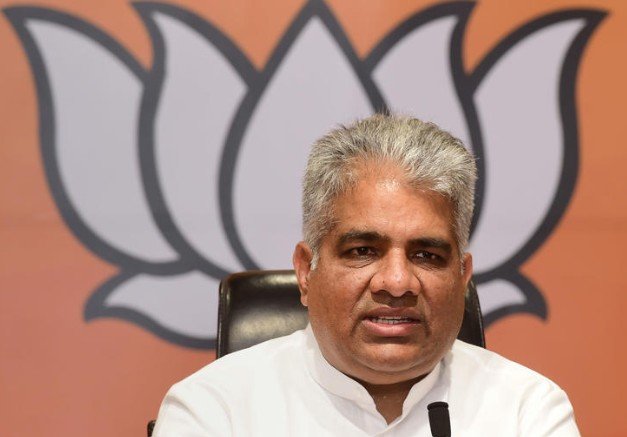
NEW DELHI, Aug 24: India restored more than 21 million hectares of degraded and deforested land between 2011 and 2020, creating around 1.22 billion person days of employment, Environment Minister Bhupender Yadav said on Monday.
Yadav made the remarks while addressing a side event organised by the International Union for Conservation of Nature (IUCN) during the 17th Conference of the Parties (CoP 17) to the United Nations Convention to Combat Desertification (UNCCD) in Mongolia.
The minister said India’s experience shows that ecological restoration can deliver significant environmental as well as socio-economic benefits. Restoring damaged landscapes has helped improve ecosystems while generating employment and supporting livelihoods, particularly in rural areas.
He noted that the restoration work covered several land use systems, including forests, agriculture, soil conservation, water conservation and other landscape-based initiatives.
Yadav stressed that restoring degraded land cannot depend on a single government programme or sector. Effective results require coordinated action across different landscapes and levels of governance, involving local communities, state governments and the Union government.
Highlighting India’s institutional approach, he cited the Green India Mission as an important initiative aimed at expanding forest and tree cover, improving ecosystem services and strengthening resilience to climate change.
The minister also pointed to the role of the Compensatory Afforestation Fund Management and Planning Authority (CAMPA), through which substantial financial resources are being channelled towards compensatory afforestation and related ecological restoration programmes.
According to Yadav, sustained restoration efforts require strong institutional mechanisms, adequate financing, scientific expertise and effective monitoring systems. Collaboration between different sectors and stakeholders is equally important to achieve restoration targets on a larger scale.
He said India’s progress demonstrates that ambitious environmental commitments can be converted into measurable results when supported by long-term planning and coordinated implementation.
Yadav reaffirmed India’s commitment to working with international partners to expand restoration initiatives and contribute to global efforts to combat land degradation and desertification.
He said the country’s experience offers an example of how large scale environmental programmes can simultaneously strengthen ecosystems, create employment and support communities dependent on natural resources.

