


India Targets 300 GW Peak Power Demand as Centre Pushes Clean Energy Manufacturing Drive
The government has projected India’s peak electricity demand could touch 300 gigawatts next year, prompting a fresh policy push to strengthen domestic manufacturing of clean energy equipment, expand storage capacity and reinforce the national power system against rising consumption.
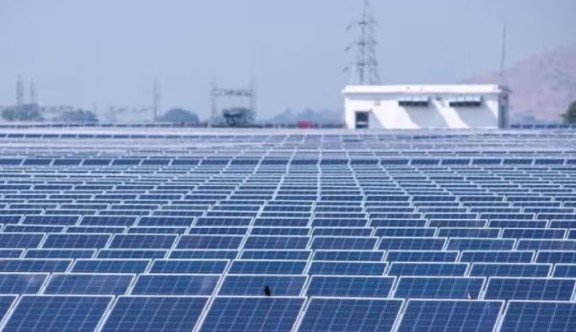
India, July 09 : India is preparing for a major jump in electricity demand next year, with the Centre estimating that peak power consumption could rise to around 300 gigawatts, a milestone that underlines both the scale of the country’s economic expansion and the urgency of strengthening its energy infrastructure. The projection, outlined by the Union power ministry on July 8, has sharpened the government’s focus on building domestic manufacturing capacity for clean-energy equipment, improving grid resilience and accelerating the shift towards a more self-reliant and future ready power system.
The new demand estimate comes at a time when India’s electricity needs are being driven by several overlapping trends: rapid urbanisation, industrial expansion, rising temperatures, increasing household appliance usage, a growing digital economy and the wider electrification of transport and services. Policymakers believe the country must move quickly not only to ensure that power shortages do not undermine growth, but also to make sure that the additional electricity demand is met in a way that is financially sustainable, technologically modern and aligned with India’s climate commitments.
Power Minister Manohar Lal said India’s power planning can no longer be guided only by immediate seasonal requirements. Instead, the country must prepare for structurally higher demand over the next several years as consumption patterns evolve and the economy expands. The 300 GW estimate is therefore more than a short-term operational forecast; it is also a policy signal that the next phase of India’s energy strategy will be centred on scale, security and domestic industrial capability.
The government’s latest position reflects a broader lesson drawn from recent years. India has repeatedly seen record-breaking power demand during periods of extreme heat, with the grid facing stress from surging cooling loads, agricultural consumption and industrial usage at the same time. Each summer has reinforced the need for more generation, more flexible balancing capacity and stronger transmission infrastructure. Officials now appear determined to avoid a reactive approach by planning ahead for a much larger power system rather than waiting for shortages or volatility to force last-minute interventions.
At the heart of this strategy is a renewed push to manufacture more clean-energy components within India. The Centre wants the country to reduce dependence on imported equipment such as solar modules, battery systems, advanced power electronics and related infrastructure that will be essential to support the next wave of electricity demand. By encouraging domestic production, the government is trying to achieve multiple goals at once: cut import vulnerability, support industrial growth, generate jobs, deepen the local supply chain and position India as a more competitive player in the global clean-energy market.
This manufacturing push is closely tied to India’s longer-term energy transition. Solar and wind capacity additions are expected to remain central to the country’s strategy, but policymakers increasingly recognise that renewables alone cannot solve the challenge of meeting sharp peaks in demand unless they are supported by storage, transmission upgrades and flexible dispatch systems. As a result, the clean-energy agenda is gradually shifting from a simple capacity-addition model to a broader ecosystem approach that includes batteries, pumped hydro, smart grids, local manufacturing and grid balancing solutions.
The 300 GW demand projection also highlights the changing nature of India’s economic growth. For decades, electricity demand was heavily associated with traditional industrial and agricultural patterns. While those remain important, the structure of demand is becoming more diversified. Commercial real estate, data centres, e-commerce logistics, urban transport systems, digital infrastructure and rising middle-class consumption are all reshaping the electricity map. Air-conditioner penetration, for example, is expected to expand sharply over the next decade, and cooling demand is already becoming one of the biggest seasonal drivers of peak load.
This transformation means that India’s power system must become more sophisticated. It is no longer enough to simply add more generation capacity. The system must also become better at forecasting demand, integrating intermittent renewable sources, managing regional imbalances and responding to sudden spikes in consumption. The challenge is not just one of volume, but of timing, flexibility and resilience. Peak demand often occurs in compressed windows, and the ability to meet those peaks without triggering supply disruptions is a key test of the grid’s strength.
The government’s emphasis on domestic clean-energy manufacturing is partly a response to this new reality. Solar panels, battery packs, inverters, transformers and transmission equipment are no longer peripheral industrial products; they are becoming strategic assets in the energy economy. If India’s electricity system is to grow quickly while remaining stable and affordable, the country will need a much larger local ecosystem of manufacturers, suppliers, service providers and technology partners. That is why energy policy and industrial policy are now increasingly overlapping.
Officials believe that scaling up local production can also reduce costs over time and improve project execution. Import dependence exposes developers and utilities to global price swings, shipping disruptions and currency volatility. In a period when geopolitical tensions and supply-chain realignments are affecting trade flows across the world, India sees value in creating a more predictable domestic pipeline for the equipment required to expand generation and modernise the grid. The same logic applies to battery storage, which is likely to play a crucial role in handling renewable variability and peak demand management.
Storage is emerging as one of the most important pillars of India’s next power phase. As renewable capacity expands, the grid will need more systems capable of storing electricity during periods of excess generation and releasing it when demand rises or renewable output dips. Batteries and pumped hydro are expected to become increasingly important in this context. Without adequate storage, even large additions in solar and wind capacity may not fully solve the problem of evening peaks or regional demand mismatches. A 300 GW peak-demand environment will require the grid to become much more flexible than it is today.
Transmission infrastructure is another critical piece of the puzzle. India has made significant progress in building a national grid capable of moving power across states, but rising demand and greater renewable integration will require another round of investment. Renewable resources are not always located close to demand centres. Large solar parks, wind corridors and storage sites need transmission links that can carry electricity efficiently to industrial hubs and urban markets. The more the country depends on renewable energy and inter-state balancing, the more important transmission planning becomes.
The government’s latest energy messaging also carries a business dimension beyond utilities and power producers. A projected 300 GW peak demand creates a large opportunity for capital expenditure across multiple sectors: equipment makers, engineering firms, EPC contractors, battery manufacturers, grid technology providers, renewable developers, financiers and logistics players. In effect, the power sector is becoming one of the most important investment themes in India’s growth story, because it sits at the intersection of infrastructure, manufacturing, climate policy and industrial competitiveness.
For investors, the significance of the government’s projection lies in what it says about future capital allocation. If demand is indeed set to reach 300 GW, the country will need not only more generation capacity but also a broader ecosystem of support assets: substations, transmission corridors, distribution upgrades, balancing technologies, storage units and digital monitoring tools. This implies a multi-year pipeline of public and private investment. It also suggests that companies with exposure to grid infrastructure, power equipment and energy-transition technologies could see sustained policy support and commercial opportunity.
The domestic manufacturing push is likely to benefit from existing policy frameworks such as production-linked incentives and localisation drives, although implementation will be the key test. India has repeatedly announced ambitious clean-energy targets in recent years, but execution has often been uneven because of land constraints, financing bottlenecks, state-level policy variation and import-cost volatility. To translate the 300 GW demand forecast into a coherent power strategy, the Centre will need to ensure that regulatory approvals, financing structures and state coordination mechanisms move in step with national targets.
Distribution companies remain another important part of the story. Even if India adds sufficient generation and transmission capacity, the health of state discoms will continue to influence the quality and affordability of power delivery. Many discoms still face structural issues related to billing efficiency, subsidy burdens, technical losses and delayed payments to generators. A higher-demand future could intensify those stresses unless distribution reforms improve the financial viability of the last-mile system. In that sense, meeting 300 GW is not only a generation challenge but also a governance challenge.
The power ministry’s updated demand estimate arrives at a moment when India is trying to balance several strategic priorities at once. It wants to maintain strong economic growth, expand manufacturing, keep inflation under control, reduce import dependence, attract investment and move towards cleaner energy. Electricity sits at the centre of all of these goals. Without abundant and reliable power, industrial growth becomes costlier, household welfare is affected, and the energy transition becomes harder to sustain. That is why the 300 GW figure has significance beyond the power sector alone; it is effectively a marker of how India sees its broader economic trajectory.
There is also a geopolitical dimension to the clean-energy manufacturing push. Around the world, governments are racing to secure supply chains for solar components, battery minerals, semiconductors and strategic industrial materials. India does not want to remain a large end-market that depends heavily on imported transition technologies. Instead, it is trying to position itself as a manufacturing base and a strategic alternative in a world where energy security increasingly includes control over technology and supply chains. The power demand forecast strengthens the case for this approach because it guarantees a large domestic market for locally produced equipment.
From a climate perspective, the challenge is equally significant. If electricity demand rises sharply and the supply response relies too heavily on conventional fossil generation, India’s emissions trajectory could come under pressure. The government therefore faces a delicate balancing act: it must ensure that power is available and affordable while still increasing the share of cleaner energy in the mix. That balancing act is one reason why domestic clean-energy manufacturing has become so important. The faster India can build renewable and storage capacity at scale, the easier it will be to meet rising demand without locking in higher carbon intensity.
For consumers, the debate may appear technical, but its implications are direct. Peak-demand stress can lead to outages, higher system costs and greater vulnerability during heatwaves or industrial surges. A better-prepared grid means more reliable electricity for households, farms, factories and commercial users. It also supports economic confidence: businesses invest more readily when power supply is dependable, and households benefit when electricity access remains stable even during periods of extreme demand.
For businesses, especially in manufacturing and services, the message from the Centre is that power planning will be a central pillar of India’s next investment cycle. Companies in renewable energy, power engineering, electrical equipment, storage, digital grid management and transmission infrastructure are likely to track upcoming policy announcements closely. Financing institutions will also be watching, because a credible long-term demand pathway can help unlock project funding and shape risk assessments for new capacity.
The July 8 projection does not mean that India’s power challenge will be solved quickly. On the contrary, it underscores how large the task has become. Reaching a system capable of reliably serving 300 GW of peak demand will require coordinated investment, regulatory clarity, faster project execution, healthier discom finances and stronger domestic manufacturing capability. But the government’s signal is clear: the next stage of India’s growth cannot be separated from the next stage of its electricity system.
In that sense, the 300 GW estimate is both a warning and an opportunity. It warns that the era of incremental planning is over and that India’s power infrastructure must scale much faster than before. At the same time, it opens the door to one of the country’s biggest industrial and infrastructure opportunities of the decade. If managed well, the push to meet rising electricity demand could strengthen India’s manufacturing base, accelerate its energy transition and support broader economic expansion. If managed poorly, it could expose the country to supply bottlenecks, higher costs and renewed energy insecurity.
For now, the message from New Delhi is unmistakable: India expects electricity demand to keep rising rapidly, and the government wants the response to come not only from more generation but from a deeper, more resilient and more locally anchored clean-energy ecosystem. The 300 GW milestone may still lie ahead, but policy planning for that future has already begun.

