


India-US Trade Deal Nears Finalisation as New Delhi Seeks Export Advantage
India says the first phase of its trade agreement with Washington is undergoing final legal drafting, with tariff stability and competitive market access emerging as key priorities for exporters.
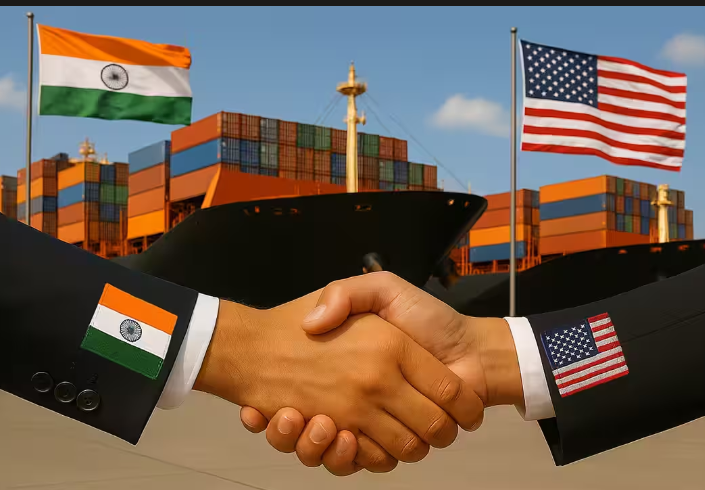
NEW DELHI, Oct. 16: India and the United States are moving closer to finalising the first phase of their bilateral trade agreement, with New Delhi emphasising that the arrangement must provide Indian exporters with a meaningful competitive advantage in the American market.
Commerce and Industry Minister Piyush Goyal said on October 15 that negotiations had reached the final stages, with legal drafting and the remaining details being worked out. The government hopes to complete the process and implement the agreement once the terms offer Indian businesses conditions comparable to, or better than, those available to competing exporting nations.
The negotiations are significant for Indian manufacturers, technology companies, engineering businesses, textile producers and other industries seeking greater access to the US market. The United States remains one of India’s most important trading partners, and any improvement in tariff arrangements could influence export orders, investment decisions and production planning.
The proposed agreement follows a framework announced in February that reduced US tariffs on most Indian goods from 50 per cent to 18 per cent, according to reporting by Reuters. However, outstanding questions concerning tariff treatment and broader trade policy have delayed the finalisation and implementation of the first phase.
India seeks a level playing field for exporters
New Delhi’s principal concern is ensuring that Indian goods do not face less favourable tariff conditions than products supplied by competitors such as Bangladesh, Vietnam and Indonesia.
Indian officials have argued that market access must translate into a genuine commercial benefit. If rival exporters receive lower duties or more favourable treatment, Indian companies could struggle to compete on price even when their products meet international standards.
Goyal said the agreement would be operationalised after India secured an appropriate competitive advantage. Commerce Secretary Rajesh Agrawal has similarly stressed the need for preferential access and greater certainty in trade arrangements.
For businesses, tariff differences can affect profit margins, pricing strategies and the ability to secure long-term supply contracts. Exporters often compete with narrow cost advantages, making changes in customs duties particularly important in sectors such as apparel, footwear, engineering goods and manufactured components.
A more predictable framework could help companies negotiate contracts with American buyers, plan capacity expansion and evaluate fresh investment in export-oriented facilities.
However, the precise commercial benefits will depend on the final terms, the products covered and the extent to which the agreement reduces uncertainty for individual industries.
Export figures highlight the importance of the US market
Recent trade figures underline the importance of bilateral commerce. India’s merchandise exports to the United States rose to $42.79 billion during April–August, compared with $40.39 billion in the corresponding period a year earlier, according to figures cited in Reuters’ October 15 report.
India recorded a merchandise trade surplus of nearly $34 billion with the United States during the 2025–26 financial year. This reflects the significance of American demand for Indian goods and services, while also highlighting the scale of the economic relationship the two governments are seeking to develop.
For Indian businesses, a stable trade framework could help sustain export growth and encourage companies to diversify their customer base. Manufacturers may also gain greater confidence when deciding whether to expand facilities, hire additional workers or invest in technology for overseas markets.
Nevertheless, stronger exports cannot be guaranteed by a trade agreement alone. Global demand, product quality, delivery schedules, logistics expenses, currency movements and competition will continue to influence business performance.
Indian exporters will therefore be watching the negotiations closely for details about tariff concessions, product coverage and implementation timelines.
Tariff uncertainty remains a major obstacle
Despite progress in negotiations, the two sides still face important questions about the wider US tariff framework.
Agrawal said India was awaiting clarity on revised American tariff policies, including a proposed measure that could impose duties of up to 100 per cent on imports from countries purchasing Russian oil. The potential impact of a separate US investigation into excess manufacturing capacity has also emerged as a concern.
These issues complicate the negotiations because businesses need to understand the total duties that could apply to their products after an agreement takes effect.
A preferential arrangement may provide limited reassurance if exporters remain exposed to additional tariffs under other measures. Companies making long-term commitments require clarity on both the negotiated terms and the wider regulatory environment.
For Indian firms, the uncertainty could influence decisions about production schedules, inventory management and the timing of shipments to the United States.
The government is consequently seeking not only improved access but also greater stability in the rules governing bilateral trade. Predictable conditions would allow exporters to calculate costs more accurately and reduce the risk of sudden changes affecting existing contracts.
Upcoming diplomatic engagement could support discussions
The trade negotiations are also taking place amid broader diplomatic engagement between New Delhi and Washington.
US Secretary of State Marco Rubio is scheduled to visit India from October 19 to 22, following engagements in Uzbekistan. His programme is expected to include discussions with government and business representatives on commercial relations, energy cooperation and investment.
US Ambassador Sergio Gor has expressed confidence in the pace of negotiations, saying that major elements of the proposed agreement had been addressed and that the remaining work was progressing. His remarks, reported on October 16, suggested that both governments remain interested in bringing the process to a conclusion.
The upcoming visit could provide an opportunity to discuss outstanding economic issues alongside broader bilateral priorities. However, the final agreement will depend on the decisions taken by the two governments and the resolution of remaining technical and policy questions.
Businesses are likely to view any further announcements as an indication of whether the negotiations can move from a political understanding to an operational trade arrangement.
Opportunities for manufacturing and employment
A successful agreement could create opportunities across several segments of India’s export economy. Engineering goods, textiles, chemicals, electronics and other manufactured products could benefit if the final provisions improve their competitiveness in the American market.
Greater certainty could also encourage domestic and international companies to consider expanding production in India for export purposes. Such investment may support employment, technology adoption and the development of supply chains involving smaller manufacturers.
Small and medium-sized enterprises could benefit from improved access to overseas buyers, although they may require assistance with quality certification, regulatory compliance, financing and international distribution.
The actual benefits would depend on how accessible the agreement’s provisions are to smaller firms and whether they can meet the requirements of American customers.
India would also need to continue improving logistics infrastructure, production efficiency and export diversification to strengthen its position in global markets. Preferential tariffs can help, but they cannot fully offset disadvantages arising from high transport costs, inconsistent quality or delivery delays.
A wider strategy for trade resilience
The negotiations form part of India’s broader effort to strengthen its international commercial relationships while reducing vulnerability to sudden changes in global trade policy.
For companies, diversifying export destinations can reduce dependence on individual markets. At the same time, maintaining a strong presence in the United States remains important because of its purchasing power and demand across a wide range of industrial and consumer products.
The government faces the task of balancing improved market access with domestic economic priorities and the need to secure durable terms. An agreement that offers immediate tariff relief but leaves significant uncertainty unresolved may provide less confidence than a framework with clearly defined obligations and implementation procedures.
The coming weeks are therefore expected to be important for determining the direction of the negotiations. Businesses will look for concrete details on duties, product coverage and the treatment of outstanding tariff concerns rather than relying solely on broad statements of progress.
For now, India and the United States appear committed to advancing the first phase of their trade arrangement. The outcome could influence export competitiveness and investment planning, but its long-term value will ultimately depend on the final provisions and how effectively both governments put them into practice.

