


India–US Trade Deal to Hit Apple, Dry Fruit Growers in J&K and Himachal: Sukhu
Karra Questions J&K Budget Management, Renews Demand for Statehood
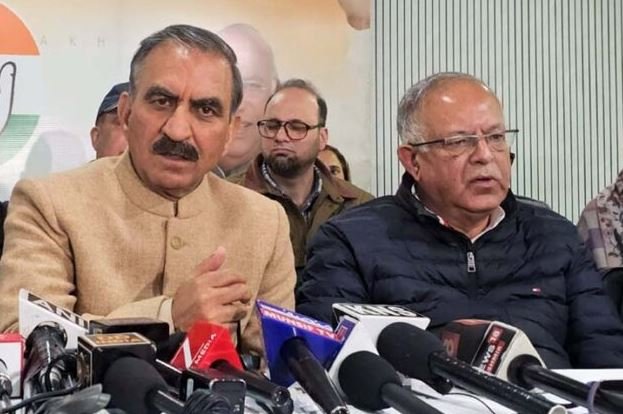
SRINAGAR/JAMMU, Feb 19: Himachal Pradesh Chief Minister Sukhvinder Singh Sukhu on Wednesday expressed concern over the potential impact of the India–United States trade agreement on the horticulture sector of hill states, particularly apple and dry fruit growers in Himachal Pradesh and Jammu and Kashmir.
Addressing a joint press conference at the Congress headquarters alongside Jammu and Kashmir Pradesh Congress Committee president Tariq Hameed Karra, Sukhu said the economies of both states share striking similarities. With nearly 70 to 75 percent of farmers dependent on small landholdings and horticulture, any shift in trade policy could significantly affect livelihoods.
He noted that apple growers in both regions had only recently begun to recover after years of financial strain. Many orchardists, he said, had invested in Controlled Atmosphere storage facilities to improve shelf life and enable off-season sales at better prices. According to Sukhu, the new trade arrangement risks undermining these gains and disrupting the fragile stability achieved by growers.
Calling the agreement a setback for the horticulture sector, Sukhu warned that the impact would extend beyond apples to include walnuts, almonds and other dry fruits. He observed that Jammu and Kashmir, which has a larger production base for walnuts and almonds, could face particularly severe consequences.
Raising questions about tariff structures, Sukhu said that under previous trade arrangements with countries such as New Zealand and members of the European Union, import duties were relatively low. He pointed out that while Indian exports to the United States attracted duties of around 3.3 percent earlier, the new terms reportedly allow duty-free imports of certain agricultural products into India while Indian exports could face significantly higher tariffs. “If imported apples and dry fruits enter India without duty, and our exports face higher charges abroad, it will create an uneven playing field,” he remarked.
He claimed that walnut prices had already declined by nearly Rs 100 per kilogram and cautioned that further price drops were likely if American produce entered the domestic market without import barriers.
On the issue of alleged harassment of Kashmiri traders in Himachal Pradesh, Sukhu played down concerns, stating that Kashmiris have lived and conducted business in the state peacefully for decades. He assured that any complaint would be taken seriously and investigated promptly. “If any incident occurs, people should inform the police by dialling 112. Strict action will follow,” he said, adding that some isolated incidents were sometimes amplified on social media for political or monetary reasons.
Meanwhile, J&K Congress chief Tariq Hameed Karra turned attention to fiscal issues within the Union Territory. Referring to remarks made in the recent budget presentation by Chief Minister Omar Abdullah, Karra alleged that a substantial amount of allocated funds remained unspent in the previous financial year. He questioned the need for fresh borrowing, particularly in the context of reported savings and interest-free loans.
Karra also criticised changes in rural employment schemes, stating that the Congress-era MGNREGA programme had provided critical support to rural households and curbed migration. He reiterated the party’s demand for restoration of statehood to Jammu and Kashmir, describing it as a democratic right of its 1.4 crore residents and urging broader political consensus on the issue.
The joint press conference highlighted economic concerns tied to trade policy, fiscal management and the broader political discourse surrounding governance and regional interests in the Himalayan states.

