


Indian Shooters Begin Los Angeles 2028 Olympic Qualification Campaign at Doha World Championships
Led by experienced competitors including Manu Bhaker, India's shooting contingent faces a challenging start to the new Olympic qualification cycle, with limited preparation time and several inexperienced members in the squad.
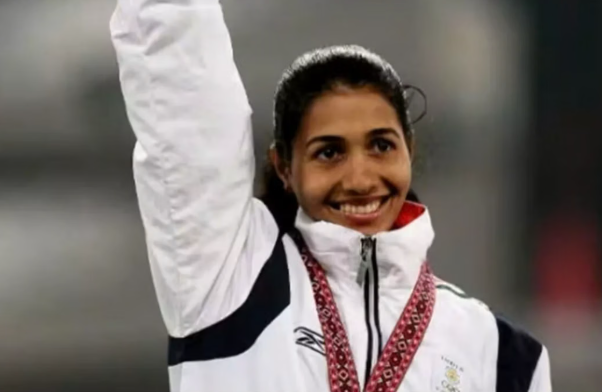
DOHA, Nov 3: India’s shooting contingent has begun its campaign at the 2026 International Shooting Sport Federation (ISSF) World Championship in Doha, Qatar, with the focus firmly on securing qualification places for the Los Angeles 2028 Olympic Games.
The championship, scheduled from November 1 to 14, marks the beginning of the Olympic qualification process for shooting and presents Indian athletes with an important opportunity to establish themselves in the race for the next Summer Games.
India has entered the competition with a 35-member squad featuring a combination of established international performers and emerging shooters who earned their places through domestic selection trials.
However, the Indian contingent faces several challenges ahead of the competition, particularly the limited recovery period following the recently concluded Asian Games in Nagoya, Japan.
Several members of the Indian shooting team participated in the continental competition before travelling to Doha. The demanding schedule has left athletes with little time to recover physically and mentally before taking on some of the world’s leading shooters.
The timing of the World Championships has also created an advantage for several European competitors, who have had a comparatively longer preparation period.
India’s high-performance director Pierre Beauchamp acknowledged the difficulties associated with the tight schedule, pointing out that athletes generally require considerable time to recover after major competitions.
He indicated that the absence of an adequate turnaround period could affect athletes’ concentration and overall performance.
The coaching and support staff have consequently focused on helping competitors regain their confidence and establish clear objectives before entering the championship.
According to Beauchamp, athletes who have not completely recovered may experience difficulties with concentration and decision-making. The team has therefore conducted workshops and regular discussions to help shooters identify their priorities and approach the competition with a fresh mindset.
The immediate objective is to secure as many Olympic quota places as possible while providing younger competitors with valuable international exposure.
The Doha championship carries considerable importance because it is the first major qualification event for shooting at the Los Angeles Olympics.
Under the qualification system, 36 quota places will be distributed across 12 individual Olympic shooting events, with three places available in each event.
The LA28 shooting programme will feature 15 medal events, including individual rifle, pistol and shotgun competitions, alongside three mixed-team events.
A total of 340 athlete quota places will be available for shooting at the Los Angeles Games, with equal representation for men and women.
The qualification process will continue through international championships, selected World Cups and continental competitions until May 2028.
For India, the Doha competition provides an early opportunity to build a strong foundation for the qualification campaign.
Among the leading names in the Indian contingent is Manu Bhaker, the double Olympic bronze medallist who remains one of the country’s most recognised shooting stars.
Bhaker’s experience at major international competitions will be particularly valuable as India looks to navigate a challenging qualification campaign.
However, her recent performance at the Asian Games in Nagoya did not produce medals in either the women’s 10m air pistol or 25m pistol events.
She will therefore be keen to regain her competitive rhythm and deliver a stronger performance in Doha.
Suruchi Phogat is another important member of the Indian pistol contingent. Her recent performances have established her as one of the emerging competitors in the discipline.
The women’s 10m air pistol team also includes Esha Singh and Sainyam Vij, providing a combination of international experience and developing talent.
The men’s 10m air pistol squad includes Kamaljeet Sohlot, Ravin Kumar and Jaypal Malviya.
For Ravin Kumar, the championship represents a particularly important milestone as he prepares to make his international debut at the senior level in Doha.
The event is also expected to provide him with valuable experience of competing against established international shooters.
Jaypal Malviya is another relatively inexperienced member of the squad. Despite being 31 years old, he has participated in only a limited number of international competitions.
Both shooters secured their positions through strong performances in domestic selection trials, demonstrating the importance of the national competition system in identifying new talent.
Their inclusion also highlights the changing composition of India’s shooting team, particularly in the pistol events, where selectors have continued to introduce fresh competitors.
The selection process has created opportunities for athletes who may not have previously received regular international exposure.
However, competing at a World Championship presents a different level of pressure, particularly when Olympic qualification opportunities are involved.
The Indian coaching staff will therefore be looking for consistency rather than expecting immediate results from every newcomer.
The men’s 25m rapid-fire pistol team also features a mixture of experience and youth. Gurmeet Singh, who finished seventh at the Rio Olympics, has returned to the national setup after an extended absence.
He will compete alongside Suraj Sharma and Bhavesh Shekhawat.
Suraj’s inclusion is particularly notable because he made his senior international debut only this year. His participation in Doha will provide another opportunity to gain experience against leading competitors.
India’s changing team composition has become increasingly visible in recent shooting competitions. Several established names have been replaced by younger athletes who have demonstrated their abilities through domestic trials.
For example, Samrat Rana, who won gold at the previous edition of the World Championships, is not part of the current contingent. Paris Olympics bronze medallist Sarabjot Singh is also absent from the squad.
Such selection decisions reflect the depth of competition within Indian shooting, where even internationally successful athletes face pressure to maintain their positions.
The Indian team management is nevertheless confident that the country has sufficient talent to remain competitive throughout the qualification cycle.
Beauchamp has emphasised the importance of patience and confidence, noting that the qualification process extends over several competitions and offers multiple opportunities for athletes to secure their places.
He also referred to India’s experience during the previous Olympic qualification cycle, when the country successfully secured an additional women’s pistol quota through a later competition.
The example highlights why the team must avoid placing excessive pressure on athletes during the opening stage of the campaign.
Apart from the immediate objective of securing quota places, the Doha championship will also provide an important assessment of India’s preparation for the next Olympic cycle.
The performances of younger competitors will be closely monitored as selectors and coaches evaluate the country’s depth across different shooting disciplines.
India has developed a strong international reputation in shooting over the past several years, with athletes regularly winning medals at the Olympic Games, World Championships, Asian Games and World Cups.
The success of Manu Bhaker and other leading shooters has also increased interest in the sport among younger athletes.
However, maintaining that progress requires consistent investment in coaching, training infrastructure, international exposure and athlete development.
The upcoming qualification period will test India’s ability to manage these requirements while preparing competitors for the highest level of international competition.
The Doha championship is therefore more than an individual medal competition. It represents the first major opportunity for Indian shooters to begin their journey towards Los Angeles.
With experienced competitors expected to lead the campaign and emerging names looking to establish themselves, the Indian contingent will aim to make the most of the available opportunities.
The limited preparation period remains a concern, but the coaching staff has attempted to address the issue through structured recovery programmes and mental preparation sessions.
As the competition progresses, India’s performance will depend on how effectively its athletes manage pressure, maintain technical consistency and adapt to the demands of international competition.
The immediate target is to secure Olympic qualification opportunities, but the wider ambition is to build a balanced and competitive shooting team capable of challenging for medals at Los Angeles 2028.
The opening championship in Doha will provide the first significant indication of how successfully India has begun that journey.

