


India’s Archery Squad Eyes Fresh Momentum After Asian Games Success
The country's strong showing in compound archery at Aichi-Nagoya boosts confidence ahead of the next international cycle.
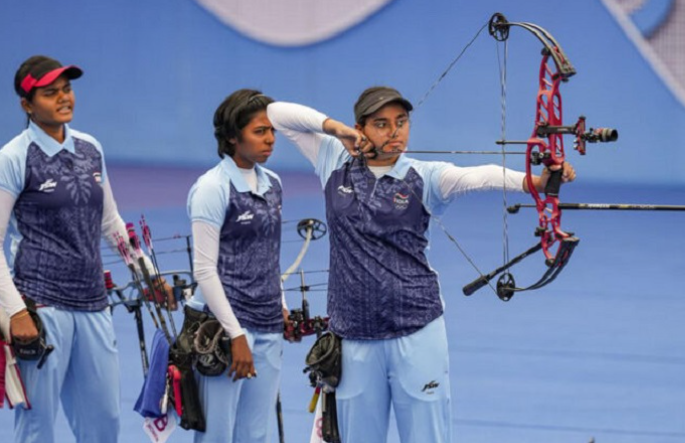
New Delhi, Oct 5: India’s archery contingent returned from the 2026 Asian Games with renewed confidence after delivering a strong performance in Aichi-Nagoya, giving the country another reason to believe that the sport can become a consistent source of medals at major international events.
The Indian archers were among the prominent contributors to the country’s overall medal haul at the continental competition, with the compound discipline once again producing several significant results.
The performance came at an important stage for Indian archery, which has been steadily expanding its presence on the international circuit. The success in Japan has strengthened expectations around the country’s prospects in future global competitions and provided encouragement to a group of athletes targeting the next Olympic cycle.
India’s compound archers entered the Asian Games with considerable expectations after establishing themselves as one of the leading forces in the discipline. Their performances throughout the competition demonstrated the depth available in the national programme.
The compound category has become one of India’s most reliable medal avenues at continental championships. Strong performances from both the men’s and women’s teams highlighted the country’s growing expertise in an event that demands exceptional consistency, concentration and control.
Archery is particularly unforgiving at the highest level. A small technical error or a single poorly executed shot can change the outcome of a close contest. India’s success in Aichi-Nagoya therefore reflected not only individual ability but also the quality of preparation undertaken by the athletes and support staff.
The Asian Games also provided valuable experience to younger members of the squad. Competing in a major multi-sport event alongside established international athletes can help emerging archers develop the composure required for medal-round situations.
India’s compound programme has benefited from the emergence of a strong domestic competitive environment. Regular national-level tournaments have given archers opportunities to compete under pressure and challenge established names.
That depth is increasingly important as the country looks beyond individual performances.
Team events have become a major area of focus because they require athletes to perform collectively rather than relying on one standout competitor. India’s ability to field competitive combinations across the men’s, women’s and mixed categories has strengthened its medal prospects.
The latest Asian Games campaign also underlined the importance of consistency. Indian archers were required to negotiate qualification rounds before facing increasingly difficult opponents in the elimination stages.
The pressure increases significantly once the competition reaches the knockout phase. Every arrow carries greater importance, and athletes must remain composed even when facing a narrow deficit.
Indian archers demonstrated that they could handle those situations effectively.
The performances have also provided the national coaching setup with useful information ahead of upcoming international tournaments. Coaches can assess which combinations worked best, where technical improvements are required and which younger competitors are ready for greater responsibility.
The next objective will be maintaining that momentum.
Success at a continental event can raise expectations, but the international calendar offers little time for complacency. India’s archers will have to continue competing at World Archery events and other major championships, where the field includes the strongest competitors from Europe, Asia and the Americas.
The experience gained in Japan could prove particularly valuable when those athletes face similar pressure in future competitions.
Another positive development is the growing popularity of compound archery in India. The discipline has attracted significant attention because of India’s success, creating greater visibility for athletes who might previously have received limited public recognition.
The performances of Indian archers have also helped broaden the country’s sporting identity beyond cricket and a handful of Olympic disciplines.
For young athletes, the success of the national team offers a visible pathway into elite sport. The development of academies, coaching programmes and domestic competitions could further strengthen that pipeline.
India’s archery administrators will now be looking to convert recent success into sustained international performance. That means ensuring athletes receive adequate competition exposure, technical support, sports science assistance and opportunities to compete against leading international opponents.
The Olympic question will also remain important.
Compound archery is not currently part of the Olympic programme, unlike recurve archery. Nevertheless, success in the discipline contributes to India’s wider archery ecosystem and helps develop athletes, coaches and infrastructure that can benefit the recurve programme as well.
For India, the long-term objective is therefore broader than a single Asian Games medal.
The country wants to create an environment in which archers can regularly compete for honours at world championships and, where applicable, the Olympic Games. The progress of the compound teams demonstrates that sustained investment can produce results.
The Aichi-Nagoya campaign has consequently offered both achievement and motivation.
The medal performances have given established athletes another confidence boost, while younger competitors have gained experience that could become important in the coming years.
The challenge now is to maintain technical standards and avoid the inconsistency that can affect archers following a major tournament.
Indian archery has already moved beyond the stage where isolated victories are viewed as surprises. The country’s leading competitors are now expected to challenge for medals whenever they enter major continental and world competitions.
That change in expectation represents a significant development for the sport.
As the post-Asian Games international calendar progresses, India’s archers will have opportunities to test themselves against the world’s best once again. Their performances in Japan have raised the benchmark, and the next task will be proving that the success was part of a sustained upward trajectory rather than a one-off achievement.
With a combination of experienced competitors and emerging talent, Indian archery appears well placed to continue its development.
The Aichi-Nagoya results have provided the latest evidence of that progress, while also setting a demanding target for the competitions that follow.

