


Jagdeep Dhankhar Was Compelled to Resign a Year Ago, Says Jairam Ramesh
Congress leader links Dhankhar's premature exit to his repeated remarks on farmers' issues, while recalling the events on the first anniversary of his resignation.
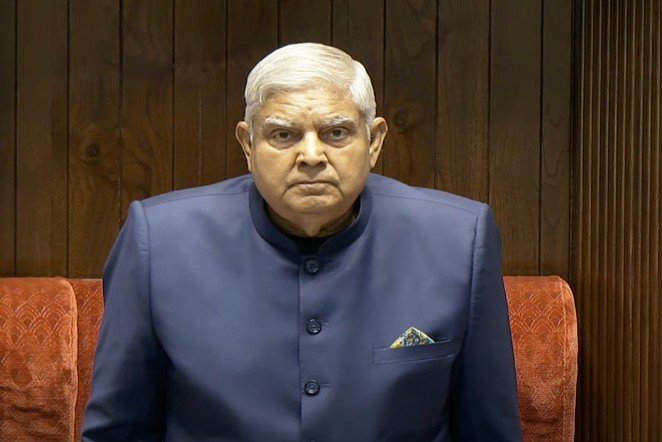
New Delhi, July 21: Congress General Secretary Jairam Ramesh on Tuesday renewed his criticism of the Centre over the resignation of former Vice-President Jagdeep Dhankhar, alleging that he was compelled to leave office before completing his tenure and was denied a proper farewell in the Rajya Sabha.
Marking one year since Dhankhar’s resignation, Ramesh shared a statement on social media platform X, claiming the former Vice-President’s departure from office was not voluntary. According to the Congress leader, Dhankhar was removed despite having nearly four years of his constitutional term remaining.
Congress Raises Questions Over Dhankhar’s Exit
Ramesh recalled that Jagdeep Dhankhar had assumed office as India’s Vice-President in August 2022 and was expected to remain in the position until 2027. However, he resigned on the opening day of the Monsoon Session of Parliament on July 21 last year.
The Congress leader alleged that the former Vice-President’s repeated expressions of concern over the hardships faced by farmers had become uncomfortable for the ruling establishment. He claimed Dhankhar had openly highlighted the challenges confronting the farming community and criticised what he described as the government’s lack of sensitivity towards their issues.
According to Ramesh, this concern for farmers eventually led to his abrupt departure from office.
Remarks on Farmers Cited by Congress
In his post, Ramesh argued that Dhankhar had frequently spoken about agrarian distress and the need to address the concerns of cultivators. He alleged that the government’s response to these issues reflected indifference, adding that a similar attitude was now being witnessed in relation to the concerns of students and young people across the country.
The Congress leader used the anniversary of Dhankhar’s resignation to reiterate his criticism of the Centre’s handling of social and economic issues affecting different sections of society.
No Formal Farewell, Claims Jairam Ramesh
Another point raised by Ramesh was the absence of a ceremonial farewell for the outgoing Vice-President. He alleged that members of the Rajya Sabha did not get the opportunity to formally bid farewell to Dhankhar despite his constitutional role as Chairman of the Upper House.
The Congress leader described the lack of a farewell as a departure from parliamentary convention and said the former Vice-President deserved greater institutional respect after serving in one of the country’s highest constitutional offices.
Dhankhar Had Cited Health Reasons
When Jagdeep Dhankhar resigned on July 21 last year, he attributed his decision to health-related concerns. In his resignation letter addressed to the President of India, he stated that he was stepping down with immediate effect in order to prioritise medical treatment and comply with the advice of doctors.
His resignation was submitted under Article 67(a) of the Constitution of India, which governs the resignation of the Vice-President.
The move surprised political observers because it came without prior public indications and coincided with the commencement of Parliament’s Monsoon Session.
Among the Few Vice-Presidents to Resign Mid-Term
Dhankhar became only the third Vice-President in India’s constitutional history to resign before completing a full five-year term. Earlier, V. V. Giri and R. Venkataraman had stepped down from the office of Vice-President to contest the election for the President of India.
Unlike those earlier resignations, Dhankhar’s resignation cited health considerations as the reason for leaving office before the completion of his tenure.
Political Debate Continues
Ramesh’s latest remarks have once again brought attention to the circumstances surrounding Dhankhar’s resignation, with the Congress maintaining that political reasons lay behind his departure. The BJP and the government have consistently maintained that the former Vice-President resigned for personal health reasons, as stated in his official communication.
With Parliament in session, the Congress leader’s comments have added another political flashpoint, reviving debate over one of the most unexpected constitutional developments witnessed last year.

