


Jairam Ramesh Accuses Modi Government of Appeasing Trump, Cites US Action Against Indian IT Professionals
Congress leader questions the Centre's approach to Washington, alleges concessions favour American firms and calls for stronger protection of India's economic and technological interests.
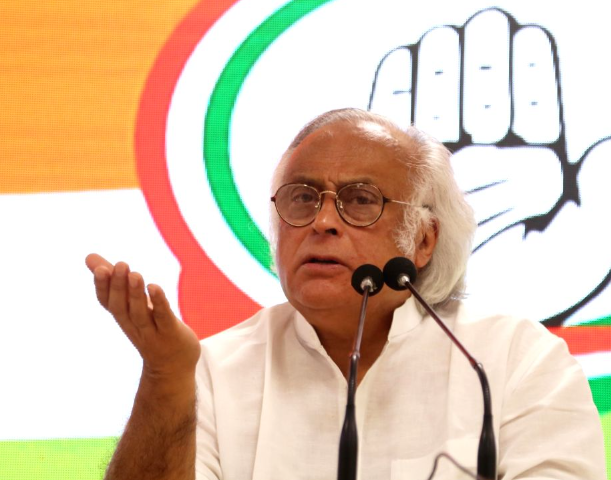
New Delhi, Oct 9: Congress general secretary in-charge of communications Jairam Ramesh on Thursday criticised the Narendra Modi government over its handling of relations with US President Donald Trump, alleging that efforts to accommodate Washington had failed to protect Indian interests following recent US actions affecting Indian IT professionals.
In a post on X, Ramesh said the latest developments demonstrated that appeasing powerful leaders did not necessarily yield favourable outcomes. He accused the US government of taking measures directly targeting Indian technology professionals and questioned whether New Delhi’s diplomatic approach was delivering reciprocal benefits.
Ramesh also linked the issue to the Centre’s reported decision concerning merchant discount rates (MDR) on Unified Payments Interface (UPI) transactions. He alleged that the move would benefit American companies and accused the Modi government of going out of its way to please Trump.
However, he did not provide specific details explaining how the alleged changes in UPI-related charges would directly benefit US firms.
The Congress leader further argued that India had legal and regulatory options available to respond to Washington’s actions. He referred to the Digital Personal Data Protection Act, 2023, and its implementing rules, suggesting that the government could consider measures within the existing legal framework.
Ramesh also alleged that domestic political controversies surrounding Chief Election Commissioner Gyanesh Kumar and the Special Intensive Revision (SIR) of electoral rolls could make the prime minister reluctant to take a stronger position. He referred to the opposition’s campaign against the Election Commission as “GyaneshGate”.
His remarks brought India’s foreign policy, digital payments and domestic electoral controversies into the same political debate, with the Congress questioning whether the government’s engagement with the Trump administration adequately safeguards national interests.
Indian IT professionals and technology companies have substantial commercial links with the US, making immigration policies, work authorisations and regulatory changes important concerns for the sector. Any measures that increase costs or restrict access to the American market could affect workers, employers and businesses operating between the two countries.
The issue of merchant discount rates is also significant for India’s digital payments ecosystem. MDR refers to the fee associated with processing certain merchant transactions, with the applicable arrangements determining how payment-processing costs are distributed among participating entities.
Ramesh alleged that the government’s position would benefit American companies, but his statement did not establish the precise mechanism behind that claim.
The Digital Personal Data Protection Act, 2023, provides the statutory framework for processing digital personal data in India. It establishes obligations for entities handling such information and sets out protections for individuals. Any government action under the legislation, however, would need to be supported by the relevant provisions and comply with applicable legal requirements.
The Congress leader’s reference to Gyanesh Kumar reflects the continuing political disagreement over the Election Commission’s functioning and the revision of electoral rolls. Opposition parties have raised concerns about the SIR exercise, while the Election Commission has defended its electoral processes.
By connecting these domestic disputes with India’s engagement with Washington, Ramesh sought to challenge the government’s broader approach to foreign relations and economic policy.
He did not identify specific provisions of the data protection law that could be invoked or outline detailed countermeasures against the reported US actions. His statement nevertheless highlighted the Congress’s demand for a more assertive approach to protecting Indian professionals and businesses in international negotiations.

