


Jairam Ramesh Reveals 2010 Letter to Modi Urging Action to Save Great Indian Bustard
Senior Congress leader highlights earlier conservation push for endangered bird amid fresh government claims
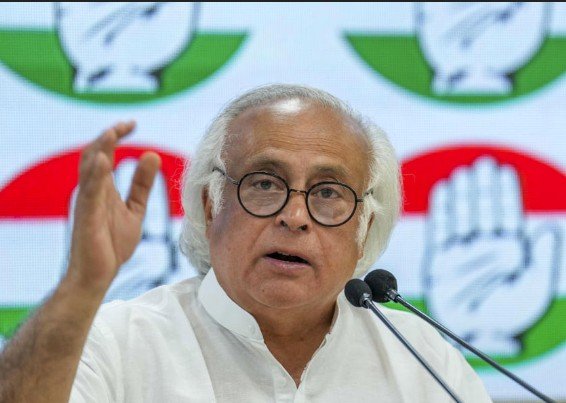
NEW DELHI, Mar 29: Congress leader Jairam Ramesh on Sunday pointed to a past initiative during his tenure as Union environment minister, stating that he had urged then Gujarat chief minister Narendra Modi in 2010 to take urgent steps to protect the critically endangered Great Indian Bustard in Kutch’s grasslands.
Ramesh said that the recent narrative crediting the Prime Minister with conceptualising conservation efforts in 2011 overlooks earlier interventions. He shared that a formal communication dated June 9, 2010, had already called for immediate measures to revive the bird’s dwindling population. According to him, experts associated with wildlife conservation are aware of this background.
He further noted that renowned ornithologist Salim Ali had once advocated for declaring the Great Indian Bustard as India’s national bird due to its endangered status. However, the Indian Board of Wildlife ultimately selected the peacock in 1963, citing cultural and historical reasons.
Referring to his earlier letter, Ramesh had warned about the rapid decline of the species and stressed the importance of preserving Kutch’s grasslands, one of the last viable habitats. He had also urged authorities to prevent the conversion of grazing land into agricultural use and to support conservation initiatives in the region, cautioning that inaction could lead to the species’ extinction in Gujarat.
The remarks came shortly after Union Environment Minister Bhupender Yadav announced the successful hatching of a Great Indian Bustard chick in Gujarat’s Kutch region after nearly a decade. The development was achieved through a specialised “jumpstart” conservation method involving coordinated efforts between central and state agencies, including Rajasthan and Gujarat forest departments and the Wildlife Institute of India.
Officials described the initiative as a significant breakthrough, particularly given the extremely limited population of the species in Gujarat, where only a few individuals remain. The process involved transporting an incubated egg over a distance of approximately 770 kilometres from Rajasthan to Kutch under carefully managed conditions. The egg was later incubated in the wild, resulting in the successful birth of the chick, now being raised in its natural habitat.

