


J&K INDUSTRIES CRY FOR HELP
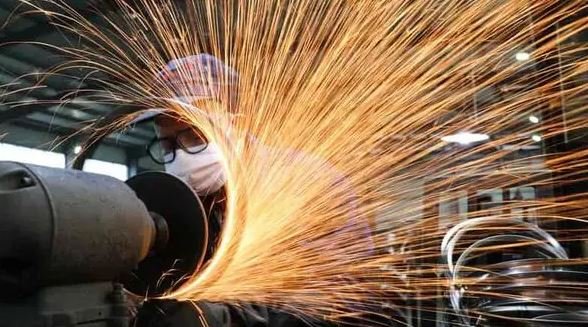
The prevailing regional tension and its cascading economic repercussions have left the industrial landscape on the brink of collapse. The FOIJ’s deliberations, supported by key members, highlighted the multitude of challenges confronting the industry—challenges that are not only immediate but also structurally destabilizing. With the mass migration of skilled, semi-skilled, and unskilled workers, production lines have come to a halt. Transportation costs have surged, power cuts have become unpredictable, and consumer demand has seen a marked decline. These issues, when viewed collectively, threaten the very survival of the region’s industrial backbone.
At this crucial juncture, the FOIJ has not merely raised concerns but has also laid down a series of practical, implementable demands. These include an urgent fiscal relief package, enhancement of working capital limits, interest waivers on loans until at least September 2025, and restructuring of term loans with relaxed repayment terms. Furthermore, the Federation has requested immediate disbursal of pending government claims and fiscal incentives, a moratorium on the proposed power tariff hike, and a six-month waiver on minimum demand charges for electricity. Equally important is the call for insurance coverage to safeguard industrial units against war-related losses. These are not extravagant asks—they are survival tools necessary to sustain employment, production, and the regional economy. The distress of the industrial community must be viewed not merely through an economic lens but also through a human one. Behind every shuttered unit lie hundreds of displaced workers, disrupted livelihoods, and broken economic chains that affect thousands of families. The Federation’s appeal to Hon’ble Lieutenant Governor Manoj Sinha, and political leaders like Jenab Omar Abdullah and Sh. Surinder Kumar Choudhary is an earnest plea for the protection and preservation of what has taken decades to build. The industrial sector in Jammu & Kashmir has not just been a generator of goods and services but also a powerful symbol of resilience in a region historically marred by political uncertainty. Its preservation is not only vital for economic stability but also for social cohesion. It is important, at this moment, for policymakers to recognize the broader implications of industrial disintegration. The crisis faced by J&K’s industries is not an isolated event but a reflection of a system under strain—a system where external conflict, internal policy inaction, and lack of financial cushioning converge to create a perfect storm. If ignored, the cost of inaction will not just be economic, but generational. Enterprises that collapse today may not return tomorrow. Skills lost may never be recovered. Trust in institutional support may further erode. In such a scenario, proactive governance becomes not just necessary but morally imperative. The Federation of Industries Jammu is not sounding an alarm in isolation; it is reflecting the mood of an entire business community battered by uncontrollable circumstances and awaiting governmental empathy. A swift, coordinated, and well-calibrated response from the administration is critical. Relief is not a hand-out—it is a bridge to stability. The time to act is now, while hope and potential still linger. The industrial sector of Jammu & Kashmir deserves more than just patience—it deserves protection, partnership, and a policy framework that acknowledges its role in shaping a peaceful and prosperous future. The Federation’s voice rings like a tempest across the barren industrial corridors, demanding that those in seats of power awaken from apathy before the last flame of production flickers out. This is not mere disruption—it is devastation in slow motion, a strangling of progress under the weight of indifference. If policy remains paralyzed, the vibrant pulse of enterprise will dissolve into ashes, scattered by the winds of economic ruin.
It is no longer the hour for cosmetic promises or bureaucratic lullabies. This is the storm’s eye, where decisions shape destinies. The factories of Jammu & Kashmir—once fragrant with labour, and ambition—now wear the dust of despair. But within this storm, there still burns a smouldering spark of hope. That spark demands kindling—not tomorrow, but today. For every moment of delay is another petal lost from the blooming flower of industry, another dream swept away in the floodwaters of conflict. Let action rise like lightning—swift, bright, and unrelenting.
– From the Editorial Desk

